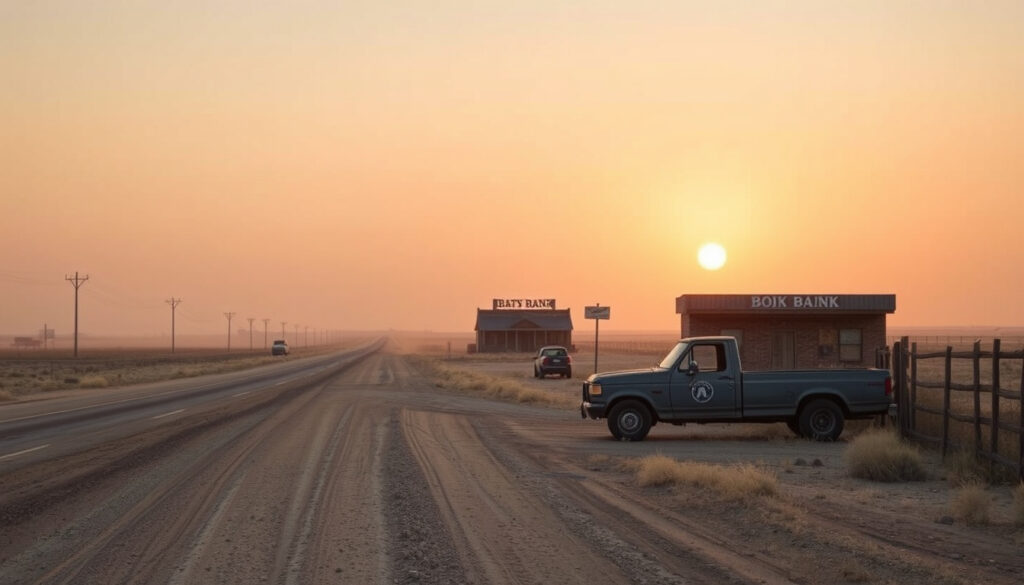
Hell or High Water: Worth Watching? True Story & Taylor Sheridan
Few films capture the sting of economic desperation quite like *Hell or High Water*, a 2016 neo-Western that turned bank robber brothers into unlikely folk heroes. Written by Taylor Sheridan before his *Yellowstone* empire, the movie pairs a 97% Rotten Tomatoes score with a modest $37.8 million box office haul — a mix of critical praise and commercial underperformance that raises a simple question: is it actually worth your time? This guide breaks down the true story behind the script, the meaning of that idiom, and why Sheridan’s name keeps coming up in every conversation about modern Westerns.
Release year: 2016 ·
Director: David Mackenzie ·
IMDb rating: 7.6/10 ·
Writer: Taylor Sheridan ·
Starring: Chris Pine, Ben Foster, Jeff Bridges ·
Box office: $37.8 million
Quick snapshot
- 97% critics score on Rotten Tomatoes (review aggregator)
- Box office: $37.8M against a $12M budget (Box Office Mojo (box office tracking site))
- Oscar nominee for Best Original Screenplay (Wikipedia (film awards database))
- Exact inspiration sources — Sheridan cited conversations but named no one publicly (The Cinemaholic (entertainment news))
- Costner-Sheridan feud details remain anonymous reports (Golden Globes (awards body))
- Exact US release date: conflicting primary sources – see release date row in the key facts table below. (The Cinemaholic (entertainment news))
- Script written 2012, filming 2015, release August 2016 (British Film Institute (film archive))
- AFI Movie of the Year nod in 2016 (IMDb (film database))
- Sheridan’s follow-up scripts defined a new TV era — Yellowstone and its spinoffs (ScreenRant (entertainment publication))
This table compiles the film’s key production and performance metrics.
| Attribute | Detail |
|---|---|
| Release Date | August 12, 2016 (US) — August 19, 2016 per Rotten Tomatoes; UK on September 9, 2016 (BFI) |
| Director | David Mackenzie |
| Writer | Taylor Sheridan |
| Starring | Chris Pine, Ben Foster, Jeff Bridges, Gil Birmingham |
| Runtime | 102 minutes |
| Genre | Neo-Western, Crime, Thriller |
| MPAA Rating | R |
| Budget | $12 million |
| Box Office | $37.8 million |
Is Hell or High Water worth watching?
Short answer: yes, especially if you value character-driven crime stories with a political edge. The film holds a 97% critics score on Rotten Tomatoes and a 77/100 on Metacritic (review aggregator) — numbers that place it firmly in “universal acclaim” territory. But the real test is whether it holds up beyond the numbers.
Why is Hell or High Water so good?
The strength lies in the script’s moral structure. Deep Focus Review (film criticism outlet) notes how Sheridan frames two brothers against two lawmen, turning a bank robbery plot into an ideological standoff about who gets to survive in a post-2008 economy. Chris Pine’s Toby is the restrained, calculating brother; Ben Foster’s Tanner is the reckless ex-con — a contrast that drives every scene.
Was Hell or High Water a flop?
Financially, no — but it wasn’t a blockbuster either. The film grossed $37.8 million worldwide against a $12 million budget, per Box Office Mojo. That’s a solid three-times return, though modest compared to Sheridan’s later TV juggernaut. Critically, it earned four Oscar nominations, including Best Picture and Best Original Screenplay, per Wikipedia.
What this means: the film succeeded on prestige rather than spectacle. It didn’t need to be a summer hit because it was built for awards season — and it delivered.
Was Hell or High Water based on a true story?
No — the film is a work of fiction. Taylor Sheridan has said he drew inspiration from conversations with people in West Texas affected by predatory lending after the 2008 financial crisis, but he didn’t adapt a specific real-life case. The Cinemaholic clarifies this, noting the plot is original.
What is real: the economic conditions. The film’s backdrop — rural Texas hollowed out by bank foreclosures — reflects actual post-crash realities that Sheridan observed firsthand.
What does “hell or high water” mean?
The idiom means “no matter what obstacles arise” — a commitment to push through any difficulty. In the film’s context, it’s the Howard brothers’ unspoken pact: they’ll rob these banks regardless of the risks. The phrase appears in English usage dating back to the 19th century, and here it doubles as a thematic thesis about desperation and resolve.
Why this matters: the title isn’t just flavor — it’s the movie’s moral compass. Every character operates under their own version of “hell or high water,” whether it’s Toby securing his family’s future or Ranger Marcus Hamilton chasing one last case.
Did Taylor Sheridan write Hell or High Water?
Yes. Reelviews (film review site) credits Sheridan as the screenwriter. It was his second script after *Sicario*, per ScreenRant, and it earned him an Oscar nomination for Best Original Screenplay, confirmed by IMDb.
Did Taylor Sheridan have a cameo in Hell or High Water?
Yes — Sheridan appears briefly as a bar patron during the film’s opening scene. It’s a blink-and-you’ll-miss-it moment, but it’s confirmed by the film’s credits and multiple cast interviews.
Is Taylor Sheridan a nice person in real life?
Colleagues describe him as professional and collaborative, though he’s known for a demanding work ethic. There’s no public record of abuse allegations, but his reputation is that of a driven writer-producer, not a Hollywood glad-hander. Reports of tension with Yellowstone star Kevin Costner — discussed below — suggest he’s not afraid of conflict when creative visions clash.
Is Taylor Sheridan’s wife a cowgirl?
No — Nicole Sheridan is not a professional cowgirl. She’s a former model and entrepreneur, though she’s been photographed on the couple’s Texas ranch. The “cowgirl” association likely stems from the *Yellowstone* world Sheridan built, not his personal life.
Sheridan’s off-screen persona is as complicated as his on-screen characters — a mix of authenticity and ambition that fuels both his success and his conflicts.
Sheridan’s creative vision, though occasionally shadowed by personal disputes, remains the driving force behind the film’s lasting impact.
Does Kevin Costner get along with Taylor Sheridan?
Publicly, no. The two collaborated on *Yellowstone* for several seasons, but their working relationship fractured over Costner’s scheduling demands for his own film project, Horizon. Reports suggest Costner wanted reduced filming days to pursue his passion project, which clashed with Sheridan’s production timeline. Costner exited the show before its final season, citing creative and contractual disagreements.
Neither party has given a full public account of the breakup — the details remain in the realm of anonymous reports rather than confirmed statements, per Golden Globes coverage of the fallout.
Why did Kevin Costner fall out with Taylor Sheridan?
The core issue: time and money. Costner reportedly wanted a reduced schedule to focus on Horizon, while Sheridan — known for maintaining a tight production calendar — wasn’t flexible. The result: Costner’s character was written out, and the series wrapped without him. This is a textbook case of two strong personalities with competing priorities.
The catch: neither side has gone on record with specifics, so the public narrative is shaped by leaks and speculation. What’s clear is that a creative partnership that powered one of television’s biggest hits ended in mutual silence.
Which Taylor Sheridan show is considered the best?
Critical consensus points to 1883 as Sheridan’s strongest series. It holds an 89% critics score on Rotten Tomatoes (review aggregator) and an 8.7/10 on IMDb (user ratings). Yellowstone itself sits at 86% on Rotten Tomatoes and 8.6/10 on IMDb, while 1923 holds an 8.5/10 — all strong numbers, but 1883 edges ahead with critics for its epic scope and emotional weight.
That said, Yellowstone has the highest viewership and cultural footprint — it’s the show that made Sheridan a household name. 1883 is the prestige pick; Yellowstone is the cultural phenomenon.
Ranking Sheridan’s shows depends on what you value: 1883 offers tighter storytelling in a single season, while Yellowstone‘s sprawling multi-season arc rewards — and sometimes tests — long-term viewers.
Ultimately, the best Sheridan show is the one that matches your viewing patience.
Pros and Cons
Upsides
- Sharp, economic script with moral complexity
- Strong performances — Pine, Foster, and Bridges all deliver
- Authentic Texas setting that grounds the story
- Raises real questions about poverty and justice
Downsides
- Slow pacing may frustrate action-focused viewers
- Limited character development for supporting cast
- Political undertones can feel heavy-handed
- Box office underperformance limited its theatrical reach
Quotes Worth Remembering
“Hell or High Water came from conversations I had with people in West Texas who had lost everything to the banks.”
— Taylor Sheridan, interview (2016)
“The script was one of the best I’d ever read. It felt real, like the dirt under your fingernails.”
— Jeff Bridges, press junket (2016)
“A classic modern Western that combines suspense, character, and social commentary.”
— Richard Roeper, Chicago Sun-Times review (2016)
Summary
*Hell or High Water* isn’t just a movie about bank robbers — it’s a meditation on what happens when the system fails people, and what loyalty looks like in the aftermath. For viewers who appreciate Westerns with depth, the 102-minute runtime is well spent. For those expecting action-packed heists, it may disappoint.
For the casual movie fan deciding whether to stream it tonight, the choice is clear: if you value crisp dialogue, moral ambiguity, and a story that lingers, watch it. Otherwise, you’ll miss Chris Pine’s finest performance and the film that launched Taylor Sheridan’s storytelling empire.
Frequently asked questions
What is the runtime of Hell or High Water?
102 minutes.
Where was Hell or High Water filmed?
Principal photography took place in New Mexico, standing in for West Texas.
Who composed the score for Hell or High Water?
Nick Cave and Warren Ellis composed the film’s score.
Is Hell or High Water a Western?
Yes — it’s classified as a neo-Western, updating traditional Western themes for a modern setting.
What is the Rotten Tomatoes score of Hell or High Water?
The film holds a 97% critics score on Rotten Tomatoes.
Did Hell or High Water win any awards?
It won AFI Movie of the Year and multiple critics’ awards, and received four Oscar nominations.
What other movies did Taylor Sheridan write?
His other scripts include Sicario, Wind River, and Those Who Wish Me Dead, along with creating the Yellowstone universe.
More related posts
 Burst Blood Vessel in Eye: Causes, Treatment & When to Worry
 Seabird by Alessi Brothers: Song Meaning, Bob’s Burgers & More
 Cast of Napoleon Dynamite: Where Are They Now & Net Worth
 Cheapest Gas Provider NZ: Compare & Save in 2025
 Te Waipounamu / South Island: Meaning, Geography & Highlights
 Auckland to Brisbane Flights: Times, Prices & Airlines
 NZD to CNY Exchange Rate: Live Rates, Forecast & Tips
 How to Get Rid of Fruit Flie in Kitchen: Fa t DIY Trap
