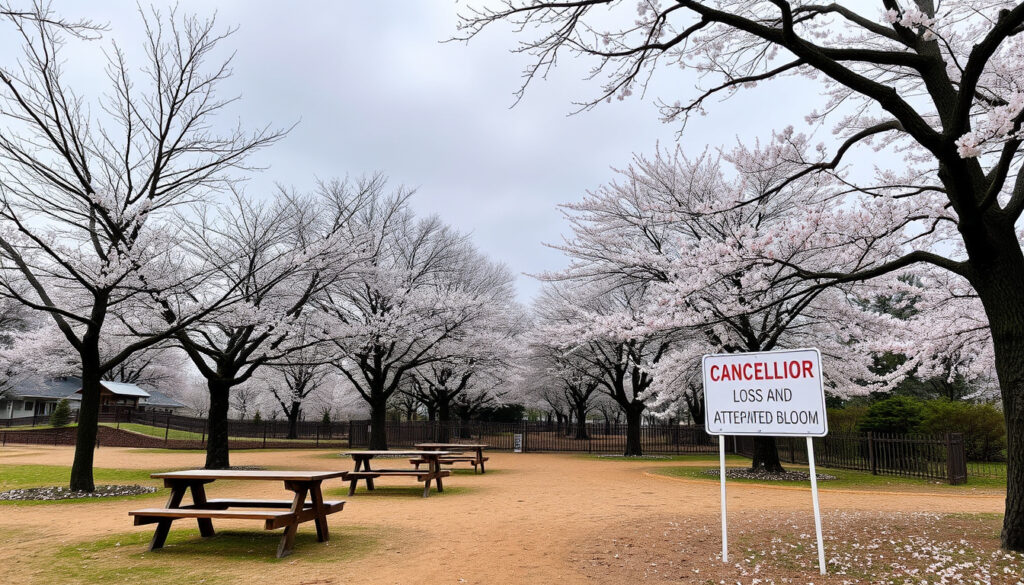
Japan Cherry Blossom Festival Cancelled 2026: Reasons & Alternatives
There’s a moment every spring when millions of travelers dream of standing beneath Japan’s cherry blossoms, camera in hand. But for residents of Fujiyoshida, a city at the foot of Mount Fuji, that dream has become a nightmare of trampled gardens and overflowing trash bins.
Festival cancelled: Arakurayama Sengen Park Cherry Blossom Festival, 2026 ·
Reason: Overtourism and badly behaved tourists ·
Location: Fujiyoshida, Yamanashi Prefecture, Japan ·
Announcement date: 3 February 2026 ·
Reported by: BBC, The Guardian, The Independent
Quick snapshot
- Arakurayama Sengen Park Cherry Blossom Festival cancelled for 2026 (The Mainichi)
- Announcement made by Fujiyoshida city government on 3 February 2026 (Forbes)
- Park located in Fujiyoshida, Yamanashi Prefecture, near Mount Fuji (Associated Press)
- Whether the festival will return in 2027 or later
- Whether other festivals in Japan will face similar cancellations
- Specific details on future tourism management policies in Fujiyoshida
- 3 February 2026: Fujiyoshida city government announces cancellation (The Mainichi)
- 5-6 February 2026: BBC, The Guardian, The Independent report on cancellation (The Mainichi)
- 9 February 2026: Indian Express covers story, calls it “overtourism ends an era” (The Indian Express)
- Japan remains open to tourists; no nationwide closure (Associated Press)
- Alternative cherry blossom spots available across Tokyo, Kyoto, Osaka (Associated Press)
- Travelers should check official government advisories before planning trips (Associated Press)
Six key facts, one pattern: the cancellation was not a sudden decision but the culmination of years of mounting pressure on a small community.
The data shows a local government forced to act where tourism revenue collided with resident liveability.
| Fact | Detail |
|---|---|
| Cancelled festival | Arakurayama Sengen Park Cherry Blossom Festival |
| Year of cancellation | 2026 |
| Location | Fujiyoshida, Yamanashi Prefecture |
| Announcement date | 3 February 2026 |
| Primary cause | Overtourism and tourist misbehavior |
| Reported by | BBC, The Guardian, The Independent, Indian Express |
Has the Cherry Blossom Festival been cancelled?
Yes — but not every cherry blossom festival in Japan. The cancellation applies specifically to the Arakurayama Sengen Park Cherry Blossom Festival in Fujiyoshida, Yamanashi Prefecture, for the 2026 season. The Fujiyoshida city government made the announcement on 3 February 2026, according to The Mainichi (Japan’s national English-language newspaper).
Which specific festival was cancelled?
- The Arakurayama Sengen Park Cherry Blossom Festival, held at a park famous for its view of Mount Fuji and the Chureito Pagoda.
- The park draws about 200,000 visitors annually, according to Forbes (business and travel publication).
- The cancellation applies to the 2026 season only; future years have not yet been determined.
When was the cancellation announced?
- The Fujiyoshida city government announced the cancellation on 3 February 2026.
- Major news outlets including BBC (UK public service broadcaster), The Guardian (UK daily newspaper), and The Independent (UK news organization) reported the story within days.
- The Indian Express called it “overtourism ends an era” in a 9 February 2026 article.
The cancellation was not a quiet administrative decision — it became international news within 72 hours, signaling that Japan’s overtourism problem had reached a tipping point visible to the world.
The implication: global media coverage signals that local frustrations are now an international story.
Why has Japan cancelled the Cherry Blossom Festival?
The cancellation stems directly from overtourism — a situation where the volume of visitors overwhelms a location’s infrastructure and the quality of life for its residents. Local officials cited traffic congestion, disruption for residents, and littering as growing problems, according to Euronews (European news network).
What is overtourism?
- Overtourism occurs when visitor numbers exceed a destination’s capacity to manage them sustainably.
- At Arakurayama Sengen Park, foreign tourists reportedly exceeded 10,000 per day in recent years, according to Associated Press (global news agency).
- Crowds at the park have been described as large enough to threaten residents’ daily lives, per the same AP report.
How were tourists behaving badly?
- Reports describe tourists trespassing on private property, littering, and defecating in public areas.
- Euronews reported that local officials cited “bad tourist behavior” as a direct cause of the cancellation.
- The CBC (Canadian public broadcaster) described the area as facing “tourism pollution” and critical crowding pressure.
Cancelling the festival did not stop overtourism at the site, according to CBC reporting — the park remains open year-round, and visitors still flock to photograph the iconic Mount Fuji backdrop. The festival’s absence removes organized crowd management, potentially making the problem worse.
The pattern: removing a festival may actually worsen the very problem it aimed to solve.
What is the cherry blossom controversy?
The term “cherry blossom controversy” can refer to multiple issues. In this context, it centers on overtourism and cultural disrespect at Japan’s most photographed blossom spots. However, a separate “cherry blossom scandal” on Wikipedia refers to an unrelated political scandal in Japan involving cherry blossom viewing parties hosted by former Prime Minister Shinzo Abe.
Is there a broader controversy beyond this cancellation?
- Yes — the cancellation is part of a wider pattern of overtourism affecting multiple Japanese destinations.
- AP coverage indicated the issue extended beyond blossom season and was part of a broader local tourism pressure pattern.
- Other Japanese festivals and landmarks have implemented visitor caps, entry fees, and behavior codes in response.
What is the ‘cherry blossom scandal’?
- The “cherry blossom scandal” on Wikipedia refers to a political scandal in Japan, unrelated to this festival cancellation.
- This article focuses specifically on the overtourism controversy at Arakurayama Sengen Park.
Which city is best to see cherry blossoms in Japan?
While Fujiyoshida remains a famous spot for its Mount Fuji backdrop, the festival cancellation means travelers should consider alternatives for 2026. Japan offers dozens of world-class cherry blossom locations that are actively managing tourism responsibly.
Are there alternative locations to Fujiyoshida?
- Tokyo: Ueno Park and Shinjuku Gyoen offer extensive blossom viewing with established crowd management.
- Kyoto: Philosopher’s Path and Maruyama Park provide iconic settings with cultural context.
- Osaka: Osaka Castle Park combines history with blossom viewing.
- Other locations in Yamanashi Prefecture may still host events, though travelers should verify current status.
What are the top cherry blossom spots in Japan?
- Hirosaki Castle Park in Aomori Prefecture — consistently ranked among Japan’s top three blossom spots.
- Mount Yoshino in Nara Prefecture — over 30,000 cherry trees covering a mountainside.
- Takato Castle Ruins Park in Nagano Prefecture — known for its pale pink blossoms.
For travelers planning 2026 trips: book early, check local government websites for festival status, and prepare for potential capacity limits at popular spots. The cancellation at Fujiyoshida may be a preview of broader restrictions to come.
Is Japan closed to tourists?
No. Japan remains open to international tourists as of 2026. The cancellation is a local event decision, not a nationwide closure. Travelers should check official government advisories before planning trips, but there are no current restrictions on entering Japan for cherry blossom season.
What are the current travel restrictions?
- Japan has no nationwide travel restrictions as of 2026.
- Individual municipalities may impose local measures, such as the Fujiyoshida festival cancellation.
- Travelers should consult the Japan National Tourism Organization (official tourism board) for current guidance.
Is Japan open for cherry blossom season 2026?
- Yes — Japan is open for cherry blossom season 2026.
- The cancellation affects only one specific festival at Arakurayama Sengen Park.
- Thousands of other blossom-viewing locations across Japan remain accessible.
The catch: Japan’s tourism infrastructure remains intact, but individual destinations are increasingly setting their own rules.
Timeline: How the cancellation unfolded
- 3 February 2026: Fujiyoshida city government announces cancellation of 2026 Arakurayama Sengen Park Cherry Blossom Festival.
- 5 February 2026: BBC reports on cancellation, citing overtourism and badly behaved tourists.
- 6 February 2026: The Guardian and The Independent publish articles on the cancellation.
- 9 February 2026: Indian Express covers the story, calling it “overtourism ends an era.”
- 19 March 2026: International Traveller publishes a feature on the cancellation.
Confirmed facts vs. what remains unclear
Confirmed facts
- Arakurayama Sengen Park Cherry Blossom Festival cancelled for 2026.
- Cancellation due to overtourism and tourist misbehavior.
- Announcement made by Fujiyoshida city government on 3 February 2026.
- Park draws about 200,000 visitors annually.
- Foreign tourists exceeded 10,000 per day in recent years.
What’s unclear
- Whether the festival will return in 2027 or later.
- Whether other festivals in Japan will face similar cancellations.
- Specific details on future tourism management policies in Fujiyoshida.
- Whether cancelling the festival will reduce crowding or simply shift it elsewhere.
Voices from the ground
“Our quiet lives are threatened.”
— Local resident quoted in Euronews (European news network)
The city at the foot of Mt. Fuji was trying to deal with overtourism strain at the famed blossom site.
— The Mainichi (Japan’s national English-language newspaper)
Instagram breaks another town: why Japan axed its famous cherry blossom festival.
The cancellation of a single festival may seem small, but it represents a fundamental shift in how Japan approaches tourism. For years, the country welcomed record numbers of visitors, with 31.9 million international tourists in 2019. The pandemic pause gave communities a taste of quiet — and many residents are reluctant to return to the chaos.
For travelers planning a cherry blossom trip to Japan in 2026, the choice is clear: choose alternative destinations that are actively managing visitor impact, or risk contributing to the very problem that shut down one of the country’s most iconic festivals.
What this means for travelers: Japan’s cherry blossom season remains open, but the Fujiyoshida cancellation shows that local communities will act unilaterally when tourism damages their quality of life. Travelers who choose responsible alternatives in Tokyo, Kyoto, or Osaka preserve the experience for everyone.
corritrip.jp, japanhighlights.com, apnews.com, instagram.com, facebook.com, instagram.com, youtube.com, mainichi.jp
Visitors hoping for the classic Mt Fuji backdrop should know that the Fujiyoshida festival cancellation stems directly from overtourism concerns.
Frequently asked questions
Will the cherry blossom festival return in 2027?
The Fujiyoshida city government has not announced plans for 2027 or beyond. The cancellation applies to the 2026 season only. Future decisions will likely depend on whether overtourism can be managed effectively.
What should tourists do instead of visiting the cancelled festival?
Consider alternative cherry blossom spots in Tokyo (Ueno Park, Shinjuku Gyoen), Kyoto (Philosopher’s Path, Maruyama Park), or Osaka (Osaka Castle Park). Check local government websites for current festival status before traveling.
Are there other cherry blossom festivals in Japan that are still on?
Yes — thousands of cherry blossom festivals across Japan remain scheduled for 2026. The cancellation affects only the Arakurayama Sengen Park festival in Fujiyoshida. Popular alternatives include Hirosaki Cherry Blossom Festival and Takato Castle Ruins Park.
How can tourists behave responsibly during cherry blossom season?
Follow local etiquette: do not touch or shake cherry blossom trees, stay on designated paths, dispose of trash properly, respect private property, and avoid trespassing. Many parks have specific rules posted at entrances.
What is the best time to see cherry blossoms in Japan in 2026?
Cherry blossom season typically runs from late March to early April in most of Japan, though timing varies by region and weather conditions. Southern regions like Kyushu bloom earlier, while northern areas like Hokkaido bloom in late April to early May.
Is it safe to travel to Japan for cherry blossom season?
Yes — Japan is safe for tourists. The cancellation is a local event decision, not a safety issue. Travelers should follow standard travel precautions and check official government advisories.
What are the rules for viewing cherry blossoms in Japan?
Common rules include: do not touch or shake trees, do not climb trees, do not pick blossoms, dispose of trash in designated bins, respect quiet hours in residential areas, and follow park-specific guidelines posted at entrances.
More related posts
 Things to Do in Canberra: Hidden Gems & Local Experiences
 Air New Zealand Boarding Procedures: What You Need to Know
 Disability Aids Shop Near Me: Prices & Free Options (Ireland)
 Nike Tech Fleece Tracksuit: Black Sale Men Women Kids Guide
 Credit Card Apply Ireland: Transfer Balances & Boost Approval
 Argan Oil for Hair: Benefits, How to Use, and Side Effects
 Boric Acid Suppositories NZ: Safety, Dosage & Where to Buy
