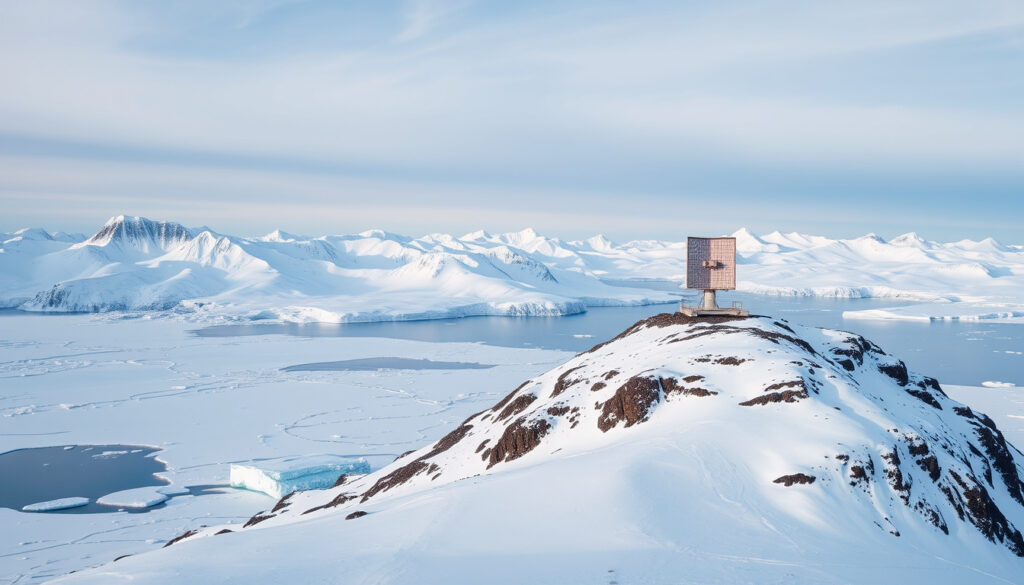
Why Does Trump Want Greenland – Strategic Reasons Explained
Donald Trump’s expressed interest in acquiring Greenland represents one of the most unconventional territorial proposals in modern American foreign policy. The idea, which surfaced publicly in 2019 and resurfaced following the 2024 presidential election, centers on strategic military positioning, access to valuable natural resources, and concerns about growing Arctic competition from Russia and China. While the proposal was quickly rejected by both Denmark and Greenlandic authorities as “absurd,” it has prompted renewed discussion about the island’s geopolitical significance and the future of Arctic governance.
The notion of purchasing Greenland is not entirely novel in American political history. Previous administrations have considered the island’s strategic value, most notably President Harry Truman in 1946, when a $100 million offer was extended to Denmark and subsequently refused. Trump’s 2019 proposal, however, arrived at a moment of intensifying Arctic competition, shifting climate conditions, and increasing global demand for rare earth minerals essential to modern technology. Understanding why Greenland has captured American attention requires examining the island’s military, economic, and geopolitical attributes.
This article provides a comprehensive examination of Trump’s stated motivations, the historical context of American interest in Greenland, international reactions, and the practical feasibility of any such acquisition.
Why Did Trump Want to Buy Greenland?
The rationale behind Trump’s Greenland interest spans multiple strategic dimensions, each reflecting broader American foreign policy concerns in the Arctic region. According to reporting by TIME magazine and other sources, administration officials identified several core justifications for pursuing the acquisition, ranging from overt military considerations to more nuanced economic resource assessments.
- Trump framed the proposal as a “large real estate deal,” though advisors emphasized national security dimensions
- Internal discussions reportedly began as early as 2017, predating the public announcement by nearly two years
- Thule Air Base, operating under a 1951 defense treaty, already provides significant American presence on the island
- Rare earth minerals, including nickel, cobalt, and uranium, have been cited as potential economic incentives
- Melting Arctic ice has increased access to previously unreachable resources and shipping routes
- Russia and China have expanded their Arctic activities, raising concerns about Western influence in the region
- The proposal generated immediate diplomatic tensions with Denmark, a NATO ally
| Fact | Details | Source Type |
|---|---|---|
| Initial Proposal Period | August 2019 | White House |
| Denmark PM Response | “Absurd” – Mette Frederiksen | Official Statement |
| Greenland Population | Approximately 56,000 | Census Data |
| Primary U.S. Base | Thule Air Base (Pituffik) | Department of Defense |
| Treaty Framework | 1951 Defense Agreement | International Agreement |
| 1946 Offer Amount | $100 million (Truman) | Historical Record |
| Strategic Chokepoint | GIUK Gap (Greenland-Iceland-UK) | Military Analysis |
| Ice Coverage | Approximately 80% | Climate Data |
Military and Strategic Considerations
The most frequently cited justification for American interest in Greenland involves military positioning within the Arctic region. Thule Air Base, located at the northwestern tip of Greenland, has operated under a 1951 defense treaty with Denmark, granting the United States rights to construct and maintain military facilities. The base serves as a critical surveillance point, particularly for monitoring the GIUK Gap—a strategic maritime corridor connecting the Greenland, Iceland, and United Kingdom maritime zones that represents a vital chokepoint for North Atlantic traffic.
Defense analysts note that Russia’s Northern Fleet represents the world’s largest ice-capable naval force, and Russian military activities in the Arctic have increased substantially over the past decade. Similarly, China’s growing interest in Arctic shipping routes and resource extraction has prompted concerns about Western competitive positioning. Trump administration officials reportedly argued that direct territorial control would provide superior monitoring capabilities compared to existing treaty arrangements, though military experts have questioned whether full acquisition is necessary given current access provisions.
Thule Air Base monitors Arctic activities including the GIUK Gap chokepoint, which serves as a critical surveillance location for tracking naval movements across the North Atlantic.
Resource Potential and Economic Interests
Beneath Greenland’s predominantly ice-covered surface lies a wealth of untapped mineral resources that have attracted attention from international mining interests and geopolitical strategists alike. The retreating ice sheet, accelerated by climate change, has increasingly exposed deposits containing rare earth minerals, uranium, nickel, cobalt, and potential oil reserves—materials essential for modern technology, electric vehicles, and defense applications.
During discussions with advisors and geological experts, acquisition proponents highlighted these resources as significant economic incentives. National Security Advisor Mike Waltz and other officials emphasized the strategic value of securing rare earth supplies independent of Chinese dominance in that market. However, Trump’s public statements sometimes downplayed the resource angle, preferring to characterize the proposal in terms of broader strategic positioning rather than direct commodity acquisition.
What Resources and Strategic Value Does Greenland Offer?
Greenland’s value extends beyond any single resource category, encompassing a combination of geographic positioning, mineral wealth, and strategic access that makes it increasingly significant in global competition for Arctic resources and influence. The island’s approximately 56,000 inhabitants occupy a territory roughly three times the size of Texas, placing it at the center of emerging Arctic shipping lanes and potential resource extraction zones.
The resource potential beneath Greenland’s surface includes significant deposits of rare earth elements critical for semiconductor manufacturing, clean energy technology, and defense systems. Uranium deposits in southern Greenland have attracted mining interest, while nickel and cobalt reserves could support electric vehicle production and battery manufacturing supply chains. Oil exploration in offshore waters has also been considered, though environmental concerns and price volatility have tempered commercial enthusiasm.
The retreating ice sheet has exposed approximately 20% of Greenland’s landmass previously covered by permanent ice, opening new areas for geological surveys and potential resource extraction that were inaccessible for decades.
Geographic and Shipping Importance
The Northwest Passage and potential trans-Arctic shipping routes increasingly factor into strategic calculations as ice continues to recede. Greenland’s position astride these potential routes provides whoever controls or influences the island with significant leverage over future Arctic commerce. The island’s proximity to both North American and European landmasses creates unique positioning for air, sea, and missile defense systems.
Climate change’s impact on Arctic accessibility has created an ironic dynamic: the very warming that makes Greenland more accessible and valuable is driven by conditions that earlier administrations might have viewed as reducing the island’s strategic urgency. Trump’s renewed interest following the 2024 election explicitly acknowledged climate-driven changes, with advisors noting that melting ice has fundamentally altered the strategic calculus for Arctic territories.
Trump’s Proposal: Timeline and Key Statements
The public emergence of Trump’s Greenland interest followed extensive internal deliberations and discreet diplomatic contacts that had been underway for nearly two years. Understanding the sequence of events helps contextualize how a seemingly impulsive announcement actually reflected prolonged internal discussions about American Arctic strategy.
- 1946: President Harry Truman offered Denmark $100 million for Greenland; the offer was refused by Copenhagen.
- 2017: Internal discussions within the Trump administration reportedly began regarding Greenland’s strategic value, partly inspired by advisor Ron Lauder.
- August 15, 2019: Trump confirmed interest in a statement, with National Security Advisor John Bolton tasked to study the proposal.
- August 18, 2019: Public tweet and television interview affirmed Greenland ownership as “strategically nice” for the United States.
- August 18-20, 2019: Danish Prime Minister Mette Frederiksen publicly rejected the proposal as “absurd” during a visit to Greenland.
- September 2019: Trump canceled a planned state visit to Denmark in apparent response to the rejection.
- December 22, 2024: President-elect Trump declared U.S. control of Greenland “essential for national security and global freedom.”
- 2025: Second-term administration renewed threats of annexation, including cash offers of $10,000-$15,000 per Greenlander, while declining to rule out military action.
Official Statements and Public Communications
Trump’s public statements on Greenland evolved from tentative interest to assertive claims of necessity over the period spanning 2019 to 2025. In August 2019, Trump characterized the proposal as a “large real estate deal” that would benefit both nations, suggesting terms that Denmark might find difficult to refuse. The framing emphasized mutual benefit rather than unilateral acquisition, though critics noted the power asymmetry inherent in such negotiations between the world’s largest economy and a small autonomous territory.
By December 2024, following his electoral victory, Trump’s language had shifted considerably. Statements on Truth Social and in public remarks emphasized what administration officials termed “absolute necessity” for American control, framing Greenland acquisition as essential to national security rather than economic opportunity. The rhetoric included references to Russian and Chinese activities in the Arctic, suggesting that existing treaty arrangements were insufficient to address emerging threats.
Denmark and Greenland’s Response to the Proposal
The reaction from both Copenhagen and Nuuk to Trump’s 2019 proposal was swift, emphatic, and uniformly negative. Danish Prime Minister Mette Frederiksen, visiting Greenland at the time of Trump’s public statements, declared the proposal “absurd” and reinforced that Greenland was “not for sale.” Her statement echoed verbatim the position held by successive Danish governments regarding the autonomous territory.
Greenlandic authorities proved equally definitive in their rejection. Premier Múte Egede, who would reiterate the position again in 2024, emphasized Greenland’s trajectory toward greater self-determination and eventual independence. Public opinion on the island strongly favored remaining outside direct American control, though some nuance existed regarding desired levels of American investment and diplomatic presence.
Diplomatic Repercussions
Trump’s cancellation of his planned September 2019 state visit to Denmark created an immediate diplomatic chill between the allies. The visit, which had been intended to strengthen bilateral relations, became instead a point of contention that required careful diplomatic repair. Secretary of State Antony Blinken and other officials subsequently worked to reassure Danish counterparts of American commitment to the alliance, though the episode revealed underlying tensions regarding burden-sharing and Arctic priorities.
Following the 2024 election, Secretary of State Marco Rubio was tasked with engaging Danish counterparts through diplomatic channels, though administration officials simultaneously continued rhetoric that Danish and Greenlandic leaders found troubling. Envoys reportedly urged the United States to moderate its approach, though the effectiveness of such interventions remained unclear as of early 2025.
Despite the tensions generated by acquisition discussions, U.S.-Denmark relations have continued through existing treaty frameworks. American investment in Greenland reached $12.1 million in 2019, and the reopening of a U.S. consulate in Nuuk reflected continued interest in cultivating the relationship regardless of acquisition prospects.
Is Buying Greenland Feasible Today?
The practical feasibility of the United States purchasing Greenland remains extremely low, despite ongoing rhetorical interest from the Trump administration. Multiple legal, political, and practical barriers stand between any proposal and actual implementation, leading most international law experts and political analysts to conclude that acquisition is unlikely regardless of American pressure.
Legal and Political Obstacles
Greenland’s status as an autonomous territory within the Kingdom of Denmark provides significant legal protections against unilateral transfer. The Greenlandic people have expressed consistent opposition to any form of American acquisition, with public statements from elected officials binding future governments to rejection of purchase offers. Furthermore, international law regarding territorial integrity and self-determination creates diplomatic obstacles that no amount of American pressure could easily overcome. For parents seeking a versatile stroller, our Baby Jogger City Select review offers an in-depth look at $Baby Jogger City Select review.
Denmark and the European Union have made clear their opposition to any transfer of Greenlandic sovereignty without the explicit consent of the Greenlandic people. The 1951 defense treaty provides the United States with substantial military access and operational capability, raising questions among analysts about whether full territorial acquisition would significantly enhance American strategic position beyond existing arrangements.
What Is Established
- Greenland’s strategic location is genuinely significant for Arctic competition
- The 1951 treaty provides substantial U.S. military access
- Rare earth and mineral resources exist beneath Greenland’s surface
- Both Denmark and Greenland have rejected acquisition proposals
- Climate change is increasing Arctic accessibility and competition
- U.S. investment in Greenland has grown in recent years
What Remains Unclear
- The ultimate scope of Trump’s renewed 2024-2025 proposals
- Whether economic offers represent genuine negotiating positions
- The willingness of Greenlandic public opinion to consider alternatives
- How far the administration might push without congressional authorization
- The credibility of military force threats amid allied opposition
- Whether recent rhetoric represents policy or negotiating tactics
Arctic Geopolitics and Strategic Competition
The broader context for American interest in Greenland involves intensifying competition among Arctic nations and growing attention from non-Arctic powers seeking influence in the region. Russia, which dominates the Arctic coastline, has expanded military installations, submarine activity, and resource extraction operations throughout its northern territories. Russian officials have asserted significant territorial claims and invested heavily in Arctic infrastructure, creating a strategic environment where American influence appears constrained by comparison.
China, despite lacking Arctic coastlines, has positioned itself as a “near-Arctic state” and pursued partnerships, research agreements, and investment opportunities across the region. Chinese firms have expressed interest in Greenlandic mining projects, though limited success in securing major concessions. The Belt and Road Initiative’s potential Arctic extensions have raised concerns among NATO allies about Chinese influence creeping toward North Atlantic approaches.
American military analysts note that existing treaty arrangements with Denmark provide substantial capability for addressing both Russian and Chinese activities in the region. Thule Air Base’s northernmost location offers unique surveillance opportunities, while the GIUK Gap remains a critical chokepoint for monitoring maritime traffic. Some experts argue that enhanced cooperation within existing frameworks could address American concerns without the complications inherent in territorial acquisition.
Sources and Key Quotes
The following statements represent the most significant public positions articulated by principal actors regarding the Greenland proposal. These quotes illustrate the divergent perspectives that have characterized the debate since 2019.
“It’s not just about real estate… it’s about security. We have a very important base there, and we’re going to keep it.”
— Donald Trump, August 2019
“The whole concept that this could be bought or sold is ridiculous. Greenland is not for sale.”
— Mette Frederiksen, Danish Prime Minister, August 2019
“The United States control of Greenland is an absolute necessity for the sake of national security and global freedom.”
— Donald Trump, December 2024 (Truth Social)
The balance of credible reporting suggests that strategic analysts within the administration have genuine concerns about Arctic competition, while the political framing of the issue serves multiple purposes including domestic political positioning and negotiating leverage. The Proposed United States acquisition of Greenland remains one of the more unusual episodes in recent American foreign policy history.
Summary
Trump’s interest in Greenland reflects genuine strategic calculations about Arctic competition, resource access, and military positioning that have motivated American attention to the island for over a century. The proposal’s revival following the 2024 election demonstrates continued internal administration interest, even as practical obstacles make actual acquisition extremely unlikely. Denmark and Greenland have maintained consistent rejection of any purchase proposal, while existing treaty frameworks continue to provide substantial American military access regardless of territorial status.
The episode illuminates broader tensions in Arctic governance as climate change reshapes the strategic landscape. Rising powers Russia and China have expanded their activities in the region, prompting reassessments among Western allies about existing arrangements and future needs. Whether Trump’s Greenland rhetoric represents serious policy exploration, negotiating tactics, or primarily domestic political performance remains debated among foreign policy observers. For more analysis on this developing situation, see comprehensive coverage from TIME magazine and other authoritative sources.
Frequently Asked Questions
What is the current status of US-Greenland relations?
Despite acquisition rhetoric, the United States maintains relations with Greenland through existing treaties and diplomatic channels. A U.S. consulate reopened in Nuuk in 2019, and American investment in the territory continues. Military cooperation operates through Thule Air Base under the 1951 defense agreement with Denmark.
Why does Trump see Greenland as a real estate deal?
Trump has described Greenland acquisition as analogous to a “large real estate deal” that would benefit all parties. This framing emphasizes the transactional nature of the proposal while downplaying more sensitive military and security dimensions that advisors have emphasized in private discussions.
Is Greenland for sale?
Both Danish and Greenlandic authorities have consistently stated that Greenland is not for sale. This position has been maintained across multiple governments and public statements, with officials emphasizing Greenland’s trajectory toward greater self-determination rather than transfer to another sovereign power.
Has the US tried to buy Greenland before?
Yes. In 1946, President Harry Truman offered Denmark $100 million for Greenland, equivalent to billions in today’s currency. The offer was refused. The U.S. has maintained strategic interest in the island since the 19th century, particularly following World War II when Thule Air Base was established.
What resources does Greenland have that Trump mentioned?
Greenland contains significant deposits of rare earth minerals, uranium, nickel, cobalt, and potential oil reserves. These resources have attracted international mining interest, though extraction challenges and environmental concerns have limited commercial development. Retreat of the ice sheet has exposed additional areas for potential exploration.
Could the US actually purchase Greenland?
Most legal and political analysts consider full acquisition extremely unlikely. Greenland’s autonomy within Denmark, consistent opposition from Greenlandic authorities, international law regarding self-determination, and allied opposition create formidable obstacles. The 1951 treaty already provides substantial military access, raising questions about whether full ownership would significantly enhance American capabilities.
More related posts
 Chicken Slow Cooker Recipe: Juicy, Safe & Easy
 Star of the Seas: Size, Features, Itinerary & Family Tips
 Man City vs Wolves: How to Watch, Team News & History
 Bring Her Back Movie: Is It Scary? Plot & Grapefruit Meaning
 Miami Heat vs Milwaukee Bucks Match Player Stats | March 12, 2026
 AA Insurance Phone Number: Ireland Customer Service Contact
 Cast of Road House: 1989 Original vs 2024 Remake
 All Blacks vs France Live Stream Free: Watch Online
