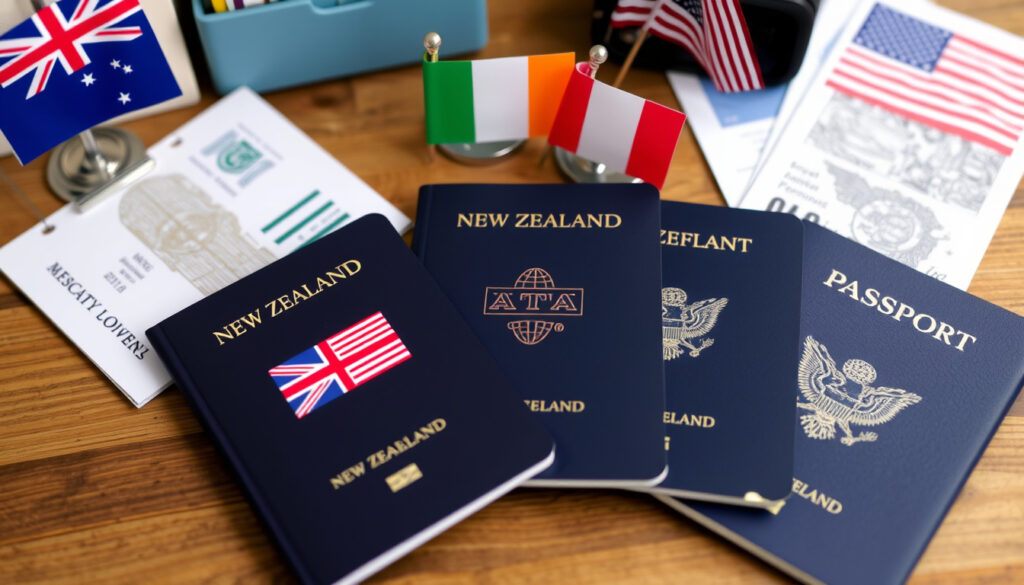
Work to Residence Visa: NZ, Ireland, US Pathways Compared
Thinking about moving abroad for work often leads to the same question: can this job eventually lead to a permanent home? Across New Zealand, Ireland, and the United States, distinct work-to-residence pathways offer different answers, each with its own trade-offs in time, cost, and eligibility. Whether you’re eyeing New Zealand’s Green List or Ireland’s long-term residency rules, understanding how these systems compare can save you years of uncertainty.
New Zealand Work to Residence Visa work requirement: 24 months with an accredited employer on Green List Tier 2 ·
Ireland long-term residency eligibility: 5 years of continuous employment permit ·
EB-3 visa job offer requirement: Yes, a full-time job offer is mandatory
Quick snapshot
- New Zealand Work to Residence Visa requires 24 months’ work with an accredited employer on Green List Tier 2 (New Zealand Government)
- Ireland grants long-term residency after 5 years of holding a valid employment permit (Wise (financial services))
- US EB-3 visa requires a full-time permanent job offer (Boundless Immigration)
- Exact processing times may vary by individual case and application volume
- Future fee changes are subject to government announcements
- NZ resident visa applications typically 12–16 months (Immigration New Zealand)
- Ireland work permit processing 8–12 weeks (Wise)
- US EB-3 processing variable 6–18 months (Immigration New Zealand)
- Check each country’s official immigration site for policy updates
- Prepare job offer documentation early to avoid delays
The table below distills the core differences in work requirements, job offer rules, processing times, fees, and visa types across the three countries.
| Metric | New Zealand | Ireland | United States |
|---|---|---|---|
| Minimum work required for residence | 24 months (NZ Govt) | 5 years | No fixed period (must have job offer) |
| Job offer needed? | Yes, accredited employer | Yes, employment permit required | Yes, permanent full-time |
| Processing time | 12–16 months (INZ) | 8–12 weeks (work permit) | 6–18 months |
| Application fee | NZ$4,300 (subject to change) | €1,200–€1,500 approx | $2,500–$10,000 (Boundless) |
| Visa type | Work to Residence (temporary → residence) | Employment permit → long-term residency | EB-3 (immigrant visa) |
What is a Work to Residence Visa?
What is the New Zealand Work to Residence Visa?
The New Zealand Work to Residence Visa is a temporary work visa that offers a pathway to residence after 24 months of work in a Green List Tier 2 role with an accredited employer. According to the New Zealand Government, the Green List includes both “Straight to Residence” and “Work to Residence” pathways — the latter requires the two-year work period before you can apply for a resident visa.
The NZ approach means you commit two years to a specific employer before residency is even considered — a trade-off for a faster overall timeline than some general skilled migration routes.
How does long-term residency work in Ireland?
Ireland does not have a single “work to residence visa.” Instead, non-EEA nationals must first secure an employment permit and a long-stay employment visa. As explained by Wise (financial services), after five years of continuous employment permit status, you can apply for long-term residency. The 50:50 rule requires that employers ensure at least 50% of staff are EEA nationals for certain permits (Citizens Information Ireland).
What is the EB-3 visa in the United States?
The EB-3 visa is an employment-based immigrant visa for skilled, professional, or unskilled workers. According to Boundless Immigration (immigration service provider), a full-time permanent job offer and an approved labor certification from the US Department of Labor are mandatory. Unlike the NZ or Irish pathways, the EB-3 leads directly to a green card rather than a temporary permit followed by residency.
While the EB-3 is a direct green-card visa, the labor certification process is lengthy and employer-dependent — any change in job status can derail the application.
How long does a work to Residence Visa take?
How much does a work to Residence Visa cost?
For New Zealand, the application fee for a Work to Residence Visa is NZ$4,300 (subject to change). However, the Green List residence fee was quoted at NZ$6,450 for 2024-2025 by New Zealand Shores (immigration advisor). In Ireland, work permit fees range from €1,200 to €1,500 depending on the permit type (Department of Enterprise, Trade and Employment). EB-3 costs typically range from $2,500 to $10,000 including legal and government fees.
Three countries, three cost brackets: NZ sits mid-range, Ireland is the cheapest, and the EB-3 is the most variable.
How long is a work to Residence Visa valid?
The New Zealand Work to Residence Visa is valid for the duration of your employment period until a resident visa decision is made. According to Immigration New Zealand, the processing time for a resident visa is typically 12–16 months. The temporary visa allows you to stay in NZ while the residency application is processed (NZ Immigration Partners).
What is the 50 50 rule in Ireland?
Is €70,000 a good salary in Ireland?
€70,000 is well above the average salary in Ireland (approx. €48,000) and indicates a comfortable lifestyle. This matters for work permit eligibility: certain employment permits have salary thresholds (e.g., for the Critical Skills Employment Permit, a minimum of €32,000 applies). The Citizens Information Ireland (official advisory service) confirms that higher salaries can fast-track permit approval.
What is the 11 hour rule in Ireland?
The 11-hour rule mandates a daily rest period of 11 consecutive hours for most employees in Ireland. It is part of the Organisation of Working Time Act and applies to anyone on an employment permit. Citizens Information Ireland notes that non-compliance can affect an employer’s ability to sponsor permits.
Can you get Ireland PR in 2 years?
No. Ireland’s long-term residency (equivalent to permanent residence) requires 5 years of continuous employment permit, not 2. According to the Irish Naturalisation and Immigration Service, after 5 years you can apply for long-term residency; after 5 years of residency you can apply for naturalisation. Two years is only possible through the EU Treaty Rights route or refugee status, not through a standard work permit.
The implication: if you’re eyeing Ireland for a faster PR route, NZ’s 2-year work-to-residence pathway is actually quicker on paper — though both require patience with processing times.
Who qualifies for an EB-3 visa?
Can I get an EB-3 visa without a job offer?
No. A job offer is mandatory for EB-3; you cannot self-petition. Boundless Immigration (immigration service provider) states that the EB-3 requires a full-time, permanent job offer and an approved labor certification from the US Department of Labor. This makes the EB-3 one of the most employer-dependent visa categories.
How much does EB-3 cost?
EB-3 costs typically range from $2,500 to $10,000 including legal fees and government filing fees. The US Citizenship and Immigration Services (USCIS) filing fee for Form I-140 is $700, plus labor certification costs ($1,000–$2,000) and optional attorney fees. USCIS (government immigration agency) provides the official fee schedule.
Which is better, EB-2 or EB-3?
EB-2 is reserved for advanced degree professionals or those with exceptional ability, while EB-3 is open to all workers meeting skill requirements. According to Boundless Immigration, EB-2 often has shorter wait times, but EB-3 has lower eligibility standards. For someone with only a bachelor’s degree and relevant experience, EB-3 may be the only choice.
EB-2 gives you a shorter line but a narrower gate; EB-3 welcomes more applicants but often longer backlogs. The winner depends on your education level and timeline.
What are the Ireland work visa requirements?
How to apply for Ireland work visa online?
Ireland work visa applications are submitted online through the Irish Naturalisation and Immigration Service (INIS) website. You first need an employment permit from the Department of Enterprise, Trade and Employment, then apply for a long-stay employment visa. Applications can be made up to 3 months before travel, as noted by Wise (financial services).
How long does work permit Ireland processing take?
Work permit processing time is typically 8–12 weeks for most application types. The Department of Enterprise, Trade and Employment processes Employment Permits, while visa applications are handled by INIS. Combined, the overall timeline from job offer to arrival is usually 3–5 months.
What is the Ireland work permit agency?
The agency responsible for work permits in Ireland is the Department of Enterprise, Trade and Employment. For visa applications, the Irish Naturalisation and Immigration Service (INIS) handles the process. Citizens Information Ireland (official advisory service) provides plain-language guidance on which permit type fits your situation.
What this means: Ireland’s two-step system (permit + visa) adds bureaucracy but also creates a clear, if slow, path to long-term residency.
“Under New Zealand’s Green List work-to-residence pathway, applicants in Tier 2 roles can apply for residence after 24 months of work.”
“Ireland generally requires non-EEA nationals to secure an employment offer and an Employment Permit before applying for a long-stay employment visa.”
— Wise (financial services)
“EB-3 eligibility requires a full-time permanent job offer and a labor certification approved by the US Department of Labor.”
— Boundless Immigration (immigration service provider)
Confirmed facts
- New Zealand Work to Residence Visa requires 24 months of Green List Tier 2 employment
- Ireland long-term residency requires 5 years of continuous employment permit
- EB-3 visa requires a job offer and labor certification
What’s unclear
- Exact processing times vary by individual case
- Future fee changes are subject to government announcements
For anyone weighing a work-to-residence move, the choice between New Zealand, Ireland, and the US boils down to your timeline and risk tolerance. New Zealand offers the fastest residence path (2 years of work), but ties you to an accredited employer and a specific role. Ireland demands a longer commitment (5 years) but provides a stable, transparent process with clear rules like the 50:50 and 11-hour protections. The EB-3 skips the temporary phase and leads directly to a green card, but places heavy dependence on employer sponsorship and a complex labor certification process. For the average skilled worker, the NZ Work to Residence Visa is the most generous on paper — if you can find an accredited employer. For those valuing predictability, Ireland’s system, though slower, offers fewer surprises. The US route best suits applicants with a robust job offer and patience for bureaucratic delays.
For those exploring work-to-residence options, New Zealands Green List offers a fast-track pathway for skilled migrants in high-demand occupations.
Frequently asked questions
What is the difference between a Work to Residence Visa and a resident visa?
A Work to Residence Visa is a temporary work visa that allows you to work in a country and later apply for a resident visa after meeting specific conditions (e.g., time worked, employer accreditation). A resident visa gives you permanent residence rights immediately. The NZ Work to Residence Visa is a stepping stone, not a residence permit itself (Immigration New Zealand).
Can an EB-3 visa lead to a green card?
Yes, the EB-3 visa is an immigrant visa that leads directly to a green card (Lawful Permanent Residence). Once approved and you enter the US, you receive a green card immediately (USCIS).
Is it possible to switch from a work permit to long-term residency in Ireland?
Yes, after 5 years of continuous employment permit status, you can apply for long-term residency in Ireland. You must have held a valid permit without gaps and met all conditions (INIS).
Does the 50:50 rule apply to all employers in Ireland?
No, the 50:50 rule applies mainly to employers applying for certain employment permits (e.g., General Employment Permits). It does not apply to Critical Skills Employment Permits or Start-up Entrepreneur Permits (Citizens Information Ireland).
How long can I stay in New Zealand on a Work to Residence Visa?
You can stay for the duration of your employment period until a resident visa decision is made. Typically 12–16 months processing after applying for residence (Immigration New Zealand).
Are there any language requirements for a work to residence visa?
For New Zealand, there is no formal language requirement for the Work to Residence Visa, but the Skilled Migrant Category and other residence pathways often require minimum English proficiency (e.g., IELTS 6.5). Ireland has no official language requirement for work permits, but the job may expect English fluency. The US EB-3 has no mandatory English requirement, though practical communication is necessary.
What happens if my job ends while on a Work to Residence Visa?
In New Zealand, if your employment ends before you have completed 24 months, you must find another accredited employer role to continue or you may lose the pathway to residence. In Ireland, if your work permit ends, you have a 6-month grace period to find a new permit. For EB-3, you can change employers after receiving the green card but not before (unless you file a new petition).
More related posts
 Singapore Airlines Manage Booking: Seats, Check-In, Fees
 Weather in My Location: Live, Hourly, Tomorrow, Warnings
 Volcanoes in New Zealand: Active, Famous, Supervolcano
 Code Cracker Solver Missing Letters Free – Top Online Tools Guide
 Compare House Insurance NZ: Top Sites & Trusted Providers
 Find an ANZ Branch Near Me: Locations, Hours & Appointments
 Five Letter Word Finder: How to Find Words Quickly
 Apple Watch Charger NZ: Prices, Stores & Alternatives
