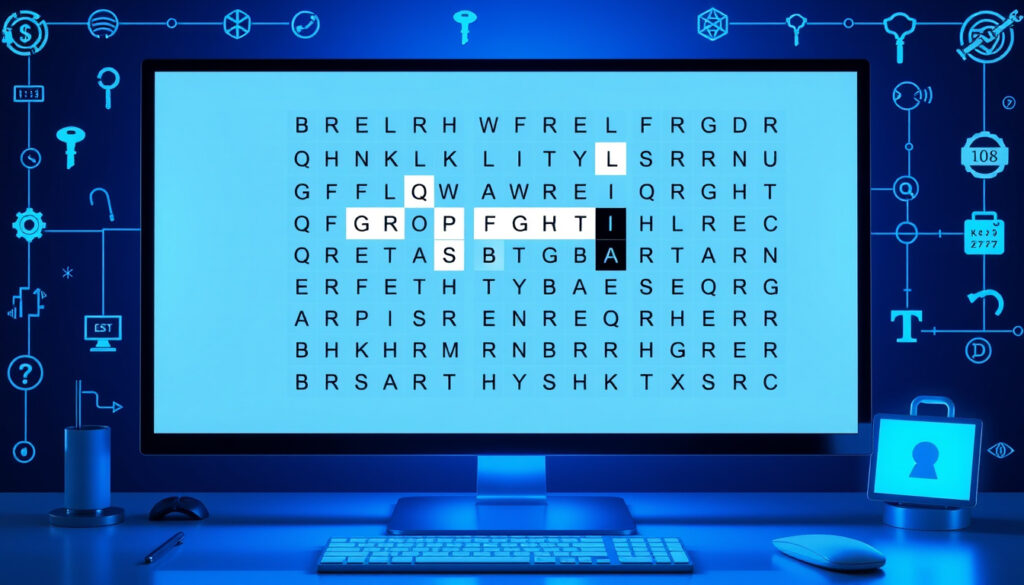
Code Cracker Solver Missing Letters Free – Top Online Tools Guide
Code cracker puzzles have challenged puzzle enthusiasts for decades, presenting encoded messages where each letter is replaced by a number. Solving these puzzles manually can be time-consuming, but free online tools now offer instant assistance for finding missing letters without requiring downloads or registrations. These web-based solvers range from simple pattern matchers to sophisticated dictionary-powered systems capable of handling complex cipher variations.
The growing availability of free code cracker solvers reflects the broader digital transformation of traditional puzzle-solving. Whether tackling newspaper codewords, crossword clues with unknown letters, or encoded messages requiring cryptographic techniques, internet-based tools provide accessible solutions for puzzlers of all skill levels. This guide examines the most effective free options available, their key features, and practical considerations for getting accurate results.
What Features Do Free Code Cracker Solvers Offer?
Free online code cracker tools generally fall into three categories: pattern-based solvers, dictionary-powered systems, and specialized cipher breakers. Understanding the strengths of each type helps users select the most appropriate tool for their specific puzzle challenge.
Enter known letters in their correct positions using wildcard symbols to find matching words from extensive databases.
Multiple vocabulary levels from everyday words to rare, archaic, and specialist terms ensure comprehensive coverage.
Support for crosswords, codewords, anagrams, and various cipher encoding schemes in a single platform.
Browser-based functionality works across desktop computers, tablets, and smartphones without installation.
- Instant results: Most pattern-based solvers return matching words within seconds of entering known letters and word lengths.
- Extensive databases: Crossword Solver maintains over 350,000 words across three dictionary tiers updated daily.
- Multiple search modes: Crossword Genius offers pattern matching, anagram solving, and Scrabble scoring within a single interface.
- Wildcard flexibility: Tools like Word Solver: Missing Letters use “?” symbols to represent unknown letters in any position.
- Filter capabilities: Advanced apps include contains/does not contain search to narrow results by specific letter sequences.
- Specialized ciphers: CacheSleuth Multi Decoder handles 255 different code and cipher variations including Vigenère ciphers.
- No registration required: All core features remain accessible without creating user accounts.
| Fact | Details |
|---|---|
| Puzzle Types | Code crackers, crosswords, codewords, anagrams, ciphers |
| Access Model | Free with no mandatory registration |
| Input Methods | Manual letter entry, wildcard patterns, image upload |
| Dictionary Coverage | 350,000+ words across multiple tiers |
| Mobile Availability | Dedicated apps for iOS and Android |
| Specialized Features | Scrabble scoring, anagram generation, cipher breaking |
| Language Support | Primarily English, with multi-language cipher analysis |
| Installation | None required for browser-based tools |
How Do Pattern-Based and Dictionary Solvers Work?
Pattern-based solvers represent the most straightforward approach to cracking codes with missing letters. Users input known letters in their correct positions while using symbols like question marks or underscores to represent unknown characters. The system then searches its database for words matching the specified pattern and length, returning all valid matches for the user to evaluate.
The interface typically allows users to enter known letters in their exact positions and specify word length before generating matching results. The simplicity of this approach makes it accessible to beginners while still delivering practical utility for experienced puzzlers working through challenging grids.
Dictionary-powered solvers add another dimension by offering multiple vocabulary tiers. These platforms provide three distinct dictionary levels: Pocket for everyday vocabulary, Original for standard British English typically used in newspaper puzzles, and Big for rare, archaic, and specialist terms that may appear in themed or academic puzzles.
When encountering uncommon vocabulary in specialized puzzles, switching to a broader dictionary tier often reveals solutions that basic dictionaries miss. However, this expanded search may return longer result lists requiring more manual filtering.
Understanding Dictionary Tier Selection
Selecting the appropriate dictionary tier significantly impacts solver effectiveness. Casual puzzles typically rely on common vocabulary, making the Pocket or Original tiers sufficient for most situations. Specialized puzzles from academic publications, themed collections, or puzzles using archaic language may require the comprehensive Big tier to find valid solutions.
The tier selection process is iterative. Users often begin with the standard dictionary and progressively expand to broader tiers when initial searches return no viable matches. This approach balances result relevance against the time required to review potential solutions.
Anagram and Letter Combination Features
Beyond simple pattern matching, many solvers incorporate anagram capabilities that rearrange letter combinations to reveal meaningful words. Word Plays includes Scrabble scoring with its anagram results, helping users identify not only valid words but strategically valuable options for word-based games.
These combination features prove particularly useful when solving code crackers where multiple letters remain unknown. By entering all visible letters from a coded word, the anagram function generates every possible arrangement, narrowing the field of candidates for final verification.
Which Specialized Cipher Tools Handle Complex Encodings?
Standard code cracker solvers handle straightforward letter-for-number substitutions effectively, but encoded messages requiring cryptographic analysis demand more sophisticated tools. Specialized cipher breakers employ frequency analysis, pattern recognition, and algorithmic approaches to crack encodings that simple dictionary lookups cannot resolve.
CacheSleuth Multi Decoder represents the advanced end of available options, supporting 255 distinct code and cipher variations within a single platform. This comprehensive approach eliminates the need for users to identify their specific encoding type before selecting an appropriate tool.
Vigenère Cipher Solving Capabilities
The Vigenère cipher presents a particular challenge due to its polyalphabetic nature, where a single letter may represent multiple different plaintext characters depending on its position within a keyword. The Multi Decoder’s Vigenère Automatic Solver addresses this complexity by analyzing letter frequencies across the entire encoded text and attempting to determine the keyword length and content.
Effectiveness increases significantly with longer text samples. The solver’s frequency analysis becomes more reliable as more characters provide statistical patterns to analyze, making this tool particularly suited for encoded messages of substantial length rather than brief codewords.
Educational Resources and Learning Tools
Platforms like dCode combine practical solving capabilities with educational resources explaining cryptographic principles. These tools serve dual purposes: helping users crack specific codes while simultaneously teaching the underlying mathematical and linguistic concepts that make those codes work.
The educational approach proves valuable for puzzlers seeking to improve their manual solving skills alongside using automated tools. Understanding why certain patterns emerge and how frequency analysis operates transforms tool use from simple shortcut-taking into informed puzzle-solving practice.
Vigenère cipher solving performs more reliably with longer texts due to the statistical nature of letter frequency analysis. Brief codewords may return less definitive results requiring additional manual verification.
What Mobile Options Exist for Solving Puzzles on the Go?
Mobile applications extend puzzle-solving capabilities beyond desktop computers, enabling users to tackle code crackers during commutes, breaks, or any situation where a computer isn’t convenient. App Store and Google Play offerings provide dedicated mobile interfaces optimized for touch interaction and smaller screens.
Word Solver: Missing Letters exemplifies mobile-first puzzle solving, available on both major mobile platforms and designed specifically for handheld use. The application uses wildcard searching where users input known letters and place “?” symbols in unknown positions, mirroring the functionality of web-based tools in a portable format.
Mobile-Specific Features
Mobile solvers often incorporate features tailored to on-device use. The Word Solver app includes contains/does not contain search functionality that finds words including or excluding specific letters or sequences. This capability proves particularly useful when working with partial information, allowing users to filter results based on letters known to appear or not appear within a word.
Touch interfaces enable rapid iteration through potential solutions. Users can quickly modify inputs, test alternative letter placements, and explore related words without the friction of keyboard-only interactions common in desktop browser applications.
Cross-Platform Accessibility
Most mobile solvers synchronize functionality across platforms when available on both iOS and Android. Word Solver maintains consistent features across its App Store and Google Play versions, allowing users to switch devices without relearning the interface or losing access to specific capabilities.
Understanding Accuracy Factors and Solver Limitations
Solver accuracy correlates directly with the completeness of information provided. When users enter more known letters in correct positions, the system returns progressively narrower result sets that more likely contain the intended solution. Conversely, minimal input data produces broader matches requiring greater manual evaluation.
Dictionary coverage limitations affect results for specialized vocabulary. Puzzles containing uncommon words from specialized publications, themed collections, or regional dialects may require switching to broader dictionary tiers. This expanded search potentially returns longer result lists demanding additional filtering effort.
No free solver can guarantee 100% accuracy across all puzzle types. Results depend on database comprehensiveness, input data quality, and the specific encoding scheme used in each puzzle. Users should verify solutions against puzzle context rather than accepting returned results automatically.
| Established Information | Information Requiring Verification |
|---|---|
| Free pattern-based solvers exist and function without registration | Specific accuracy percentages for each tool |
| Dictionary tiers vary in vocabulary comprehensiveness | Complete list of all supported cipher variations |
| Mobile apps provide equivalent core functionality to web versions | Detailed user satisfaction ratings |
| Longer encoded texts produce better frequency analysis results | Specific performance benchmarks across puzzle types |
The Evolution of Code Cracker Solving Methods
Code cracker solving has progressed through distinct phases, from entirely manual approaches requiring linguistic intuition and patient deduction to increasingly sophisticated algorithmic assistance. Early solvers relied on personal vocabulary, printed dictionaries, and letter frequency charts to crack simple substitution ciphers.
- : Manual solving using paper, pencils, printed dictionaries, and frequency analysis charts.
- : Early software CD-ROMs provided electronic dictionary access with pattern searching capabilities.
- : Web-based tools emerged, eliminating software installation requirements and enabling access from any internet-connected device.
- : Mobile applications brought puzzle solving to smartphones and tablets with touch-optimized interfaces.
- : Comprehensive platforms combine multiple solving modes, extensive databases, and educational resources in accessible formats.
What Should Users Know Before Relying on Free Solvers?
Free online code cracker solvers represent powerful tools that supplement rather than replace puzzle-solving skills. Understanding their capabilities and limitations helps users apply them effectively while maintaining the intellectual engagement that makes puzzles enjoyable.
These tools work best when users provide sufficient input data. Entering as many known letters as possible in their correct positions dramatically improves result relevance. Sparse input produces long lists of potential matches that require substantial manual filtering, potentially negating the time-saving benefits of automated solving.
Dictionary comprehensiveness varies significantly between platforms. Some solvers use extensive databases with hundreds of thousands of entries across multiple vocabulary tiers, while others rely on smaller collections that may miss uncommon words. Users encountering puzzles with specialized terminology should consider switching to broader dictionary tiers or alternative solvers with more comprehensive databases.
For those interested in related puzzle-solving techniques, exploring word game strategies can provide complementary skills that enhance overall puzzle proficiency.
Conclusion
Free online code cracker solvers have democratized puzzle assistance, making sophisticated solving capabilities accessible without cost or installation requirements. From straightforward pattern matching tools to comprehensive cryptographic platforms like CacheSleuth Multi Decoder, a diverse ecosystem addresses various puzzle types and complexity levels. Mobile applications extend this functionality to smartphones and tablets, enabling puzzle-solving across contexts. While accuracy depends on input completeness and database comprehensiveness, these tools effectively supplement manual solving skills when applied thoughtfully.
Frequently Asked Questions
Are free code cracker solvers completely free to use?
Yes, the core features of major platforms like Crossword Solver Quick Solve, Codeword Solver, and CacheSleuth Multi Decoder are free to use without registration. Some platforms offer premium features, but basic pattern matching and dictionary lookup remain accessible at no cost.
How do I use question marks in code cracker solvers?
Most solvers use “?” as a wildcard symbol representing any unknown letter. Enter known letters in their correct positions and replace unknown letters with “?” symbols. For example, entering “C?D?” searches for five-letter words starting with C and D in the third position.
Can these tools solve Vigenère ciphers?
Yes, specialized tools like CacheSleuth Multi Decoder include Vigenère cipher solving capabilities. The automatic solver analyzes letter frequencies to determine keyword length and content, performing better with longer encoded texts.
Do mobile apps offer the same features as web versions?
Mobile apps like Word Solver: Missing Letters provide core functionality comparable to web-based tools, including wildcard searching and letter filtering. However, specialized features like extensive cipher variations may be more comprehensive in dedicated web platforms.
Why did my search return no results?
No results typically indicate that the pattern doesn’t match any words in the solver’s dictionary, the word contains letters not in the standard alphabet, or the puzzle uses specialized vocabulary beyond the current dictionary tier. Try switching to a broader dictionary tier or verifying the pattern for input errors.
Are these tools useful for learning cryptography?
Educational platforms like dCode combine practical solving with explanations of cryptographic principles, making them valuable learning resources. Understanding the underlying frequency analysis and pattern recognition techniques improves both manual and automated solving capabilities.
How accurate are free code cracker solvers?
Accuracy depends on input completeness and dictionary coverage. More known letters produce narrower, more accurate results. Basic solvers work well for common vocabulary, while specialized puzzles may require tools with comprehensive dictionary tiers for reliable results.
More related posts
 Open BNZ Account Online: Guide for Residents & Non-Residents
 Mint Chocolate Chip Ice Cream – Origins, History and Popularity
 Things to Do in South Island – Top Adventures Hikes and Itineraries
 Idiens Sheetmetal & Roofing Ltd – Liquidation Status in New Zealand
 Cheap Cars for Sale Auckland: Best Deals Under $5,000, $2,000, $1,000
 Pak n Save Tauranga: Specials, Hours, Online Shopping & Jobs (Cameron Road)
 How to Reduce Sugar in Your Diet: Tips, Effects, and Food Choices
 How Many Hours Are in a Year? Work, Sleep & More Explained
