How to Reduce Cholesterol: Diet and Lifestyle Tips
You have probably heard that high cholesterol is bad for your heart, but figuring out what to do about it can feel like wading through conflicting advice. The truth is that a combination of diet changes, regular exercise, and lifestyle tweaks can lower your LDL by up to 15% within three to six months, according to the NHS. This article cuts through the noise to give you the evidence-backed steps, the foods that actually work, and the timeline you can expect.
Number of worst foods for cholesterol: 6 · Number of foods that help lower cholesterol: 40 · Warning signs of high cholesterol: 10 · Cholesterol level considered high: 6.3 mmol/L
Quick snapshot
- Saturated and trans fats raise LDL cholesterol (NHS (UK public health agency))
- Soluble fiber lowers LDL (PMC review (medical journal database))
- Physical activity improves cholesterol profile (Mayo Clinic (US medical center))
- Smoking cessation raises HDL (NCBI Bookshelf (medical reference))
- How dietary cholesterol from eggs affects individuals varies (PubMed review (health research database))
- Effectiveness of specific supplements like red yeast rice is not fully proven (PMC review (medical journal database))
- Whether high cholesterol can be reversed without medication in all cases (Heart UK (cholesterol charity))
- Significant LDL reduction of 5-10% possible by month 3 with consistent diet and exercise (Harvard Health Publishing (university medical publisher))
- After lifestyle changes, expect a blood test in 3-6 months to check progress (NHS (UK public health agency))
- For high-risk individuals, medication might still be needed (Mayo Clinic (US medical center))
Five key benchmarks summarise the landscape of cholesterol management.
| Label | Value |
|---|---|
| Total cholesterol goal | Below 5.0 mmol/L (ideal); 6.3 considered high |
| LDL reduction from diet | 5-15% within 3-6 months |
| Worst foods list | 6 food categories |
| Best foods list | 40 foods identified |
| Warning signs | 10 signs, often asymptomatic |
The spread between worst and best foods shows how much control your grocery cart gives you.
What are the main causes of high cholesterol?
What are the risk factors for high cholesterol?
- Diet high in saturated and trans fats raises LDL cholesterol. The NHS (NHS (UK public health agency)) names butter, lard, ghee, cream, fatty meat, and cakes as key offenders.
- Genetics can cause familial hypercholesterolemia. According to the NCBI Bookshelf (medical reference), inherited conditions prevent the liver from clearing LDL effectively.
- Obesity and lack of physical activity contribute. Exercise of at least 120 minutes per week provides the most benefit, notes the American Academy of Family Physicians (clinical guideline).
- Smoking and excessive alcohol intake increase LDL and lower HDL. The Mayo Clinic (US medical center) advises quitting smoking and limiting alcohol to 1-2 drinks per day.
The implication: multiple risk factors compound, so addressing them together yields the largest reduction.
Is 6.3 too high for cholesterol?
Yes. A total cholesterol level of 6.3 mmol/L is considered high. The NHS targets a total cholesterol below 5.0 mmol/L for the general population. At that level, your risk of heart disease increases, and your doctor will recommend lifestyle changes and possibly medication (NHS).
A 6.3 reading is a wake-up call, but it is not a crisis you cannot fix. The same lifestyle changes that reduce cholesterol also lower blood pressure and improve overall cardiovascular health.
How do I get my cholesterol down quickly?
How to reduce cholesterol in 7 days naturally?
No magic pill exists for a one-week fix. However, you can start seeing early shifts by making three changes immediately:
- Increase soluble fiber: Eat oats, apples, beans, and psyllium. A systematic review in PMC (medical journal database) found that 5-10 g/day of soluble fiber from psyllium can lower LDL by 5% to 10%.
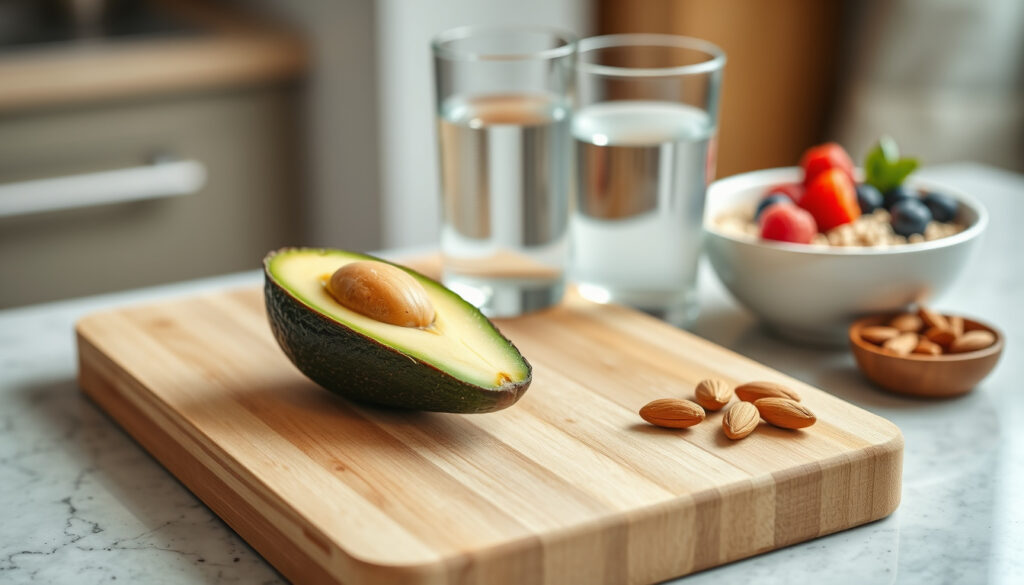
- Replace saturated fats with unsaturated fats: Use olive or rapeseed oil instead of butter, and eat nuts and avocados. The Heart UK (cholesterol charity) says swapping fats is a core first-line strategy.
- Cut out the worst offenders immediately: No fried foods, processed meats, or full-fat dairy for a week (NHS (UK public health agency)).
Even if your numbers do not change dramatically in 7 days, you will have proven to yourself that you can stick with the pattern — and that is the real foundation for long-term reduction.
What reduces cholesterol quickly naturally?
A dietary portfolio approach — combining nuts, plant sterols, soy protein, and viscous fiber — has shown faster results. At 24 weeks, the portfolio diet lowered LDL by 13% compared to 3% on a low-fat diet, reports Harvard Health Publishing (university medical publisher). This approach works by attacking LDL through multiple mechanisms simultaneously.
What are the 6 worst foods for cholesterol?
What are 40 foods that can help lower cholesterol?
The 6 worst food categories for cholesterol, as identified by the NHS (NHS (UK public health agency)), are:
- Fried foods (chips, fried chicken)
- Red meat (beef, lamb, pork, especially fatty cuts)
- Full-fat dairy (butter, cream, cheese, whole milk)
- Processed meats (sausages, bacon, salami)
- Baked goods (cakes, biscuits, pastries containing butter or palm oil)
- Excessive egg yolks (the NHS advises moderation — 1-2 eggs per day is acceptable for most people)
On the flip side, a PubMed (health research database) systematic review identified 40 foods that can lower LDL, including oats, nuts, fatty fish, olive oil, avocados, berries, beans, soy, flaxseeds, whole grains, and green tea. Avocados and berries showed moderate to large LDL-lowering effects.
What is the number one fruit to fight cholesterol?
The review points to avocados and berries as top fruits. Avocados provide monounsaturated fat and plant sterols; berries deliver soluble fiber and antioxidants. There is no single “magic fruit,” but replacing a high-saturated-fat snack with an avocado or a bowl of berries directly reduces LDL (PubMed (health research database)).
Is 2 eggs a day bad for high cholesterol?
For most people, no. The NHS says moderate egg consumption (1-2 per day) does not significantly raise cholesterol in the general population. The problem arises when eggs are fried in butter or served with bacon and cheese. The AAFP (family physician group) advises that dietary cholesterol has less impact on blood cholesterol than saturated fat does.
Which drink can reduce cholesterol?
Three drinks have evidence: green tea (catechins may modestly lower LDL), soy milk (as part of the portfolio diet), and tomato juice (lycopene may help). The PMC review (medical journal database) notes that plant sterol-fortified drinks can lower LDL by 7-12% when consuming about 2 g of sterols daily.
Unfiltered coffee, on the other hand, was associated with moderate to large increases in LDL cholesterol according to the same PubMed review. Your morning brew choice matters.
How long does it take to lower cholesterol?
How to reduce cholesterol in 30 days?
Realistic expectations matter. Within 30 days of consistent dietary changes (soluble fiber, unsaturated fats, plant sterols), you may see a small improvement of 2-5% in LDL. The full effect usually emerges at 3-6 months. Harvard Health (university medical publisher) reported a 13% LDL reduction after 24 weeks on the portfolio diet.
When should I expect to see results from diet changes?
- Week 1-4: Early behavioral changes start; no significant blood changes.
- Month 3: 5-10% LDL reduction if diet and exercise are consistent, per PMC review (medical journal database).
- Month 6: 10-15% reduction, plateau of lifestyle effect. At this point, if levels remain high, medication may be discussed (NHS (UK public health agency)).
- Long-term: Annual blood test to maintain levels.
If you have a strong genetic component (familial hypercholesterolemia), lifestyle changes alone may not be enough. But even a 10% reduction reduces heart attack risk, so every change counts.
Can a person with high cholesterol reverse it without statins?
What supplements lower cholesterol?
Some supplements have evidence for modest effects:
- Plant stanols/sterols: About 2 g/day lowers LDL by 7-12% (PMC review (medical journal database)). Look for fortified spreads or yogurts.
- Psyllium fiber: 5-10 g/day reduces LDL by 5-10% (PMC review (medical journal database)).
- Omega-3s from fish oil: Mainly lower triglycerides rather than LDL. The NCBI Bookshelf (medical reference) notes mixed effects on LDL.
Supplements are not a substitute for diet, and some (like red yeast rice) raise safety concerns. Heart UK (cholesterol charity) advises getting nutrients from food first.
What flushes cholesterol out of your body?
No food or drink “flushes” cholesterol. The body removes cholesterol through bile acids, which are excreted via stool. Soluble fiber binds to bile acids and helps eliminate them, forcing the liver to use more cholesterol to produce new bile acids. This mechanism is why oats, beans, and psyllium work. The Mayo Clinic (US medical center) emphasizes that sustainable dietary change, not a quick flush, is key.
For people with very high cholesterol (above 7.5 mmol/L) or existing heart disease, lifestyle changes may not be enough. Statins remain the gold standard for those who need them — the goal is overall risk reduction, not dogmatic avoidance of medication.
What are 10 warning signs of high cholesterol?
Is 6.3 too high for cholesterol?
As covered earlier, 6.3 is high. Many people ask because they feel fine. That is the danger: high cholesterol often has no symptoms until it is too late (NHS (UK public health agency)). The only way to know your level is a blood test.
When should I get tested?
The NHS recommends that adults over 40 get a cholesterol test as part of an NHS Health Check. Earlier testing is advised if you have a family history of early heart disease, are overweight, or have diabetes. The 10 warning signs that may eventually appear include chest pain (angina), shortness of breath, fatigue, dizziness, pain in the legs (peripheral artery disease), yellow deposits around the eyes (xanthelasma), gray rings around the cornea (arcus senilis), numbness in extremities, high blood pressure, and erectile dysfunction (Mayo Clinic (US medical center)). Many of these only show after years of damage.
Upsides
- Diet changes can lower LDL by up to 15% without drugs
- No side effects compared to statins
- Improves overall health (blood pressure, weight)
- Sustainable long-term habit
Downsides
- Requires significant discipline and consistency
- Results take 3-6 months to fully appear
- May not be enough for people with genetic forms or very high levels
- Supplements can be expensive and less regulated
Steps to lower cholesterol
- Swap fats: Replace butter, lard, and palm oil with olive, rapeseed, and avocado oil (NHS (UK public health agency)).
- Eat soluble fiber daily: At least 5-10 g from oats, beans, apples, and psyllium (PMC review (medical journal database)).
- Exercise 150 minutes per week: Brisk walking, cycling, or swimming (Mayo Clinic (US medical center)).
- Quit smoking and limit alcohol: Smoking lowers HDL; alcohol in excess raises triglycerides (AAFP (family physician group)).
- Add plant sterols: Fortified spreads, yogurts, or supplements (2 g/day) (PMC review (medical journal database)).
- Test after 3 months: Get a blood test to measure progress (NHS (UK public health agency)).
Timeline for reducing cholesterol
- Week 1: Start dietary changes: increase fiber, reduce saturated fat.
- Month 1: Implement regular exercise; small improvements may begin.
- Month 3: Significant LDL reduction (5-10%) expected if consistent (Harvard Health (university medical publisher)).
- Month 6: Full effect of lifestyle changes: 10-15% LDL reduction. Consider medication if not meeting goals.
- Long-term: Maintain habits; annual blood test recommended (NHS (UK public health agency)).
“Top 5 lifestyle changes to improve your cholesterol include eating heart-healthy foods and exercising.”
— Mayo Clinic (US medical center)
“Eating less fatty food, exercising more, stopping smoking, and cutting down on alcohol can help lower your cholesterol.”
— NHS (UK public health agency)
“Swapping saturated fats for unsaturated fats and eating more fibre can make a big difference.”
— British Heart Foundation (UK heart charity)
The pattern is clear: the three strongest levers — diet, exercise, and weight management — work in concert. Relying on just one rarely achieves the 10-15% reduction many patients need. For someone with a reading of 6.3, the path forward demands both commitment and patience.
pmc.ncbi.nlm.nih.gov, aafp.org, nccih.nih.gov, health.harvard.edu
Frequently asked questions
What is LDL cholesterol and why is it harmful?
LDL (low-density lipoprotein) carries cholesterol to your arteries. High levels can build up plaque, narrowing arteries and increasing heart attack and stroke risk (NHS (UK public health agency)).
Is high cholesterol hereditary?
Yes. Familial hypercholesterolemia is a genetic condition affecting about 1 in 250 people. It causes very high LDL even with a healthy lifestyle (NCBI Bookshelf (medical reference)).
Can exercise alone lower high cholesterol?
Exercise alone can modestly increase HDL and lower triglycerides, but significant LDL reduction requires dietary changes as well. Combined, exercise and diet have the biggest impact (Mayo Clinic (US medical center)).
What is the difference between total cholesterol and triglycerides?
Total cholesterol includes LDL, HDL, and VLDL (very low-density lipoprotein). Triglycerides are a separate type of fat stored in fat cells and used for energy. High triglycerides often result from excess sugar and alcohol (PubMed (health research database)).
How often should I check my cholesterol levels?
The NHS recommends every 5 years for adults over 40, or more frequently if you have risk factors or are already on treatment.
Are statins safe for long-term use?
Statins are among the most studied medications. Most people tolerate them well; muscle aches occur in a minority. The benefit of preventing heart attacks generally outweighs risks (Heart UK (cholesterol charity)).
Does stress affect cholesterol levels?
Chronic stress may indirectly raise cholesterol by encouraging unhealthy eating, less exercise, and more smoking. Some research also links stress hormones to higher LDL (Mayo Clinic (US medical center)).
More related posts
 Westlake Girls High School: Fees, Rankings & Reviews
 Cast of The Lincoln Lawyer TV Series – Full Season 4 Guide
 Punjab Kings vs Delhi Capitals Standings 2026: Playoff Race
 Hell or High Water: Worth Watching? True Story & Taylor Sheridan
 Average Penis Size in New Zealand vs Global (Data-Backed)
 How Much Is a Dime Worth? Value, Weight, History & More
 The Warehouse Group Careers: How to Apply and Find Jobs
 Chicken Wrapped in Bacon: Baking Time, Name, and Serving Ideas
