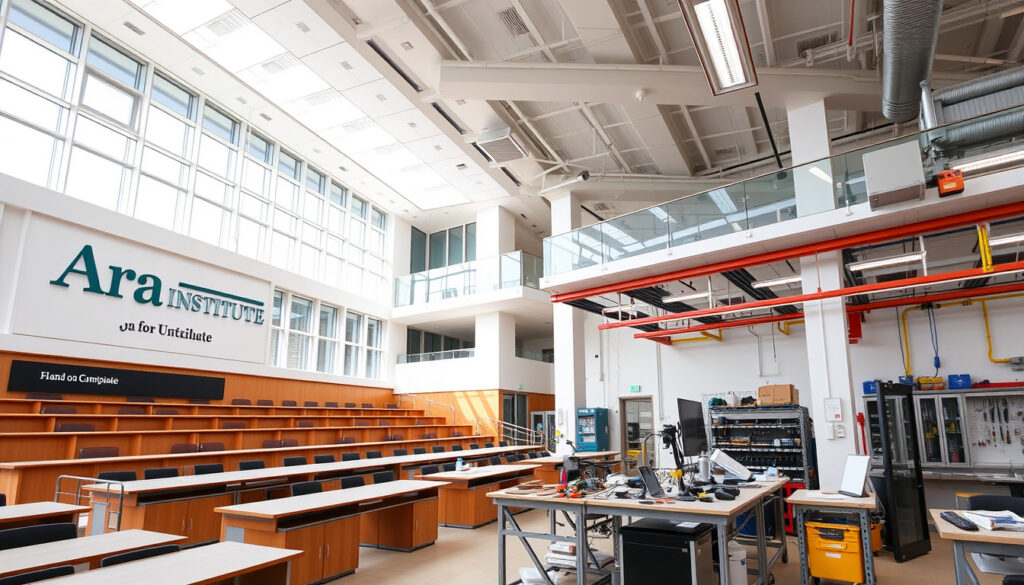
Ara Institute of Canterbury: University or Vocational Institute
You’ve probably heard New Zealand’s education system lies between a polytechnic and a university, but no institution embodies that middle ground better than the Ara Institute of Canterbury in Christchurch. With around 13,000 students and a name meaning “path” in te reo Māori, it was formed in 2016 from the merger of Christchurch Polytechnic Institute of Technology and Aoraki Polytechnic’s Timaru campus.
Founded: 2016 · Students: approx. 13,000 · Campuses: Christchurch & Timaru · Type: Institute of Technology
Quick snapshot
- Formed in 2016 from CPIT merger (Ara Institute of Canterbury official website)
- Approx. 13,000 enrolled students (Ara Institute of Canterbury official website)
- Name means “path” in te reo Māori (Ara Institute of Canterbury official website)
- Exact global ranking – Ara is not included in major university rankings
- Exact acceptance rate – not publicly released
- No major news timeline – Ara is a stable institution not currently in a rapid change phase
- Continued growth in applied bachelor’s and master’s programs (Ara Institute of Canterbury published fee schedule PDF)
Here are the key facts about Ara Institute of Canterbury at a glance.
| Label | Value |
|---|---|
| Full Name | Ara Institute of Canterbury |
| Founded | 2016 |
| Location | Christchurch and Timaru, New Zealand |
| Type | Institute of Technology |
| Students | Approx. 13,000 |
| Campuses | 2 (City Campus, Timaru) |
Is Ara Institute of Canterbury a university or college?
What is ARA in Christchurch?
Ara is an institute of technology – a category that sits between a traditional university and a vocational college. It offers certificates, diplomas, degrees, graduate diplomas, and master’s programmes, but its focus is applied, hands‑on learning rather than pure academic research. According to the Ara Institute of Canterbury official website, the institution is “a leading provider of vocational education” in New Zealand.
“Ara is a leading provider of vocational education.” — Ara Institute of Canterbury official website
What type of institution is Ara Institute of Canterbury?
It is classified as an Institute of Technology (ITP) under New Zealand’s tertiary education system. ITPs like Ara are distinct from universities because they are not research‑intensive and they prioritise industry‑aligned training. Ara’s 2026 fee schedule shows programme levels from certificates (NZQF Level 3) to master’s degrees (Level 9), confirming its range.
The implication: students who prioritise hands-on industry training over academic research will find Ara’s model a better fit than a traditional university.
What is the rank of Ara Institute of Canterbury?
How does Ara compare to New Zealand universities?
Ara does not appear in global university rankings (e.g., QS, THE, ARWU) because it is not a research university. However, it is consistently recognised as one of New Zealand’s leading vocational tertiary institutes. The Study with New Zealand government portal lists Ara among the country’s accredited Institutes of Technology.
“Ara is one of New Zealand’s leading tertiary institutes.” — Study with New Zealand government portal
Does Ara have a global ranking?
No. That fact often surprises prospective students, but it’s a reflection of Ara’s mission – it measures success by graduate employment rates rather than publication counts. For comparison purposes, a student looking at a vocational pathway will find Ara’s reputation strong in local industry, especially in Canterbury.
How many students are at Ara Institute of Canterbury?
What is the student population?
The official figure, stated on Ara Institute of Canterbury official website, is approximately 13,000 enrolled students. This includes full‑time and part‑time learners across both campuses.
Are there international students at Ara?
Yes. Ara actively enrolls international students, primarily from Asia, the Pacific, and other English‑speaking countries. The 2026 International Fees brochure lists specific programmes and their costs for international applicants.
For international students, Ara’s smaller class sizes and direct industry connections can be an advantage over larger universities, but the lack of global brand recognition may affect future plans to work abroad.
The pattern: Ara offers strong local industry links at the cost of global name recognition.
What does the name Ara mean?
What is the cultural significance of Ara?
“Ara” is a te reo Māori word meaning “path” or “way.” The name was chosen to reflect the institution’s role in guiding students on their educational journeys. The choice acknowledges the bicultural foundation of New Zealand and the importance of Māori language in the country’s identity.
Is Ara a Māori word?
Yes. The name was adopted after the 2016 merger to symbolise a new beginning for vocational education in Canterbury. According to the Ara Institute of Canterbury official website, the name “reflects our commitment to opening pathways for learners.”
Do you have to pay for Ara Institute of Canterbury?
Are there scholarships available?
Yes. Ara offers a limited number of scholarships for both domestic and international students. Eligibility and amounts vary by programme and residency status. The Ara scholarships page provides current listings.
What are the tuition fees for domestic and international students?
Domestic students may be eligible for fees‑free study under the New Zealand government’s scheme, depending on their prior study and residency. International students pay programme‑specific tuition, as detailed in the 2026 fee schedule. For example, five programmes illustrate the range: international fees range from NZ$8,503 (18‑week English language) to NZ$29,229 (one‑year Postgraduate Diploma in Creative Practice).
| Programme | Duration | International Fee (NZD) |
|---|---|---|
| NZ Certificate in English Language (General) | 18 weeks | $8,503 |
| Study and Employment Pathways | 6 months | $13,286 |
| Business (Administration & Technology) | 6 months | $13,286 |
| Information Technology Technical Support | 1 year | $26,572 |
| Bachelor of Design | 3 years | $26,572 (total) |
| Master of Creative Practice | 1.5 years | $27,458 |
| Applied Management (180 credits) | 1.5 years | $27,458 |
| Postgraduate Diploma in Creative Practice | 1 year | $29,229 |
All data from Ara Institute of Canterbury published fee schedule PDF.
Additional costs include a Student Services Levy of NZ$392.50 per year and campus carparking at NZ$370 per year.
For international students, the total cost (fees + levy + living expenses) can be significantly lower than at New Zealand universities, but the programmes are shorter and more intensive, so the per‑credit cost is comparable.
The catch: lower total fees come with a compressed timeline that may not suit all learning styles.
ask.shiksha.com, jeduka.com, shiksha.com, unischolars.com, scribd.com, flamingoeducare.com, uniranks.com, adscientificindex.com, youtube.com, linkedin.com
Frequently asked questions
Is Ara Institute of Canterbury accredited?
Yes. Ara is accredited by the New Zealand Qualifications Authority (NZQA) and all its programmes are listed on the NZQA framework.
Can international students apply to Ara?
Yes. Ara welcomes international students and provides a dedicated support team. The Ara international page outlines the application process.
Does Ara offer online programs?
Some programmes are available online or in blended mode, but most are campus‑based to support hands‑on learning.
What are the entry requirements for Ara?
Requirements vary by programme. For most bachelor’s degrees, a recognised secondary school qualification is needed. International students need an IELTS score of 6.0 or equivalent.
How does Ara support student housing?
Ara does not operate its own halls of residence, but it partners with local accommodation providers and provides a housing database on its website.
Are there part‑time study options at Ara?
Yes. Many certificates and diplomas can be studied part‑time, and the timetables are designed to accommodate working students.
For prospective students weighing a career‑focused education in New Zealand, Ara Institute of Canterbury fills a clear gap: it offers the practical training employers want without the theoretical overhead of a university. For international applicants, the trade‑off is simple – lower global prestige but lower cost, smaller classes, and a direct line to industry in one of New Zealand’s fastest‑growing cities.
More related posts
 Weather in My Location: Live, Hourly, Tomorrow, Warnings
 Nicotine E Liquid NZ: How to Buy Legally, Safely, and Where
 360 USD to NZD: Convert US Dollars to New Zealand Dollars
 Is BNZ Online Banking Down Today? Check Status
 Te Awamutu Golf Club: Rates, Booking & Course Info
 How Old is Dolly Parton? Age, Birthday & Facts 2026
 What to Do to Sleep Better: Science-Backed Tips & Techniques
