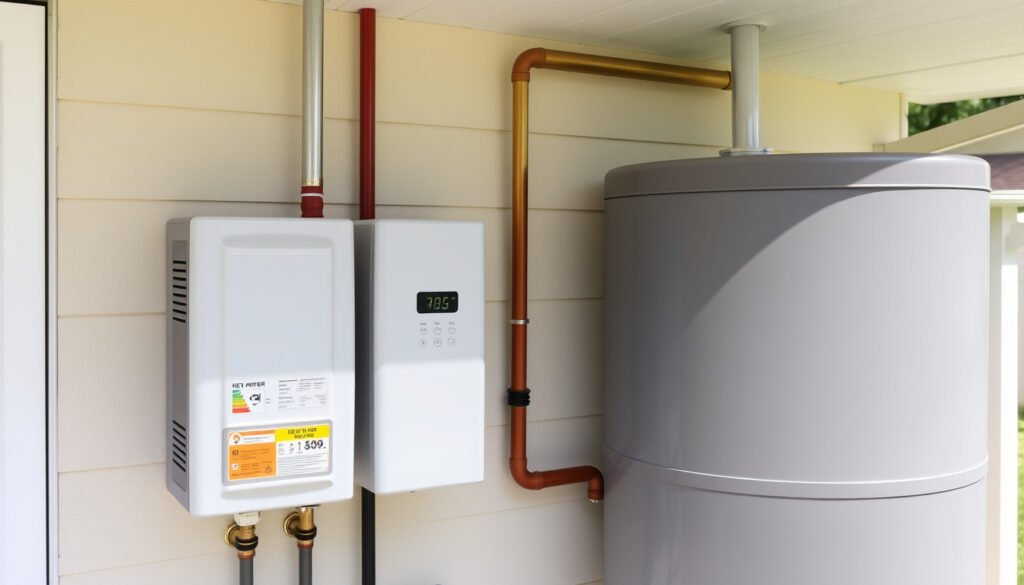
Heat Pump Hot Water: Is It Worth It? Costs, Pros & Cons
Few energy upgrades spark as much curiosity—and hesitation—as heat pump hot water systems. The promise of slashing water heating bills by 50–70% while shrinking your carbon footprint is compelling, but the upfront price tag (€14,000–€17,000 before grants in Ireland) gives many homeowners pause.
Energy efficiency: Up to 3.5 times more efficient than standard electric water heaters (Energy Star) ·
Annual savings: $300–$400 per year on water heating costs (U.S. DOE) ·
Typical lifespan: 10 to 15 years (NYSERDA) ·
Upfront cost: $1,200–$2,000 for unit and installation
Quick snapshot
- Heat pump water heaters are 2–3× more efficient than electric resistance models (U.S. Department of Energy)
- They require a 240V outlet and proper ventilation (NYSERDA)
- Best performance in ambient temperatures above 40°F (U.S. DOE)
- Exact payback period depends heavily on local energy prices and usage patterns (U.S. DOE)
- Performance in subfreezing climates varies significantly by model (NYSERDA)
- Long-term durability in hard‑water areas is not well documented (U.S. DOE)
- Payback period often 5–10 years, but can be shorter with grants (Mastertherm (heat pump installer))
- SEAI grant up to €12,500 from February 2026 (Solar Info Ireland (energy advisory))
- Growing number of Irish homeowners switching from oil/gas to heat pumps (SEAI (national energy authority))
- Policy push: heat pumps are central to Ireland’s 2030 climate targets (SEAI (national energy authority))
Five key facts, one pattern: the efficiency gains are real, but the upfront investment and installation complexity are the real gatekeepers.
The table below summarises the core specs at a glance.
| Metric | Value |
|---|---|
| Efficiency (COP) | 2.5–3.5 (Energy Star) |
| Typical cost (unit + install) | $1,200–$2,000 |
| Lifespan | 10–15 years (NYSERDA) |
| Annual savings vs electric | $300–$400 (U.S. DOE) |
| Installation requirements | 240V outlet, 50+ gallons of space, proper ventilation |
Is a heat pump hot water system worth it?
What are the upfront costs?
In Ireland, the median cost of an air-to-water heat pump system lands between €14,000 and €17,000 before any grants, according to Energy Efficiency Ireland (price comparison platform citing SEAI). This covers unit, cylinder, installation, and controls. The SEAI (Ireland’s national energy authority) quotes a similar median range. For an average three-bedroom semi-detached home, the full system cost is typically €12,000–€18,000 (Bord Gáis Energy (utility provider)).
Irish homeowners face a €14K–€17K wall, but grants from SEAI can knock up to €12,500 off that total starting February 2026 (Solar Info Ireland (energy advisory)). That brings net cost down to as low as €1,500 in best‑case scenarios — a dramatic shift.
What are the long-term savings?
Heat pumps produce 3–4 kWh of heat for every 1 kWh of electricity consumed, cutting water heating bills by 50–70% compared to oil or gas systems (Solar Info Ireland). The annual running cost in Ireland is roughly €600–€1,000 (Bord Gáis Energy), a fraction of what oil or LPG would cost. Over a 20‑year lifespan, the cumulative savings can repay the upfront cost multiple times.
How does it compare to gas or electric water heaters?
- vs electric resistance: 2–3× more efficient, saving $300–$400/year in the US. In Ireland, savings are even larger due to high oil/gas prices.
- vs gas boiler: Heat pumps eliminate on-site emissions and typically cost less to run, but gas boilers have lower upfront cost and faster recovery rate.
- vs solar thermal: Heat pumps work independently of sunlight and provide year‑round performance, but solar can supplement in summer.
What are the downsides of a heat pump water heater?
Why does my house feel cold with a heat pump?
Heat pump water heaters extract heat from the surrounding air and exhaust cool air into the room. In winter, this can drop the ambient temperature by several degrees in an unheated basement or utility room (U.S. DOE). The same principle applies to air‑to‑water heat pumps that heat radiators: they produce lower‑temperature water than a gas boiler, so radiators feel cooler to the touch even though the house is warm.
What about installation complexity?
Installation requires a dedicated 240V electrical circuit, proper condensation drainage, and adequate air volume (typically a room at least 750 cubic feet) (NYSERDA). Retrofitting into an existing home may involve significant electrical work or relocation, adding €1,000–€3,000 to the total. In Ireland, fitting air‑to‑water heat pumps often requires upgrading insulation and radiator sizes (SEAI).
Is noise a concern?
The compressor and fan generate noise levels around 50 dB—comparable to a quiet refrigerator (U.S. DOE). Placing the unit away from bedrooms or using sound‑dampening materials can mitigate this. For outdoor air‑source heat pumps, modern models are quieter, but some homeowners in Ireland report disturbance during defrost cycles at night.
The cold‑air exhaust is not a design flaw—it’s physics. If your utility room doubles as living space, the temperature drop may be unacceptable. Plan the location carefully, or budget for supplementary heating in that zone.
The trade‑off: you gain 50–70% energy savings, but you may lose a few degrees of comfort in the room where the tank sits—and you’ll spend more upfront on installation.
Do heat pumps provide enough hot water?
Can I run out of hot water with a heat pump?
First‑hour ratings (FHR) of heat pump water heaters are comparable to conventional electric tanks. A typical 50‑gallon unit delivers around 50‑60 gallons of hot water in the first hour (Energy Star). That’s enough for a family of four to shower, wash dishes, and do laundry sequentially—as long as the tank size matches household demand.
What size tank do I need?
Common tank sizes are 50, 65, and 80 gallons. For a family of four, a 65‑gallon tank is generally recommended (NYSERDA). Undersizing leads to cold showers; oversizing wastes energy. In Ireland, typical hot water cylinders for heat pump systems range from 200 litres (53 gallons) to 300 litres (79 gallons).
What is the recovery rate?
Recovery rate for heat pump water heaters is slower than gas—about 2–3 times slower—but faster than electric resistance in some modes (U.S. DOE). Most models include an electric resistance booster element for high‑demand periods. For an average household, the combination of tank storage and slow recovery is sufficient, as long as you’re not trying to fill a large tub immediately after a long shower.
The pattern: heat pump water heaters can keep up with typical daily demand, but they’re not designed for marathon bathing sessions. Plan your hot water use, and you’ll rarely notice the difference.
What’s the life expectancy of a heat pump water heater?
What factors affect lifespan?
Average life is 10–15 years (NYSERDA). Key factors: water quality (hard water accelerates scaling on heat exchanger), usage patterns (frequent cycling wears compressor), and ambient temperature (prolonged exposure to freezing conditions stresses the system). In Ireland’s temperate climate, lifespan tends toward the longer end of the range.
What maintenance extends life?
Annual anode rod inspection and replacement every 3–5 years is critical to prevent tank corrosion (U.S. DOE). Flushing the tank annually to remove sediment, cleaning the air filter, and checking the condensate drain are also recommended. Heat pump water heaters come with warranties of 6–10 years, with some manufacturers offering extended coverage.
Why this matters: a well‑maintained unit can outlive its warranty by a decade. Neglect—especially skipping the anode rod—can halve its lifespan. The €300‑€500 you spend on maintenance over 15 years is a fraction of the cost of early replacement.
How many hours a day should a heat pump run in winter?
What is the 30 minute heating rule?
Citizens Advice (UK consumer body) recommends running heat pumps continuously in cold spells rather than cycling on and off, because frequent defrost cycles reduce efficiency. The “30 minute rule” suggests that in very cold weather, the system should run for at least 30 minutes before expecting significant heat output, since it first needs to raise the refrigerant to operating temperature.
Does continuous run affect efficiency?
In cold weather (below 5°C), optimal run time is often 8–12 hours per day — sometimes longer if the building has poor insulation (SEAI). Short cycling (turning on and off every few minutes) reduces efficiency because the compressor consumes more power during startup. Longer, steadier runs maintain the coefficient of performance (COP) at its design level.
The catch: a properly sized heat pump should not run 24/7. If it does, the system is either undersized or the house leaks too much heat. That’s a sign to upgrade insulation or consult an installer.
Pros and cons of heat pump hot water systems
Upsides
- 2–3× more efficient than electric resistance heaters (U.S. DOE)
- Reduces water heating costs by 50–70% vs oil/gas (Solar Info Ireland)
- Eligible for SEAI grants up to €12,500
- Lower carbon footprint — uses renewable heat from air/ground
- Can be integrated with existing heating systems
Downsides
- High upfront cost (€14,000–€17,000 before grants)
- Cools the surrounding air — noticeable in winter
- Requires adequate space and ventilation
- Noise level up to 50 dB from compressor/fan
- Slower recovery rate than gas
For Irish homeowners weighing this choice, the decision often hinges on one question: can you afford the upfront cost, and are you willing to adapt to slightly different hot water habits? If yes, the long‑term savings and environmental case are strong.
What the experts say
Heat pump water heaters can be two to three times more energy efficient than conventional electric resistance water heaters. — U.S. Department of Energy (federal energy agency)
Heat pumps use renewable energy from the air or ground and are one of the most efficient ways to heat your home and water. — SEAI (Ireland’s national energy authority)
Typical COP for air-to-water heat pumps is 3-4, meaning you get three to four times the heat output for each unit of electricity. — Lee Therm (heat pump installer, citing SEAI research)
Air-source heat pump installed cost in Ireland: €9,000–€14,000, with SEAI grant up to €12,500 from February 2026. — Solar Info Ireland (energy advisory)
For Irish homeowners weighing the upfront investment, understanding how hot water heat pump systems perform in different climates can clarify long-term savings.
Frequently asked questions
Do heat pump water heaters work in cold climates?
They work best above 40°F (4°C). In colder conditions, performance drops and the backup electric resistance element kicks in, reducing efficiency. Models designed for cold climates maintain decent COP down to around -15°C (NYSERDA). In Ireland’s mild climate, they perform well year‑round.
How noisy are heat pump water heaters?
Most indoor units produce about 50 dB—similar to a quiet refrigerator. Outdoor air‑source units are a bit louder during defrost cycles. Placing the unit in a utility room or basement reduces disturbance (U.S. DOE).
What size heat pump water heater do I need for a family of 4?
A 65‑gallon (250‑litre) tank is typically sufficient. For a family of four taking showers, washing dishes, and doing laundry, the first‑hour rating of 60 gallons should cover most daily needs (Energy Star).
Can I install a heat pump water heater myself?
No. Installation requires electrical work (240V circuit), plumbing connections, and often structural modifications. Improper installation can void warranty and create safety hazards. Always use a certified installer (NYSERDA).
Are there tax credits for heat pump water heaters in the US or Ireland?
In the US, the federal tax credit covers 30% of cost up to $2,000 (no cap on model). In Ireland, the SEAI grant offers up to €12,500 for air‑to‑water heat pumps (SEAI).
How does a heat pump water heater compare to a solar water heater?
Solar water heaters work only when the sun shines and require backup heating. Heat pumps work 24/7 and are more consistent in Ireland’s cloudy climate. Solar can be a supplement but rarely replaces the need for a heat pump or conventional heater (U.S. DOE).
Do heat pump water heaters require regular maintenance?
Yes—annual flange cleaning, air filter changes, and anode rod inspection every 1–3 years are recommended. Neglect can lead to premature failure (U.S. DOE).
More related posts
 New Years Festivals NZ 2026: Best NYE Celebrations
 Real Estate Agents Compensation Case – NAR Settlement Explained
 Gold Price in India Today: 24K & 22K Rate per Gram and Tola
 Mint Chocolate Chip Ice Cream – Origins, History and Popularity
 The Running Man 2025: Reviews, Cast, Where to Watch
 D-Wave Share Price Analysis: Is QBTS a Good Buy
 Anime Rangers X Codes – Active & Expired (July 2026)
 Free YouTube to MP3 Converter: Safest & Fastest Tested
