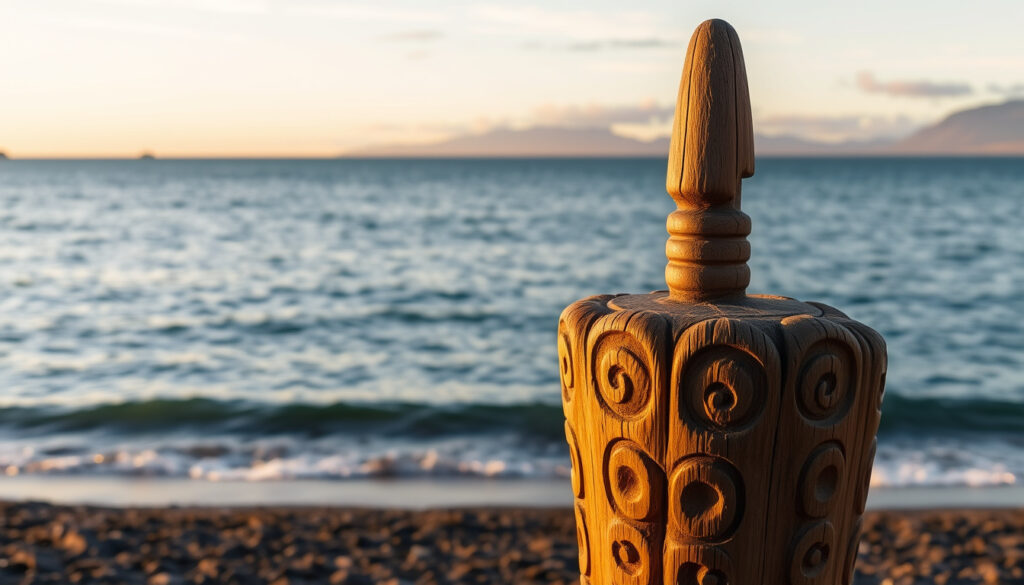
Kia Hora te Marino Karakia: Māori Words, Translation & Meaning
Most Monday-morning meetings begin with logistics; in Aotearoa New Zealand, many begin with a karakia instead — a short spoken blessing that settles the room before anyone opens a laptop. If you have heard “Kia hora te marino” and wondered what it means or how to lead it, this explainer gives the words, translation, and context.
Opening line: Kia hora te marino ·
Full version: 18 words ·
Common use: Opening a day, meeting, session, or workshop ·
Second line: Kia whakapapa pounamu te moana ·
Third line: Kia tere te kārohirohi i mua i tō huarahi
Quick snapshot
- The first line, Kia hora te marino, is commonly translated as “May peace be widespread” or “May the calm be widespread” (CPSLE (Mātauranga Māori education resource)).
- The phrase is catalogued as a well-known Māori proverb and blessing (SOUNZ (Centre for New Zealand Music)).
- It can open a day, meeting, or workshop as a karakia tīmatanga, an opening incantation (Te ORA (Māori education resource)).
- The original composer and date of the karakia are not recorded in the published sources reviewed for this guide. (Te ORA (Māori education resource))
- Translations of kia whakapapa pounamu te moana vary: “like greenstone”, “as flat as pounamu”, or “glisten like greenstone” (Te ORA (Māori education resource)).
- No single authoritative list of karakia exists; wording shifts by whānau, hapū, iwi, and occasion. (Te ORA (Māori education resource))
- The karakia has moved from hui settings into published educational collections and official government communication. (SOUNZ (Centre for New Zealand Music))
- Christopher Tin set the words for choir, giving the phrase international concert exposure (SOUNZ (Centre for New Zealand Music)).
- A New Zealand government speech used Kia hora te marino as the frame for a policy address on a peaceful, prosperous, and stable Indo-Pacific (New Zealand Government (Beehive speech)).
- For meeting organisers, the three-line version is a practical, low-risk place to start.
- Check the version used in your rohe (region) before adopting one for a formal hui.
- Lead with practised pronunciation and clear intent; that matters more than a flawless script.
Eight details, one pattern: the karakia is short, visual, and deliberately open — each line paints a scene rather than stating a doctrine.
| Detail | Value |
|---|---|
| Māori title | Karakia Tīmatanga / Opening Incantation |
| First line | Kia hora te marino |
| Second line | Kia whakapapa pounamu te moana |
| Third line | Kia tere te kārohirohi i mua i tō huarahi |
| Common translation | “May peace be widespread” or “May the calm be widespread” |
| Meaning in practice | Peace, safe passage, harmony, and collective wellbeing |
| Documented use | Opening a day, meeting, session, or workshop in educational and organisational settings |
| Longer form adds | Hei huarahi mā tātou i te rangi nei · Aroha atu, aroha mai · Tātou i a tātou katoa · Hui ē, Tāiki ē |
What is the origin of the Kia Hora Te Marino karakia?
Unlike a hymn or a poem with a named author, this karakia carries no single credited composer in the sources reviewed. What the record does show is a phrase that has travelled from spoken tradition into classrooms, concert halls, and even ministerial speeches.
Who composed the Christopher Tin setting of Kia Hora Te Marino?
- Christopher Tin’s choral setting appears in the SOUNZ catalogue, where the text is described as a well-known Māori proverb and blessing (SOUNZ (Centre for New Zealand Music)).
- That distinction matters: Tin composed the musical setting, not the words. The karakia itself belongs to the Māori oral tradition and predates his piece.
The upshot: the origin question resolves into two answers. As a composition, the work has a named composer. As a karakia, the words have no single author — their authority comes from continuous use.
What does “Karakia Tīmatanga” mean?
- Karakia is the Māori word for prayer, incantation, blessing, or sacred utterance.
- Tīmatanga means beginning or opening, so Karakia Tīmatanga is an opening incantation.
- Educational materials also use the fuller label karakia whakatuwhera (opening karakia), the category into which this text falls.
The pattern: this karakia gains authority from use, not authorship. The same words can open a classroom and a government speech without anyone finding it strange.
What does “Kia Hora te Marino” mean?
The literal core is simple: marino is calm, hora is to spread or lay out, and kia turns the phrase into a wish. The opening words ask that calm spread widely. Te Rau Ora, a Māori workforce development organisation, describes the saying as a whakataukī, or proverb-like saying, about maintaining calm in the face of turbulence and threat, drawing on the strengths of the past to sustain the future (Te Rau Ora (Māori workforce development)).
What does “kia whakapapa pounamu te moana” mean?
- Moana is the sea; pounamu is greenstone (jade).
- Published translations vary: “may the sea be like greenstone”, “may the seas be as flat as pounamu”, or “may the sea glisten like greenstone”.
- The different renderings share one image: a sea smoothed and treasured like pounamu.
If you expect one authoritative English sentence for this line, the sources will disappoint you on purpose: the image of greenstone is doing cultural work that no single English adjective can finish.
What does “kia tere te kārohirohi i mua i tō huarahi” mean?
- Kārohirohi means shimmer or heat-haze; huarahi means path or road.
- A New Zealand government speech renders the full three-line karakia as “widespread calm, a greenstone-like ocean, light on the path, and peace as a travelling companion” (New Zealand Government (Beehive speech)).
- The third line is therefore a wish for shimmering light to play ahead of the listener’s journey — a lit path, not an uncertain one.
If one line had to carry the whole meaning, the first line is the one. The others extend the image outward: a calm sea, a smooth crossing, a bright road. A longer circulating version then adds “Hei huarahi mā tātou i te rangi nei”, commonly rendered “a pathway for us all this day” (CPSLE (Mātauranga Māori education resource)), and closes with “Hui ē, Tāiki ē”, translated in one health-education resource as “Bind us all together” (New Zealand College of Natural Medicine (health education resource)).
The trade-off: pin this karakia to one English sentence and you flatten it. The variation across published translations is not sloppiness — it is the karakia doing what it is designed to do: wishing broadly, for everyone in the room.
What is the Māori karakia for opening a meeting?
Kia Hora Te Marino is a practical answer to this question because it is short, it is explicitly an opening karakia, and it asks for the thing a meeting actually needs: calm. In educational and organisational settings it opens a day, meeting, session, or workshop, and it sets a tone of mutual respect.
What is a good Māori karakia to start the day?
- The same three-line version works as a daily opener: Kia hora te marino; Kia whakapapa pounamu te moana; Kia tere te kārohirohi i mua i tō huarahi.
- Karakia have traditionally been used at the start of significant gatherings, so a morning opening sits inside a long-standing pattern.
- For a personal morning practice, the first line alone — Kia hora te marino — is complete in itself.
What is a short opening karakia for a meeting?
- The shortest credible meeting opener is the first line alone: Kia hora te marino.
- The standard short version is the three-line form above — 18 words in total.
- For a formal hui, check the group’s own tikanga and local wording before choosing; published versions differ by region and context.
The implication: for most workplaces and classrooms, the three-line version is the right size. It is long enough to feel like a karakia and short enough that a nervous leader can deliver it with confidence.
What are traditional Māori karakia?
Karakia are Māori incantations, prayers, blessings, or sacred utterances — a wider category than a single fixed text, and often rich in symbolism. Karakia have traditionally marked the openings and closings of hui, preceded food, and accompanied important life events (CPSLE (Mātauranga Māori education resource)).
What is the Māori karakia for kai?
- Karakia kai are short recitations said before or after eating.
- The practice belongs to the same tradition that opens and closes gatherings with karakia; the food version simply redirects the intention to gratitude and shared wellbeing.
- Kia Hora Te Marino is not usually framed as a food karakia — it belongs to the opening and closing family.
Can you provide a list of karakia?
- Published collections group karakia by function: opening, closing, kai (food), travel, and protection.
- Wording varies by whānau, hapū, iwi, and context; no single list is treated as canonical.
- The useful first step is to learn one opening and one closing karakia well, rather than collecting many.
What this means: karakia are a family of practices, not a fixed canon. For a beginner, that is good news — there is no “wrong list” to memorise, only the obligation to use the words with respect.
What is the difference between a karakia and a prayer?
Karakia is often translated as “prayer”, but the Māori term is wider. As the traditional karakia section above shows, it is also an incantation, a blessing, and a sacred utterance. And a karakia does not always address a deity: contemporary karakia in workplaces and schools are often secular, asking for calm, safety, and collective wellbeing rather than divine intervention.
Is a karakia a prayer?
- In everyday English, “prayer” implies addressing God; many karakia are not addressed to a deity at all.
- In te reo Māori, karakia is the natural word for both prayer-like and incantation-like speech, so the translation runs in both directions.
- The practical difference shows in use: a prayer often asks something of a higher power, while an opening karakia sets a shared intention for the people in the room.
Four contrasts, one pattern: karakia is a cultural category, not a religious one.
| Dimension | Karakia | Prayer (English sense) |
|---|---|---|
| Literal gloss | Incantation, blessing, sacred utterance | Petition or address to a deity |
| Who it addresses | Not always a deity; can be spoken to the group or the occasion | Usually a god or higher power |
| Range of functions | Opens and closes hui, precedes food, marks life events | Worship, petition, confession, thanksgiving |
| Cultural frame | Tikanga and whakapapa; wording varies by iwi and context | Liturgical or personal; varies by religion |
The catch: translating karakia as “prayer” is not wrong, but it is incomplete. In a bilingual meeting, the safest move is to use the Māori word and let its meaning expand in context — or simply say, “we’ll open with a karakia”.
How to lead a karakia: a five-step walkthrough
Leading a karakia is less about performance and more about preparation. These five steps work for a meeting, a workshop, a classroom, or a daily practice.
- Match the moment. Karakia are used at openings and closings of hui, before food, and at important life events; choose an opening karakia to start and a closing karakia to finish.
- Learn the words aloud. The three-line version runs to 18 words; practise until the pronunciation is steady before you lead a group.
- Set the intention. The karakia asks for calm, a smooth path, and shared wellbeing — speak it as a wish, not a recitation.
- Choose the right length. One line suits a quick daily start; three lines suit a formal meeting; the longer form suits a hui.
- Close cleanly. The longer version ends with “Hui ē, Tāiki ē”; if the group is new to karakia, add one English sentence explaining what you said and why.
Reading a karakia from a slide without practising the pronunciation turns a living ritual into a compliance exercise. The words land only when the leader can speak them with ease.
The pattern: a well-led karakia is short and sets the temperature of the whole room.
What’s confirmed, what’s not
Research on this karakia is thin in places, and the honest gap matters: some details are solid, others remain open.
Confirmed
- The first line is Kia hora te marino, and the phrase can function as an opening karakia, or karakia tīmatanga (Te ORA (Māori education resource)).
- The longer version closes with Hui ē, Tāiki ē, translated as “Bind us all together” (New Zealand College of Natural Medicine (health education resource)).
- The phrase is associated with peace, safe passage, harmony, and collective wellbeing (Te Rau Ora (Māori workforce development)).
Still open
- The original composer and date of the karakia are not recorded in the published sources reviewed here.
- Word-for-word English renderings of “whakapapa pounamu te moana” differ across published sources (Te ORA (Māori education resource)).
- No single authoritative list of karakia exists; wording varies by whānau, hapū, iwi, and context.
- Whether a formal hui expects you to lead the karakia depends on local tikanga and relationships, not on a rule in a guidebook.
For a meeting organiser, the practical risk is not imperfect pronunciation. It is treating one translation or one version as universal when the sources themselves show variation.
The honest position: use this karakia with confidence in casual settings and with humility in formal ones.
Voices on the Kia Hora Te Marino karakia
“Kia hora te marino” is a well-known Māori proverb and blessing.
— SOUNZ (Centre for New Zealand Music)
The saying is a whakataukī about maintaining calm in the face of turbulence and threat, drawing on the strengths of the past to sustain the future.
— Te Rau Ora (Māori workforce development)
Kia Hora Te Marino: a peaceful, prosperous, and stable Indo-Pacific.
What this means: one short phrase can bless a classroom, steady a workforce, and frame a foreign-policy speech — context decides which voice you hear.
Why this matters
Karakia are not decorative. This one is a living opening ritual used in classrooms, workplaces, and government communications, and its message keeps expanding: calm spreading, a sea made smooth, a path shimmering ahead. For meeting organisers and team leaders in Aotearoa New Zealand, the choice is clear — learn the three-line version, practise the pronunciation, and lead it with genuine intent, or leave the space for someone with the standing to do so. Either way, the karakia does what it is designed to do: it changes how a room begins.
Related reading
If you are exploring how Māori and Pacific language moves through everyday life, two companion guides sit well alongside this karakia explainer: for te reo place names, read Te Waipounamu / South Island: Meaning, Geography & Highlights; for translation practice across the wider Pacific, see Samoan to English Translation: Key Words, Phrases, and Tools.
Frequently asked questions
What is a good karakia to close the day?
A closing karakia (karakia whakamutunga) is said at the end of a day or gathering to release the group. Kia Hora Te Marino is mainly framed as an opening incantation, so for a close, look for a karakia that gathers the day’s work and lets people leave it behind. Most collections that publish opening karakia also publish closing ones.
What to say before starting karakia?
There is no required preamble. The karakia itself is the opener. In a bilingual meeting, a simple English line — such as “we’ll open with a karakia” — is enough to signal what is happening and why.
Which mantra to say before eating?
In te reo Māori contexts, the karakia for kai is the phrase to use before eating. Karakia are traditionally used before food, as noted in the traditional karakia section above, and a food karakia follows the same pattern as an opening karakia: short, spoken, and focused on intention.
Can karakia be said in English?
A translation helps learners understand the meaning, but the karakia is normally spoken in te reo Māori. Because wording varies by iwi and context, an English rendering is a learning aid, not a substitute version.
What is the purpose of a karakia?
Karakia set the tone for a gathering. They open and close hui, precede food, and mark important life events. This karakia specifically points to peace, safe passage, harmony, and collective wellbeing.
Is Kia Hora Te Marino a prayer?
It is a karakia — a category that includes prayer but also covers incantation and blessing. As the sources above show, the phrase is catalogued as a well-known Māori proverb and blessing, and its uses are wider than what the English word “prayer” usually suggests.
What does “Hui ē, Tāiki ē” mean?
The closing affirmation of the longer version, Hui ē, Tāiki ē, is translated in one health-education resource as “Bind us all together” (New Zealand College of Natural Medicine (health education resource)).
More related posts
 Cavius Smoke Alarm NZ: Beeping Fixes & Buying Guide
 All Blacks vs South Africa: Watch, History & Player Salaries
 Man City vs Wolves: How to Watch, Team News & History
 How to Build a Deck in New Zealand: Step-by-Step Guide & Rules
 How to Scan a QR Code on My Phone Screen or Photos
 Tallest Building in the World: Burj Khalifa, Jeddah Tower & More
 Who Moved My Cheese: Summary, Meaning, Moral, and Characters
 360 USD to NZD: Convert US Dollars to New Zealand Dollars
