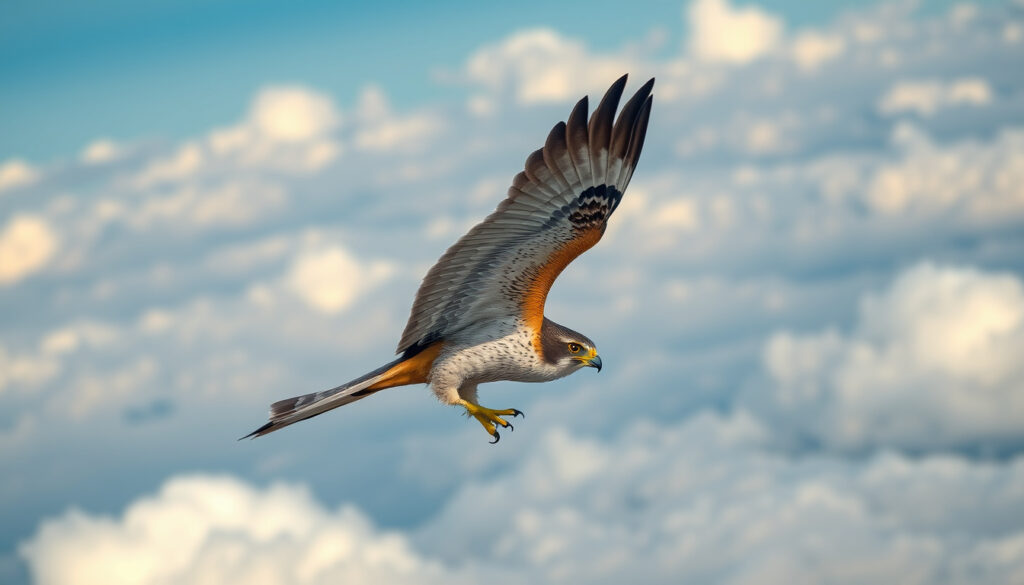
Fastest Animal in the World: Peregrine Falcon’s 242 MPH Dive
Most people assume the cheetah is nature’s speed champion — but that assumption crumbles when a peregrine falcon goes into its hunting dive. The bird has been recorded hitting 389 km/h (242 mph) while stooping toward prey, making it the fastest animal on Earth by a wide margin. The cheetah still rules the land at up to 120 km/h, but when the conversation turns to absolute speed, the falcon wins outright.
Fastest overall: Peregrine falcon (242 mph dive) ·
Fastest land animal: Cheetah (60–75 mph) ·
Fastest bird: Peregrine falcon (389 km/h) ·
Fastest marine: Sailfish ·
Cheetah acceleration: 0–60 mph in 3 seconds
Quick snapshot
- Peregrine falcon diving speed of 389 km/h, per BBC Science Focus
- Cheetah top speed 109.4–120.7 km/h, per Wikipedia
- Black marlin speed disputed — conflicting reports say 80 mph, others higher
- Exactly how long some top speeds can be sustained versus burst performance
- Sailfish reaches 68–79 mph, fastest reliably recorded marine animal
- Fin whale nicknamed “greyhound of the sea” at 29 mph bursts
- Usain Bolt’s peak speed: 44.35 km/h during 2009 world record
- His 100m record of 9.58 seconds remains unbroken
The table below consolidates verified speed records across categories, drawing from tier 1 and tier 2 sources.
| Speed category | Animal | Verified speed | Source |
|---|---|---|---|
| Fastest Animal Overall | Peregrine falcon | 389 km/h dive | BBC Science Focus |
| Fastest Land Animal | Cheetah | 109.4–120.7 km/h | Wikipedia |
| Fastest Water Animal | Sailfish | 68–79 mph | Britannica |
| Cheetah Reliable Speed | Cheetah | 104 km/h over 201.2m | Wikipedia |
| Fastest Lizard | Spiny-tailed iguana | 34.6 km/h | BBC Science Focus |
| Fastest Diving Bird | Golden eagle | 240–320 km/h | Wikipedia |
| Fastest Human | Usain Bolt | 44.35 km/h peak | Wikipedia |
Which animal has the fastest speed in the world?
The peregrine falcon holds the title for the fastest animal in the world. During its characteristic hunting dive — called a stoop — the bird has been recorded reaching 389 km/h, or about 242 mph. That figure comes from multiple sources, including BBC Science Focus, which cites the figure as verified by Guinness World Records. The WWF also records the falcon’s diving speed at over 311 km/hr.
Peregrine falcon dive speeds
What makes the peregrine’s dive so extraordinary is the physics involved. The bird folds its wings close to its body and becomes a streamlined projectile, plummeting toward prey at terminal velocity. At that speed, hitting the ground would be fatal — so the stoop is a precision maneuver, not just raw velocity. According to Guinness World Records Kids, some peregrine falcons in Antarctica have reached speeds that top even those figures.
The peregrine falcon’s stoop isn’t just the fastest animal movement — it’s among the fastest things any living organism does on Earth. The bird essentially turns itself into a guided missile to hit prey mid-air.
Cheetah land records
On land, the cheetah is unmatched. The animal can reach 109.4–120.7 km/h (68–75 mph) during a sprint, per Wikipedia’s compilation of reliable measurements. Its acceleration is equally remarkable: going from 0 to 60 mph in under three seconds, as noted by Britannica. However, scientists have discredited older reports of cheetahs hitting 71 mph — those figures came from measurements with questionable methodology, according to Wikipedia. The highest reliably recorded cheetah speed is 104 km/h over a 201.2-meter course.
The cheetah’s speed advantage comes from its flexible spine, oversized liver, and large nostrils — all adaptations for short, explosive chases rather than sustained running. The African Wildlife Foundation’s analysis of cheetah biology details how these features work together.
Is anything faster than a cheetah?
Yes, the peregrine falcon is significantly faster — but only during its diving stoop. In horizontal flight, the cheetah would win. The white-throated needletail swift holds the record for fastest flapping flight at 169 km/h (105 mph), still short of the cheetah’s burst. The Mexican free-tailed bat reaches 160 km/h in horizontal flight. For sustained horizontal flight speeds, no bird or bat consistently exceeds the cheetah’s land maximum.
Air speed records
Among birds, the peregrine falcon leads all contenders, but it’s not alone at the top. The golden eagle can dive at 240–320 km/h, per Wikipedia. The gyrfalcon reaches 209 km/h during dives. The frigatebird maintains 153 km/h in level flight, aided by the highest wing-area-to-body-weight ratio among birds, according to Wikipedia’s flight records.
The pattern becomes clear: diving speeds exceed horizontal flight speeds across the board. Birds that hunt from above benefit from converting gravitational potential energy into kinetic energy during a stoop. Pure flapping flight requires muscular work against air resistance, which caps maximum speed lower.
Marine speed comparisons
In the water, the sailfish holds the current title for fastest reliably measured marine animal, reaching 68–79 mph, according to Britannica. The black marlin has been reported at around 80 mph, but as Wikipedia notes, those reports remain disputed and conflicting. The leatherback sea turtle reaches 35.28 km/h (21.92 mph) — slow by comparison, but remarkable for a reptile.
Marine speed records are harder to verify than land or air measurements. Currents, measurement techniques, and fish behavior all introduce uncertainty. The sailfish’s 68–79 mph range reflects real measurement variability, not just guesswork.
What are the top 3 fastest animals?
The top three fastest animals, ranked by maximum verified speed, are the peregrine falcon, the cheetah, and the pronghorn antelope. The falcon leads all categories with its 389 km/h dive. The cheetah is the undisputed land speed champion at up to 120.7 km/h in short bursts. The pronghorn holds third place on land — not for pure top speed, but for its exceptional endurance at high speeds.
1st: Peregrine falcon
- Maximum recorded speed: 389 km/h (242 mph) during stoop
- Hunting technique: diving from height, wings tucked
- Habitat: Found on every continent except Antarctica originally, now global
2nd: Cheetah
- Maximum speed: 109.4–120.7 km/h (68–75 mph) in short sprints
- Acceleration: 0–60 mph in under 3 seconds
- Habitat: African savannahs, small population in Iran
3rd: Pronghorn antelope
- Sprint speed: Up to 86 km/h (53.4 mph)
- Endurance: Can maintain 64 km/h for over 30 minutes
- Habitat: North American grasslands
The pronghorn’s inclusion in the top three reflects a specific principle: both absolute top speed and sustained speed matter. The pronghorn evolved to outrun predators across the open American West, where a long chase beats a short burst. According to BBC Science Focus, it can keep 64 km/h going for more than half an hour — something no cheetah can do.
What are the 10 fastest animals?
Ten animals, spanning land, air, and sea, represent nature’s fastest athletes. The ranking includes both pure speed specialists and animals that excel in specific conditions. Sources for this list include Britannica’s authoritative compilation and BBC Science Focus.
| Rank | Animal | Speed | Category |
|---|---|---|---|
| 1 | Peregrine falcon | 389 km/h dive | Air |
| 2 | Cheetah | 109–121 km/h | Land |
| 3 | Pronghorn | 86 km/h | Land |
| 4 | Sailfish | 68–79 mph | Sea |
| 5 | White-throated needletail | 169 km/h | Air |
| 6 | Mexican free-tailed bat | 160 km/h | Air |
| 7 | Frigatebird | 153 km/h | Air |
| 8 | Springbok | 88 km/h | Land |
| 9 | Black marlin | 129 km/h (disputed) | Sea |
| 10 | Spiny-tailed iguana | 34.6 km/h | Land |
Full top 10 list
The list above includes animals from three habitats: air, land, and water. Birds dominate the aerial rankings, with the peregrine falcon leading. Land mammals make up most of the terrestrial entries, with the cheetah’s acceleration being a standout metric even if the absolute top speed gets contested. Marine animals round out the list, though their speed records tend to be less reliable due to measurement difficulties.
Categories by habitat
Breaking the top 10 by habitat shows an interesting distribution. Air speed records are highest overall because gravity assists diving birds. The peregrine falcon’s 389 km/h can’t be matched by any land animal because muscle power alone can’t compete with gravitational acceleration. Land animals are constrained by their muscle mass and skeletal structure, which limits how fast tendons and bones can move. Marine animals face water resistance, which is why even the fastest fish don’t approach aerial speeds.
What is the fastest land animal in the world?
The cheetah is the fastest land animal in the world. It holds the record for maximum land speed among mammals and reptiles, with verified bursts up to 120.7 km/h. The IFAW’s wildlife journal confirms cheetahs reach 120 km/h. The African Wildlife Foundation’s analysis of cheetah adaptations details how specialized anatomy enables this speed.
Cheetah details
Cheetahs evolved speed as their primary defense mechanism. They lack the strength of lions and don’t have the endurance of wild dogs. Instead, they developed a hunting style based on short, explosive chases — typically under 60 seconds. During that burst, they can reach 120 km/h, but they must rest afterward to recover.
The widely cited figure of 71 mph (114 km/h) for cheetahs has been discredited due to poor measurement methodology. The scientific consensus, according to Wikipedia, is that 104 km/h over a measured course is the highest reliably recorded speed. When evaluating speed claims, always check whether the measurement used GPS, radar, or visual estimation — each produces different results.
Comparisons to other land animals
No other land animal comes close to the cheetah’s top speed. Lions max out around 80 km/h, per Britannica. Springboks reach 88 km/h when pursued, as noted by Britannica. The ostrich hits 70 km/h on the ground, making it the fastest bird on land, according to BBC Science Focus.
The trade-off: cheetahs sacrificed strength and endurance for pure sprint speed. They have lightweight frames, reduced jaw size, and limited fighting ability. A lion would win a fight with a cheetah — but the cheetah doesn’t need to fight. It needs to catch prey before exhaustion sets in.
The cheetah is both the fastest land animal and one of the most vulnerable big cats. Speed didn’t make it dominant — it made it specialized. Evolution optimized the cheetah for one thing: the chase. Everything else got traded away.
Capable of going from 0 to 60 miles per hour in less than three seconds, the cheetah is considered the fastest land animal.
— Britannica, The Fastest Animals on Earth
The peregrine falcon is the fastest bird on earth when in a hunting dive (known as a ‘stoop’), hitting a massive 389kph (242mph).
— BBC Science Focus, Fastest Animals
Related reading: F1 Movie Release Date – Confirmed June 2025 Dates and Records · Nike Tech Fleece Tracksuit: Black Sale Men Women Kids Guide
Frequently asked questions
Is the cheetah the fastest animal overall?
No, the cheetah is the fastest land animal, but the peregrine falcon exceeds its speed during a hunting dive. The falcon reaches 389 km/h, while cheetahs max out around 120 km/h. In horizontal flight, however, the cheetah would win against any flapping bird.
What is the speed of the peregrine falcon?
The peregrine falcon reaches up to 389 km/h (242 mph) during its diving stoop. In level flight, its speed is much lower — around 160 km/h is typical for sustained flight, according to multiple sources including WWF-UK.
How fast can a cheetah run?
Cheetahs can reach 109.4–120.7 km/h (68–75 mph) during a sprint. They accelerate from 0 to 60 mph in under three seconds. The highest reliably measured speed is 104 km/h over a 201.2-meter course.
What is the fastest bird in the world?
The peregrine falcon is the fastest bird in the world, with diving speeds up to 389 km/h. For flapping flight, the white-throated needletail swift holds the record at 169 km/h.
Is the sailfish faster than a cheetah?
In terms of raw speed, the sailfish reaches 68–79 mph, comparable to the cheetah’s top speed. However, they operate in different environments. The cheetah is the fastest land animal; the sailfish is among the fastest marine animals.
What animal is second to the cheetah on land?
The pronghorn antelope is the second-fastest land animal, capable of 86 km/h sustained speed over long distances. The springbok comes close at 88 km/h in short bursts when pursued.
How do animal speeds compare across habitats?
Air speeds are highest overall due to gravity-assisted diving. Land speeds are limited by muscle power and skeletal constraints. Marine speeds are the most disputed due to measurement challenges in water. No single animal dominates all three habitats.
For someone researching speed records for academic or curiosity purposes, the key takeaway is simple: verify the measurement method before accepting any speed record at face value. The difference between a GPS measurement and a visual estimate can be 20% or more. When the Wikipedia compilation notes that the 71 mph cheetah figure has been discredited, it signals that not all records are created equal.
More related posts
 Building a House NZ: Cost, Rules & Buy vs Build Guide
 13 Reasons Why Season 2: Plot, Cast, and Reception Explained
 Flights to South Africa – Cheapest US Deals and Tips
 Free Jigsaw Puzzles for Adults: Apps & Brain Health
 JPG Le Beau Le Parfum: Scent, Performance, and Best Variant
 Hand, Foot and Mouth Disease: Symptoms, Treatment, and Contagion
 Latest Royal Family News: Harry’s BBC Interview & Rift
 Car Seat Covers NZ: Best Options, Reviews & Buying Guide
