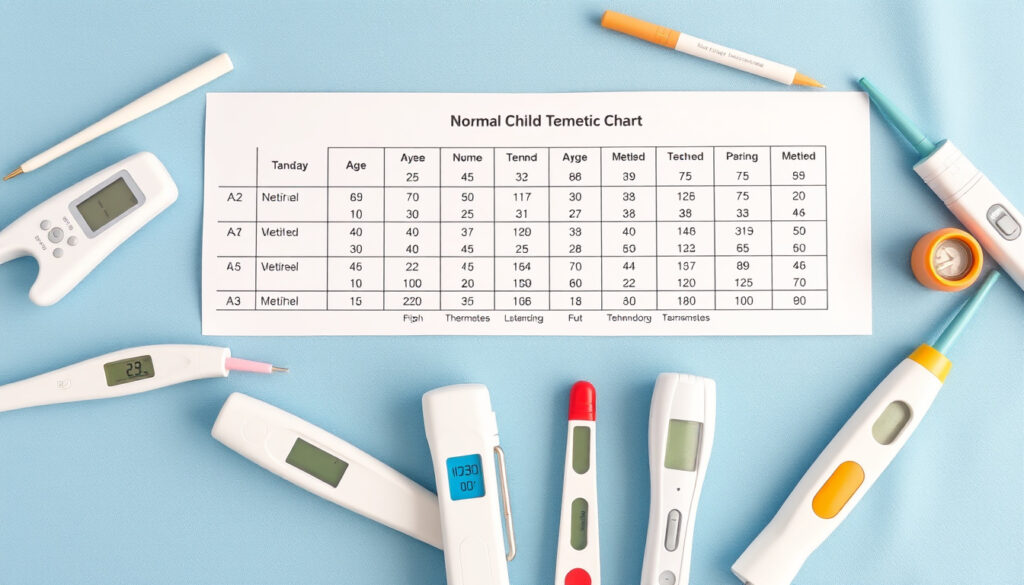
Normal Temperature for Child – Ranges by Age and Method
Understanding what constitutes a normal temperature for a child can be challenging for parents, especially given the various measurement methods and age-specific considerations involved. Body temperature naturally fluctuates throughout the day, and what counts as a fever depends on where on the body the reading is taken.
This guide provides evidence-based information from pediatric health sources to help caregivers interpret temperature readings accurately and respond appropriately when a child’s temperature rises above normal range.
The average body temperature for children hovers around 98.6°F (37°C), though this figure represents a baseline rather than a fixed value. According to data from Children’s Mercy and Akron Children’s Hospital, normal body temperature varies by measurement method and time of day. Rectal and forehead readings typically range from 96.8°F (36°C) in the morning to 100.3°F (37.9°C) in the afternoon, while oral measurements fall between 95.8°F (35.5°C) and 99.9°F (37.7°C).
Body temperature in children can vary by as much as 0.5°F depending on measurement method and age. There is no single “normal” temperature that applies universally to all children. Temperature tends to be lowest in the early morning and highest in late afternoon or early evening. Activity, clothing, and room temperature can all influence readings. Fever definition changes based on which body site is used for measurement. Young infants have narrower normal ranges compared to older children. Always use a digital thermometer for accurate readings.
Pediatric sources consistently define fever thresholds based on measurement location. A fever is present when a rectal, tympanic (ear), or temporal artery (forehead) reading reaches 100.4°F (38°C) or higher. For oral measurements, the threshold is 100°F (37.8°C) or higher. Armpit readings indicate fever at 99°F (37.2°C) or higher.
A reading of 99.5°F falls just below most fever thresholds when measured orally or via forehead, but it exceeds the normal range. Whether this constitutes a fever depends entirely on the measurement method used. Parents should note that 99.5°F measured rectally or via forehead would typically be considered within the normal range, while the same reading taken orally is borderline.
Low-grade fever typically refers to temperatures between 100°F and 102°F (37.8–38.9°C), depending on the measurement method. According to data from Children’s Mercy, this range often indicates the body is fighting an infection and may not require aggressive intervention if the child appears otherwise well.
A temperature of 99.5°F in an infant under 3 months warrants immediate medical consultation, as their immune systems are still developing and fevers can escalate rapidly. Always verify armpit readings with a rectal measurement in young infants.
Selecting the appropriate measurement method depends on the child’s age, as accuracy varies significantly between techniques. According to Mayo Clinic, rectal temperatures are considered the most accurate for infants and young children under 3-4 years of age. Forehead (temporal artery) thermometers provide a reliable alternative, particularly for sleeping children.
Always use a digital thermometer rather than older glass thermometers. For rectal readings, use a lubricant and insert only 0.5 to 1 inch. Ear thermometers can be affected by earwax buildup or improper positioning. Temporal artery thermometers work even while the child sleeps. Wait 15-30 minutes after eating or drinking before taking oral temperatures. Axillary readings are least accurate but useful for quick screening.
While most fevers in children are harmless and resolve within a few days, certain circumstances require prompt medical attention. Parents and caregivers should monitor not just the temperature number but also the child’s behavior, appetite, and overall appearance when assessing severity.
A baby under 3 months develops any fever above 100.4°F rectally. Additionally, seek urgent care if the child shows signs of dehydration, cannot be awakened, has a seizure, or has a purple or red rash that does not fade when pressed.
According to San Francisco’s Department of Public Health, parents should contact a healthcare provider when a child under 2 years has a fever lasting more than 24 hours, or when an older child has a fever persisting beyond 72 hours. Other red flags include fever returning after being absent for 24 hours or fever accompanied by severe headache, stiff neck, or light sensitivity.
Fever itself is not an illness but a symptom and natural response to infection. The goal of treatment is to keep the child comfortable, not necessarily to bring the temperature down to normal. Medications should be used only as directed by a healthcare provider.
Medical understanding of childhood fever and appropriate treatment thresholds has evolved over time. Current consensus reflects decades of research and clinical observation.
In 2011, the American Academy of Pediatrics updated its guidance on fever management, emphasizing that the focus should be on child comfort rather than temperature normalization. In 2015, research published in journals including AAP periodicals reinforced rectal thermometry as the gold standard for young infants. In 2019, enhanced temporal artery thermometer accuracy validated their use as reliable alternatives for children of all ages. Current guidelines from major pediatric institutions including Mayo Clinic, Akron Children’s, and Children’s Colorado align on measurement-specific thresholds.
Understanding why normal temperature ranges vary helps parents interpret readings accurately and avoid unnecessary concern or false reassurance.
According to Mayo Clinic’s first-aid guidelines, body temperature naturally peaks in late afternoon and evening, varies with physical activity, and can be affected by recent food or drink consumption when measured orally.
Over-bundling infants can artificially elevate skin temperatures, while dehydration may cause temperatures to rise. In contrast, children who have been in cool environments may have lower-than-expected readings. These contextual factors highlight the importance of considering multiple variables rather than relying on a single temperature reading to determine whether a child is unwell.
If your child has a fever, focus on keeping them comfortable and monitoring for warning signs. Ensure adequate fluid intake, dress them in light clothing, and use age-appropriate fever reducers only as directed by your healthcare provider. Keep a log of temperature readings, noting the measurement method used, to share with your doctor if the fever persists.
For parents interested in related household health topics, understanding how to prevent fogging in various environments can help maintain clear visibility when transporting children to medical appointments during cold weather.
It depends on the measurement method. A reading of 99°F is at the fever threshold when taken under the armpit (99°F/37.2°C) but falls within the normal range for rectal or forehead measurements. Oral readings of 99°F are slightly below the 100°F fever threshold.
For infants under 3 months with any fever, check every 2-3 hours or as directed by your healthcare provider. For older children, checking every 4-6 hours is typically sufficient unless symptoms worsen, in which case more frequent monitoring is appropriate.
Digital rectal thermometers provide the most accurate readings for children under 4 years. For older children who can cooperate, digital oral thermometers are reliable. Temporal artery (forehead) thermometers offer good accuracy and are convenient for sleeping children.
Teething may cause a slight temperature elevation, but true fever (100.4°F or higher rectally) is not typically caused by teething. If an infant has a genuine fever, other causes should be investigated rather than attributed to teething.
Unless specifically instructed by a healthcare provider, children with fever who are sleeping comfortably should not be woken for medication. Let them rest, as sleep supports recovery.
A reading of 99.5°F falls slightly below the fever threshold for oral and forehead measurements but exceeds normal range for rectal measurements. Consider the measurement method used and the child’s age. For children under 3 months, any elevated reading warrants medical consultation.
{“@context”:”https://schema.org”,”@type”:”NewsArticle”,”headline”:”Normal Temperature for Child: Ranges by Age and Fever Guide”,”description”:”Discover normal child temperature ranges (97.5–99.5°F), fever thresholds, measurement tips and when to call a doctor. Evidence-based guide for parents.”,”datePublished”:”2025-01-15″,”author”:{“@type”:”Organization”,”name”:”Public Health News”},”publisher”:{“@type”:”Organization”,”name”:”Public Health News”},”articleSection”:[“Introduction”,”What Is the Normal Temperature for a Child?”,”Key Insights on Normal Child Temperature”,”Temperature Ranges by Age Group”,”What Temperature Is Considered a Fever for a Child?”,”Is 99.5°F a Fever?”,”Understanding Low-Grade Fever”,”How to Accurately Measure a Child’s Temperature”,”Measurement Methods by Age”,”Tips for Accurate Readings”,”When Is a Child’s Temperature Too High?”,”Fever Severity Guide”,”When to Call the Doctor”,”Evolution of Fever Guidelines”,”Temperature Ranges: What Varies and Why”,”Understanding Child Temperature in Context”,”Expert Sources on Childhood Fever”,”What to Do Next”,”Frequently Asked Questions”]}
{“@context”:”https://schema.org”,”@type”:”FAQPage”,”mainEntity”:[{“@type”:”Question”,”name”:”Is 99°F a fever for a child?”,”acceptedAnswer”:{“@type”:”Answer”,”text”:”It depends on the measurement method. A reading of 99°F is at the fever threshold when taken under the armpit (99°F/37.2°C) but falls within the normal range for rectal or forehead measurements.”}},{“@type”:”Question”,”name”:”How often should I check my sick child’s temperature?”,”acceptedAnswer”:{“@type”:”Answer”,”text”:”For infants under 3 months with any fever, check every 2-3 hours or as directed by your healthcare provider. For older children, checking every 4-6 hours is typically sufficient.”}},{“@type”:”Question”,”name”:”What is the most accurate thermometer for children?”,”acceptedAnswer”:{“@type”:”Answer”,”text”:”Digital rectal thermometers provide the most accurate readings for children under 4 years. For older children who can cooperate, digital oral thermometers are reliable.”}},{“@type”:”Question”,”name”:”Can teething cause fever?”,”acceptedAnswer”:{“@type”:”Answer”,”text”:”Teething may cause a slight temperature elevation, but true fever (100.4°F or higher rectally) is not typically caused by teething.”}},{“@type”:”Question”,”name”:”Should I wake my child to give fever medication?”,”acceptedAnswer”:{“@type”:”Answer”,”text”:”Unless specifically instructed by a healthcare provider, children with fever who are sleeping comfortably should not be woken for medication.”}},{“@type”:”Question”,”name”:”Is 99.5°F a fever for a toddler?”,”acceptedAnswer”:{“@type”:”Answer”,”text”:”A reading of 99.5°F falls slightly below the fever threshold for oral and forehead measurements but exceeds normal range for rectal measurements.”}}]}
More related posts
 Air New Zealand Boarding Procedures: What You Need to Know
 Aura Farming Boat Kid: Who He Is, Age, and What Happened
 Ferrari for Sale NZ: 2025 Prices, Models & Buying Guide
 Arsenal vs Chelsea Stats: Head-to-Head Record & Live Updates
 How to Scan a QR Code on My Phone Screen or Photos
 Work to Residence Visa: NZ, Ireland, US Pathways Compared
 Jobs in New Plymouth NZ: Salaries & Platforms
