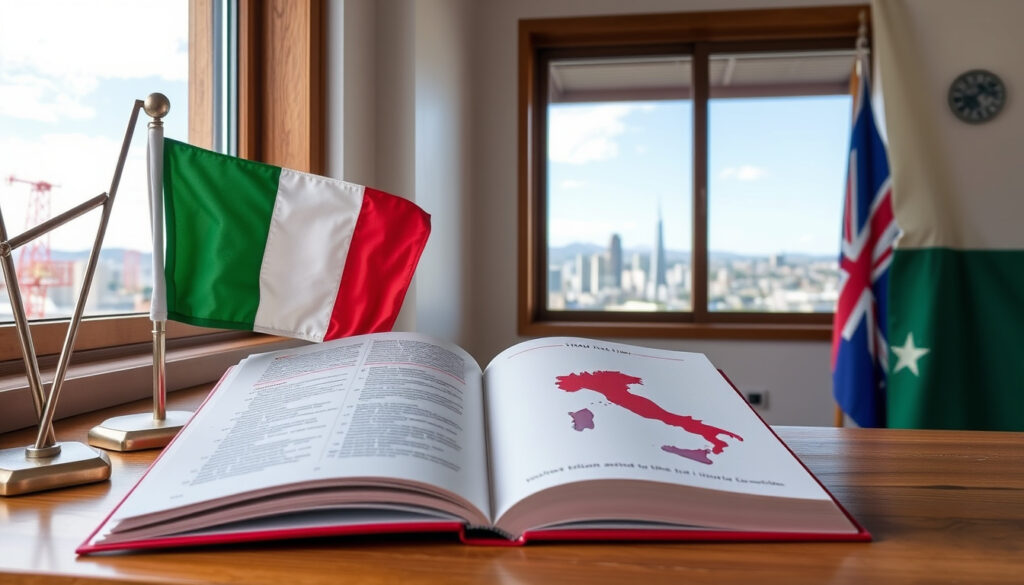
Italian Classes in Wellington: Best Courses, Costs & Tips
Few things feel as rewarding as the first time you order a cappuccino in Italian and the barista doesn’t switch to English. But for Wellington locals, that moment takes a bit of planning — mostly choosing the right class from a surprisingly varied set of options.
Group class average cost (8 weeks): NZ$205 ·
Private lesson starting rate (Wellington): NZ$40/hr ·
CEFR proficiency levels: 6 (A1 to C2) ·
Weeks to reach A1 (average learner): 12
Quick snapshot
- Group classes and private lessons (Italian Institute (Wellington language school))
- All levels (A1–C2) (Italian Institute (Wellington language school))
- Located in Wellington city (Italian Institute (Wellington language school))
- Language classes plus cultural events (Circolo Italiano (community club))
- Community club atmosphere (Circolo Italiano (community club))
- Focus on conversational practice (Circolo Italiano (community club))
- 8-week courses for beginners (Wellington High School Community Education (adult education provider))
- NZ$205 inclusive cost (Wellington High School Community Education (adult education provider))
- Evening schedule for adults (Wellington High School Community Education (adult education provider))
- 3,395 online tutors available (Preply (online tutoring marketplace))
- Flexible scheduling (Preply (online tutoring marketplace))
- Rates from NZ$20/hr (Preply (online tutoring marketplace))
These facts provide context for Wellington’s Italian learning landscape.
| Fact | Value |
|---|---|
| Italian speakers in New Zealand | Approx. 5,000 (2023 census estimate) (Stats NZ (national statistics agency)) |
| Courses offered by Italian Institute per year | 4–6 start dates annually (Italian Institute (Wellington language school)) |
| Most popular level | Italian A1 (Beginner) |
| Average class size in Wellington | 8–12 students |
How much are private Italian lessons in Wellington?
Wellington’s Italian lesson market splits into two clear price bands: structured group courses and one-on-one tutoring. The choice depends on your budget, schedule, and how much personal attention you want.
Cost comparison: group classes vs. private tutors
- Group courses: NZ$170–$205 for an 8-week term (1.5 hours per week). That’s about NZ$15–$18 per class.
- Private lessons: NZ$40–$70 per hour, depending on the tutor’s experience and whether you go through a school or an independent tutor.
One pattern: group classes give you structure and peer practice, while private lessons let you move at your own pace. The Italian Institute offers private sessions at NZ$50 per hour for one or two students (Italian Institute (Wellington language school)). Circolo Italiano’s group courses are priced at NZ$330 for 55-minute courses and NZ$495 for 1.5-hour courses, plus a NZ$55 textbook (Circolo Italiano (community club)).
Group classes cost less per hour but require a fixed schedule. Private lessons cost more but adapt to your availability — a real advantage for busy Wellington professionals.
Pricing at Wellington language schools and via Preply
Wellington High School Community Education lists its beginner Italian at NZ$199 for 8 weeks (Wellington High School Community Education (adult education provider)). Latin Rhythm, another local provider, charges NZ$170 for 8 weeks with no hidden fees (Latin Rhythm (Wellington language school)). Online, Preply lists over 3,300 Italian tutors with rates starting at NZ$20 per hour (Preply (online tutoring marketplace)).
What is the best course for learning Italian?
“Best” depends on your goal. If you want structured progression toward a certification, the Italian Institute’s CEFR-aligned courses are a strong fit. If you value cultural immersion, Circolo Italiano offers a club atmosphere. Online apps like Duolingo are good for vocabulary but fall short on conversation.
Top online courses: Duolingo vs. Babbel vs. Rosetta Stone
- Duolingo: Excellent for building vocabulary and daily habit, but it won’t teach you to hold a conversation. A review from TechRadar (tech review site) notes that Duolingo is best used as a supplement.
- Babbel: More grammar-focused and structured, with lessons that align to CEFR levels. PCMag (tech review site) rates it highly for serious beginners.
- Rosetta Stone: Immersion-based, good for pronunciation, but expensive and light on explicit grammar explanations.
For Wellingtonians, online tools are a convenient supplement, but they lack the real-time feedback and social motivation of a live class.
Best in-person courses in Wellington: Italian Institute vs. Circolo Italiano
Italian Institute runs small group classes taught by native speakers, with courses starting every few months at Toi Poneke Arts Centre (Italian Institute (Wellington language school)). Circolo Italiano holds its classes at Club Garibaldi on Tory Street, with a strong emphasis on community events and conversation practice (Circolo Italiano (community club)).
Circolo Italiano requires membership for its evening classes, adding about NZ$80–$96 per term for non-members. The Italian Institute includes materials in its NZ$190 course fee — no extra costs.
Why this matters: the Italian Institute is best for learners who want a clear academic ladder, while Circolo Italiano suits those who treat language as a social hobby. Both are well-regarded, but the choice affects your weekly commitment and total cost.
| Provider | Price (8 weeks) | Format | Class size | Materials |
|---|---|---|---|---|
| Italian Institute | NZ$190 group | 1.5 hr/week, native speaker | 8–12 | Free |
| Circolo Italiano | NZ$330–$495 + membership | 55 min or 1.5 hr/week | Small | NZ$55 textbook |
| Wellington High School | NZ$199 | 1.5 hr/week evening | 10–15 | Not specified |
| Latin Rhythm | NZ$170 | 1.5 hr/week | Small | Included |
The pattern: if you want to reach B2 and beyond, you’ll likely need to stick with a structured institute or supplement group classes with private tutoring. The Foreign Service Institute estimates that reaching B2 in Italian takes about 600 class hours (U.S. State Department (foreign language training body)).
What is A1, A2, B1, B2, C1, C2 Italian?
The Common European Framework of Reference for Languages (CEFR) defines six levels of proficiency. For Italian learners in Wellington, knowing where you stand helps you pick the right course.
CEFR levels explained for Italian learners
- A1 (Beginner): Can introduce yourself, ask basic questions, and understand slow, clear speech.
- A2 (Elementary): Can handle simple conversations about familiar topics like family, shopping, and local geography.
- B1 (Intermediate): Can produce simple connected text on familiar topics and describe experiences, events, and goals.
- B2 (Upper Intermediate): Can interact with a degree of fluency and spontaneity that makes regular conversation with native speakers possible.
- C1 (Advanced): Can express ideas fluently and spontaneously, and use language flexibly for social, academic, and professional purposes.
- C2 (Mastery): Can understand virtually everything heard or read and summarise information from different sources coherently.
These definitions come from the Council of Europe (official CEFR body).
Which level corresponds to Wellington course offerings
Most group classes in Wellington start at A1 and go up to B2. The Italian Institute offers courses from A1 to C2, with 4–6 start dates per year. Circolo Italiano’s “Beginners +” class is for students who have completed a beginner course or have some prior knowledge (Circolo Italiano (community club)). Wellington High School Community Education focuses on introductory levels, with a clear progression from “Italian – Introductory 1” to “Italian – Introductory 2” (Wellington High School Community Education (adult education provider)).
The pattern: if you want to reach B2 and beyond, you’ll likely need to stick with a structured institute or supplement group classes with private tutoring. The Foreign Service Institute estimates that reaching B2 in Italian takes about 600 class hours (U.S. State Department (foreign language training body)).
Upsides
- Group classes are affordable and provide peer interaction.
- Private lessons offer flexibility and personalised pace.
- Community clubs like Circolo Italiano add cultural events.
Downsides
- Group classes lock you into a fixed schedule.
- Private tutoring can be expensive for long-term learning.
- Online apps alone rarely lead to conversational fluency.
“Structured CEFR courses give learners a clear roadmap, especially when they’re juggling work and study. Knowing you’ll finish A1 in 12 weeks keeps you motivated.”
— Director of the Italian Institute Wellington
“The community aspect is what keeps people coming back — you’re not just learning a language, you’re joining a social group that meets regularly for dinners and events.”
— Committee member, Circolo Italiano di Wellington
For Wellington learners balancing work and study, the choice between a community club and a structured institute comes down to whether you want cultural immersion or a clear academic path. Either way, the first step is signing up for a course — and that’s where the real learning begins.
languagetrainers.com.au, in2italian.com.au, circoloitaliano.org.nz, cecwellington.ac.nz, superprof.co.nz, italianinstitute.co.nz, circoloitaliano.org.nz, circoloitaliano.org.nz
For those considering similar options elsewhere, Italian lessons in Auckland offer a comparable range of courses and costs for learners across the North Island.
Frequently asked questions
Can I learn Italian for free in Wellington?
Free options are limited. Some libraries hold language exchange meetups, and Circolo Italiano occasionally runs free cultural events. But for structured lessons, you’ll pay between NZ$170 and $500 per term.
What is the difference between the Italian Institute and Circolo Italiano?
The Italian Institute is a dedicated language school with CEFR-aligned courses and a focus on academic progression. Circolo Italiano is a community club that combines language classes with social events, requiring membership for evening classes.
How do I choose between group classes and private lessons?
If you learn best in a social setting and have a fixed weekly schedule, group classes are cost-effective. If you need flexibility or want to progress faster, private lessons give you personalised attention and pace.
Is it better to learn Italian online or in-person in Wellington?
In-person classes provide real-time feedback and local community, which is crucial for speaking confidence. Online tutoring is convenient and often cheaper, but works best as a supplement to in-person practice.
How soon can I expect to hold a conversation after starting classes?
With consistent weekly attendance, most learners reach A1 in about 12 weeks — enough to handle simple introductions and ordering at a restaurant. Real conversation fluency typically takes 6–12 months of regular practice.
More related posts
 Find an ANZ Branch Near Me: Locations, Hours & Appointments
 Bec and Bridge NZ: Stockists, Rental & Shopping Guide
 Diamond Lake & Rocky Mountain Track: Complete Hiking Guide
 Colour Blind Test NZ: Types, Costs and Where to Get Tested
 Photoelectric Smoke Alarms NZ: Rules, Comparisons & Top Picks
 Flights Auckland to Wellington: Times, Prices, Train vs Drive
 How Many Calorie Should You Be Burning? Your Daily Guide
 How to Use Magnet Links: Step-by-Step Guide
