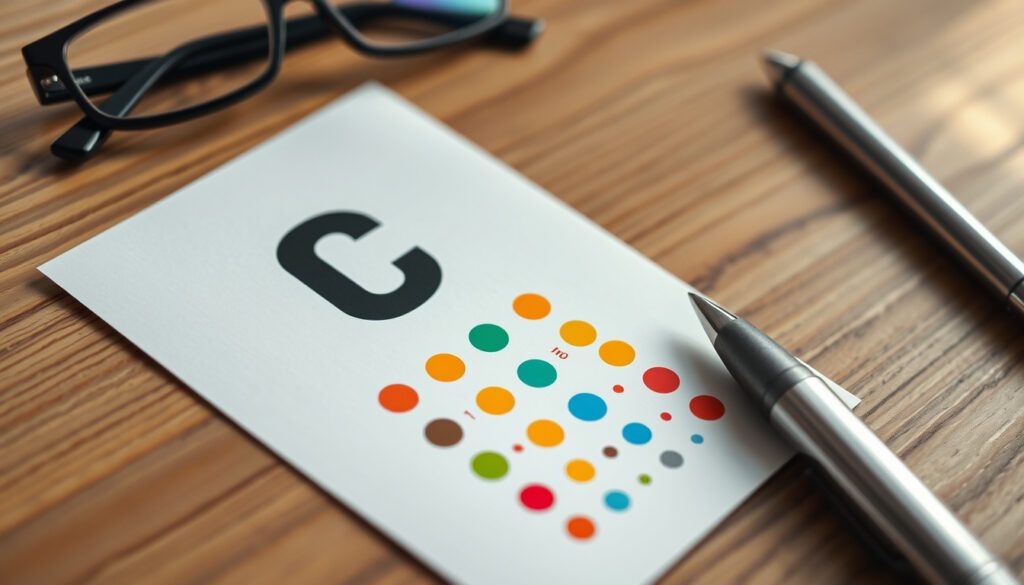
Colour Blind Test NZ: Types, Costs and Where to Get Tested
It usually starts the way these things do: a child calls a yellow car “green”, or an adult stumbles on one of those dotted-number plates during an eye exam. In New Zealand, the practical questions follow quickly — where to get a colour blind test, what it costs, and whether the result affects your driver licence — but the encouraging part is that the Ishihara plate test, the standard screening tool since 1917, is easy to access, though the result only counts once an optometrist confirms it.
Most common screening test: Ishihara plate test ·
Standard Ishihara set: 38 cards ·
Year Ishihara test was introduced: 1917 ·
Main categories of colour blindness: 3
Quick snapshot
- The Ishihara plate test screens for red-green colour-vision deficiency (Healthpoint / Highbury Optometrists (NZ optometry practice))
- New Zealand has no colour-vision requirement for fitness to drive (Waka Kotahi vision-and-driving guidance)
- Exact Specsavers NZ pricing for a colour blind test isn’t published in the reviewed sources
- Whether free online screening results are accepted by NZ optometrists without an appointment isn’t covered by the available research
- Specific free in-person testing locations in New Zealand aren’t listed in the reviewed sources
- Colour vision deficiency can be present from birth
- Today: Specsavers’ help section names the Ishihara test as the most commonly used colour vision test
- 1917: Dr. Shinobu Ishihara develops the plate test that still anchors colour vision screening (Healthpoint / Highbury Optometrists)
- Optometrist confirmation is the step that turns a screening result into a usable finding (Healthpoint / Highbury Optometrists)
- Book an eye exam with a registered NZ optometrist for a confirmed result (Healthpoint / Highbury Optometrists) (Waka Kotahi NZ Transport Agency)
- Check Waka Kotahi eyesight rules before any driver-licence transaction (Waka Kotahi NZ Transport Agency)
- Ask your optometrist about management options such as EnChroma glasses (Healthpoint / Highbury Optometrists) (Waka Kotahi NZ Transport Agency)
Twelve facts, one pattern: the colour-vision screen is the easy part, while the licensing rules are really about acuity and visual field.
| Fact | Detail |
|---|---|
| Primary screening test | Ishihara plate test |
| Standard Ishihara set | 38 cards |
| Test developer | Dr. Shinobu Ishihara |
| Year developed | 1917 |
| Main colour blindness categories | 3 (red-green, blue-yellow, complete) |
| Class 1 / 6 licence visual acuity | at least 6/12 with both eyes (New Zealand Legislation (Land Transport Rule 1999)) |
| Class 2–5 licence visual acuity | at least 6/9 with both eyes and 6/18 in each eye separately (New Zealand Legislation (Land Transport Rule 1999)) |
| Visual field requirement | at least 140 degrees (New Zealand Legislation (Land Transport Rule 1999)) |
| Colour-vision requirement for driving | none for fitness to drive |
| Eyesight certificate age limit | no more than 60 days old (Waka Kotahi NZ Transport Agency (driver-licensing authority)) |
| Driver-licence screening fee (indicative) | NZ$69 |
| Eyesight certificate cost (older official figure) | from NZ$25 (New Zealand Ministry of Transport (vision-testing literature review)) |
Where can I get a free colour blind test?
The short answer: a genuinely free test in New Zealand usually means an online Ishihara-style screening, not a clinic visit. No national directory of free in-person colour vision testing turned up in the reviewed sources, so treat “free” as a first step rather than a final answer.
- Free online Ishihara-style screenings are widely available and give an immediate first signal.
- A free home test is not a substitute for a full optometrist assessment.
- The standard Ishihara screening set contains 38 cards, so expect a short series of plates rather than a single image.
How much does an eye exam cost in New Zealand?
- Highbury Optometrists lists an indicative driver-licence screening fee of NZ$69 (Healthpoint / Highbury Optometrists (NZ optometry practice)).
- The Ministry of Transport’s literature review reports an optometrist certificate from NZ$25 — an older figure, not a guaranteed current price (New Zealand Ministry of Transport (vision-testing literature review)).
- Full eye-exam prices vary by practice, so get a written quote before booking.
The price you’re quoted depends on what the optometrist includes. A colour vision check is often part of a broader eye exam, so the published “screening fee” and the final invoice can be different numbers.
The pattern: free online screening costs nothing, the optometrist route costs something real, and the certificate that licensing accepts is the one from a registered optometrist or health practitioner — budget for that step.
Do optometrists do colour blind tests?
Yes. Colour vision testing happens during a standard eye exam, so you don’t need a specialist referral. A registered optometrist runs the screening, confirms the type of deficiency, and can issue a certificate if you need one for licensing.
Can Specsavers test for colour blindness?
- Specsavers identifies the Ishihara test as the most commonly used colour vision test.
- Optometrists can test for colour blindness during an eye exam.
- The Ishihara test was developed by Dr. Shinobu Ishihara in 1917.
What this means: the capacity is routine, but the diagnosis is only as good as the follow-up. A screening flags the issue; the optometrist’s assessment names it.
How much does a Specsavers colour blind test cost?
Specsavers NZ doesn’t publish a fixed colour blind test price in the reviewed sources. The realistic move is to ask your local store whether colour vision testing is included in the exam fee or charged separately.
- Ask the local store for a written price before booking.
- Confirm whether the certificate for driver-licence purposes is included.
The implication: price transparency is the weak spot in NZ colour vision testing. The test itself is routine; the invoice depends on the practice, the exam type, and whether a certificate is part of the deal.
What are the 3 main types of colour blindness?
Colour vision deficiency is the inability to see colours normally. The three main categories are red-green colour blindness, blue-yellow colour blindness, and complete colour blindness.
- Red-green colour blindness — the category the Ishihara screen targets; deuteranopia is one form of it.
- Blue-yellow colour blindness — a separate category affecting blue-yellow discrimination.
- Complete colour blindness — the rarest form; seeing little or no colour at all.
What is deuteranopia?
A screening result tells you the family — red-green — before it tells you the exact label. For most everyday decisions, that family label is the one that matters.
What is complete colour blindness?
- Complete colour blindness is the rarest form.
- It means seeing little or no colour at all.
- It sits apart from the red-green and blue-yellow categories because it affects the whole spectrum, not one pair.
What colours can a colour blind person see?
- It depends on the type of deficiency.
- Red-green colour blindness makes certain reds and greens hard to tell apart.
- Complete colour blindness means little or no colour is perceived.
Why this matters: the type of deficiency determines the practical impact. A red-green result points to colour-coded signals; the rarer categories reach further into daily life. A test that doesn’t name the type hasn’t finished its job.
At what age is colour blindness detected?
Colour blindness is usually present from birth, so the question is less “when does it appear” and more “when does someone notice it.” Screening can happen once a child is old enough to cooperate with the test.
How do you test for colour blindness in toddlers?
- Colour vision can be assessed once a child can cooperate with vision screening.
- Toddler testing requires an optometrist to choose age-appropriate methods rather than standard number-reading plates.
- Early testing catches colour vision problems before a child starts school.
A child who mixes up colours at home isn’t necessarily struggling — but if the pattern persists into school age, an optometrist screening answers the question instead of letting it become a private worry.
The pattern: early detection is achievable, and the practical window is before school starts — that’s where a quick optometrist screen has the most value for a child.
What are the eyesight requirements for driving in New Zealand?
New Zealand’s driving eyesight rules are about visual acuity and visual field, not normal colour vision. Colour blindness alone doesn’t disqualify a driver, but the acuity and field standards are enforced at the licensing counter.
- For Class 1 and 6 licences, applicants need at least 6/12 visual acuity using both eyes and a visual field of at least 140 degrees; Classes 2 to 5 demand 6/9 with both eyes, 6/18 in each eye separately, and the same 140-degree field (see the sourced breakdown in the key facts table).
- You can prove eyesight by passing a screening check at a licensing agent or by supplying a certificate from a registered optometrist or health practitioner — Waka Kotahi sets the details, including the 60-day age limit noted above.
- If you fail the agent’s screening, the licensing transaction cannot be completed until a satisfactory eyesight or medical certificate is supplied.
- People with colour-vision problems should be advised about traffic lights, indicator signs, hazard-warning lights and stop lights (Waka Kotahi vision-and-driving guidance).
- Colour blindness does not automatically disqualify a New Zealand driver — Waka Kotahi’s medical guidance confirms there is no colour-vision requirement in determining fitness to drive.
- Confirm the exact current standard with the NZ Transport Agency before relying on it, because the rule, not a blog, is what the licensing agent applies.
Colour blindness won’t stop you getting an NZ licence, but failing the acuity or visual-field screening absolutely will pause the transaction. Don’t confuse the two tests — the colour screen informs you; the eyesight screen gates you.
The takeaway: colour blindness won’t block an NZ licence, but the acuity and field standards will. Know which test you’re sitting before you book.
The separation between colour-vision screening and eyesight requirements is the most common gap in NZ driver preparation, and it’s the one that matters at the counter.
Free screening vs optometrist vs licensing agent: which one do you need?
Three ways to check your eyes in NZ, one pattern: only the optometrist route produces a result that official processes accept.
| Option | What happens | Cost signal | What it counts for |
|---|---|---|---|
| Free online Ishihara-style screening | You read dotted-number plates on a screen | Free | A first signal only — not a diagnosis or certificate |
| Optometrist eye exam | In-clinic Ishihara plates, full assessment, certificate if needed | Indicative NZ$69 for driver-licence screening; full exams vary | The result that confirms a deficiency and supports a licensing certificate |
| Driver-licensing agent screening | Eyesight screening during the licence transaction | Varies; certificate route from NZ$25 on an older official figure | Acuity and visual field, not colour vision — it decides whether the transaction proceeds |
The trade-off: free screening tells you whether to worry; the optometrist tells you what the worry means; the licensing agent only cares whether you meet the acuity and field rules.
Pros and cons of starting with a free online colour blind test
Upsides
- Free and immediate — a useful first signal before you spend money on an appointment.
- Can be done at home, which helps parents size up a child’s colour naming calmly.
- Gives you a vocabulary for the optometrist visit: red-green, blue-yellow, complete.
Downsides
- Not a diagnosis and not a substitute for a full optometrist assessment.
- Will not produce a certificate any licensing process accepts.
- Can’t tell you whether management options such as EnChroma glasses fit your situation — only a practitioner can.
The balance: an online test is a good first step for everyone, but it’s the last step for no one. The optometrist is the one who turns a screen result into a usable answer.
How to get a colour blind test in New Zealand: 6 steps
- Take a free online Ishihara-style screening to check whether red-green deficiency is likely.
- Book an eye exam with a registered NZ optometrist and say you want colour vision testing.
- Ask whether the colour vision assessment is included in the exam fee or billed separately.
- If you need proof for driver licensing, request an eyesight certificate and confirm the cost.
- Use the confirmed type to plan around real-world situations such as traffic lights and colour-coded charts.
- If glasses are part of the conversation, discuss options such as EnChroma glasses with the optometrist before buying anything.
The pattern: screen at home, confirm in clinic, then decide — the sequence costs the least and avoids both panic and wasted spending.
What’s confirmed and what’s still open
Research confidence on NZ colour vision testing is uneven, so it helps to separate what the sources agree on from what the reviewed research simply doesn’t pin down.
Confirmed facts
- The Ishihara test is the standard screening tool for red-green deficiency (Healthpoint / Highbury Optometrists (NZ optometry practice)).
- Colour blindness can be present from birth.
- New Zealand has no colour-vision requirement for fitness to drive (Waka Kotahi medical guidance).
- The eyesight certificate must be no more than 60 days old (Waka Kotahi NZ Transport Agency (driver-licensing authority)).
What’s unclear
- Exact NZ pricing for a Specsavers colour blind test isn’t available in the reviewed sources.
- Whether free online screening results are accepted by NZ optometrists without an appointment isn’t covered by the inputs.
- Which specific NZ clinics offer free in-person colour vision testing isn’t listed in the reviewed research.
- The current real-world price of a full optometrist eye exam — published figures are older or indicative.
What this means: the research supports the “screen first, confirm in clinic” pathway, but it can’t support a specific price list. Treat any NZ$ number you see online as a starting point for a quote, not a promise.
What the sources say
Ishihara plates are designed to screen for red-green colour-vision deficiency using coloured-dot figures, commonly numbers, embedded in contrasting fields of dots.
— Highbury Optometrists (NZ optometry practice)
The Ishihara test is the most commonly used colour vision test.
— Specsavers help section (optical retailer)
There is no colour-vision requirement in determining fitness to drive.
— Waka Kotahi NZ Transport Agency (fitness-to-drive guidance for health practitioners)
The thread: the same test appears across all the sources; what differs is what they tell you to do with the result.
The takeaway for New Zealanders
Colour blind testing in NZ is straightforward when you separate the three layers: the free online screen, the optometrist confirmation, and the licensing eyesight rules. The gap in the research is price certainty — the reviewed sources give indicative fees, not a national price list. For NZ drivers, the choice is clear: book one optometrist assessment that confirms the type and covers the licensing certificate, or keep guessing at symptoms and risk a stalled transaction at the licensing counter.
Frequently asked questions
What happens during a colour blind test?
You look at a series of plates made of coloured dots, usually with a number or shape hidden inside. The Ishihara screen targets red-green colour-vision deficiency, and a registered optometrist explains what the result means rather than just marking it pass or fail.
How long does a colour blind test take?
The plate-reading part of the Ishihara screen is brief — the standard set contains 38 cards. The full appointment length depends on the eye exam, so ask your optometrist when you book.
Are online colour blind tests accurate?
Online Ishihara-style tests are a useful first signal, and a free home test is a reasonable starting point. It is not a substitute for a full optometrist assessment, and it won’t produce a certificate.
Can a colour blind test produce a false result?
Any screening can mislead, which is why optometrist confirmation is treated as the decisive step. If a home test flags a deficiency, treat it as a reason to book an exam, not as a verdict.
Can colour blindness be treated?
There is no standard cure described in the sources reviewed. Management focuses on knowing your type, planning around situations such as traffic lights, and discussing aids like EnChroma glasses with an optometrist before buying.
Are there colour blind tests other than the Ishihara test?
The reviewed sources consistently name the Ishihara test as the most common colour vision screen. For children who can’t yet read numbers, an optometrist chooses age-appropriate methods; the specifics of alternative tests aren’t detailed in the sources reviewed.
The pattern across these answers: screening is easy and cheap, confirmation belongs to the optometrist, and the licence question turns on acuity and visual field, not colour perception.
Related reading
- Albany Street Medical Centre: Contact, Services & Registration
- What Is Respite Care? Costs, Duration, Pros and Cons
Check back for more New Zealand health guides to stay informed about medical services and requirements.
More related posts
 Best Exercises Without Equipment: Build Muscle & Burn Calories
 Under Armour Compression Shirt vs Nike: Which is Better
 When Does Stranger Things Season 5 Come Out? Release Dates
 Sarah J Maas Reading Order: ACOTAR, Throne of Glass & CC
 Book a Bach Rotorua: Prices, Pet-Friendly & Long-Term Guide
 US Stock Market News: Dow Swings 700 Points as S&P Nears Records
 Rotorua Thermal Holiday Park: Hot Pools, Cabins & Campsites
 New Zealand Population 2025: Official Stats & Demographics
