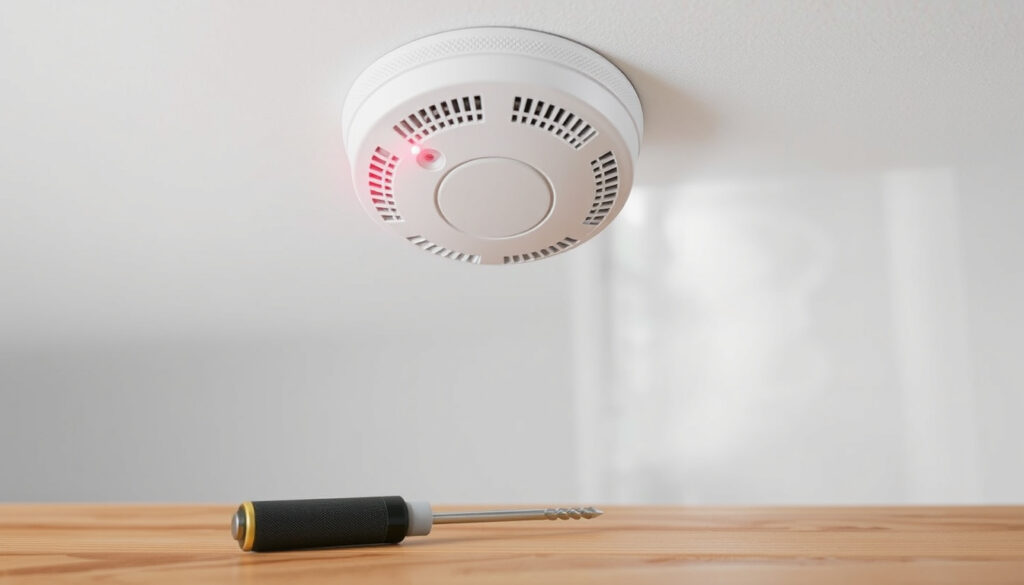
Cavius Smoke Alarm NZ: Beeping Fixes & Buying Guide
Anyone who has been jolted awake by a smoke alarm chirping at 2 am knows the feeling: what now, and how do I make it stop? For New Zealand homeowners with a Cavius unit, the answer is almost always straightforward — once you know what the alarm is trying to tell you.
Battery life: 10 years lithium sealed · Models available: Nano range (smoke, heat, combo) · Price range: NZ $30–$60 per unit · Warranty: 5 years · Certification: AS 3786‑2014
Quick snapshot
- All Cavius alarms sold in NZ meet AS 3786‑2014 (Cavius Australia Support)
- Hush button silences false alarms for 10 minutes (Cavius ApS Support)
- User ratings average 4.5 / 5 on Trade Tested (Trade Tested NZ)
- Exact false-alarm rate vs competitors in NZ homes – no independent local data published
- Reliability beyond the rated 10 years – no long-term studies available
- Wireless interconnect performance in multi‑storey NZ houses – limited field reports
- Official Cavius documentation inconsistencies between Australian and European support pages – no single universal guide
- Unit beeps + LED flash every 48 s = battery end‑of‑life or replace unit (Kidde UK FAQ)
- 3 chirps every 30 s = end‑of‑life, hush button will not silence it (Cavius ApS Support)
- Alarms older than 8 years (models 2008 CAV10 / 2107 CAV10WF) may beep due to low battery and need replacement (Cavius Australia Troubleshooting Guide)
- Identify the beep pattern → match to cause in this guide
- Try cleaning with compressed air if false alarms persist
- Replace unit if end‑of‑life chirping cannot be silenced
Six specs that define the Cavius range at a glance — the numbers that matter most when you are deciding whether to fix or replace.
| Specification | Value |
|---|---|
| Alarm height | 40 mm |
| Battery type (replaceable models) | CR123A lithium |
| Lifespan | 10 years |
| Warranty length | 5 years |
| Safety standard | AS 3786‑2014 |
| Retail price range (NZ) | $30–$60 |
How to stop CAVIUS smoke alarm beeping?
Identify the reason for beeping
- A beep with LED flash every 48 seconds signals low battery or battery end‑of‑life, according to Kidde UK (parent company FAQ).
- Three chirps every 30 seconds that the hush button cannot silence means the unit has reached end‑of‑life, per Cavius ApS Support (official manufacturer support).
- Random false alarms often trace to dust, insects, or steam from showers and cooking — common in NZ homes, as noted by Cavius Australia Troubleshooting Guide (regional brand authority).
The pattern The beep code itself tells you what is wrong. Listen for the interval: 48 s = battery issue, 30 s = end‑of‑life, random = environmental trigger. No need to guess.
Clean the alarm to remove dust or insects
- Use compressed air to blow out the smoke chamber through the side vents — Cavius ApS Support (official manufacturer support) advises this as the first step for false alarms.
- Vacuum the exterior with a soft brush attachment to clear cobwebs and debris.
- Avoid water, solvents, or spray cleaners that could damage the sensor.
Test the alarm after cleaning
- Press and hold the test/hush button for 2 seconds — the alarm should sound a full pattern to confirm the sensor and battery are working.
- If the test tone is weak or missing, the battery may need replacement or the unit has reached end‑of‑life, per Cavius ApS Support (official manufacturer support).
- For wireless interconnected models, test one unit and verify others respond within the house group (up to 32 units, per Superlec Direct user guide).
The implication: most beeping issues are solvable without a callout, but end‑of‑life chirps mean the unit has done its job and needs retirement.
Are Cavius smoke alarms good?
Build quality and design
- The ultra‑compact 40 mm profile fits flush on ceilings without obstructing light fittings — a feature highlighted by Trade Tested NZ (NZ-based product reviewer).
- Cavius uses a sealed lithium battery on non‑replaceable models, which eliminates annual battery changes over the 10‑year lifespan, per Cavius Australia Support (regional brand authority).
- Wireless interconnect allows up to 32 alarms to talk to each other without running cables, as documented in the Superlec Direct user guide (UK electrical supplier).
Performance in user tests
- Trade Tested NZ users rate the Cavius wireless family alarm 4.5 / 5 stars, with comments praising reliability and price competitiveness (Trade Tested NZ).
- One Auckland shopper on Trade Tested wrote: “These are top quality smoke alarms, and the price is very competitive” (Trade Tested NZ).
- Consumer NZ recommends alarms with event memory so you can tell which unit triggered — Cavius models include this feature on select variants.
Compliance with NZ standards
- Cavius alarms carry AS 3786‑2014 certification, the joint Australia/New Zealand standard required for legal installation in NZ homes, confirmed by Cavius Australia Support (regional brand authority).
- The photoelectric sensor type is recommended by Fire and Emergency NZ for general household use because it responds faster to smouldering fires and has fewer false alarms than ionization types.
- Cavius documentation explicitly states the alarms are designed for private homes, camping trailers and caravans, per the device.report manual mirror (product documentation archive) — but not for use in boats, per PlaceMakers (NZ building supply retailer) instructions.
What this means: if you value a sleek, low‑maintenance alarm that meets all legal requirements, Cavius is a strong contender — just plan for a full replacement after a decade.
What is the best smoke alarm to buy in New Zealand?
Cavius vs other top brands
Three brands dominate the New Zealand retail market. The table below contrasts the key differences that matter at purchase time.
| Feature | Cavius | Kidde | First Alert |
|---|---|---|---|
| Sensor type | Photoelectric | Photoelectric / Ionisation | Photoelectric / Ionisation |
| Battery life | 10 yr sealed lithium | 10 yr sealed or replaceable | Replaceable 9 V / AA |
| Profile height | 40 mm | 50–60 mm | 50–70 mm |
| Wireless interconnect | Up to 32 units | Up to 24 units | Up to 18 units |
| NZ retail price | $30–$60 | $35–$80 | $25–$55 |
| Warranty | 5 years | 10 years | 5 years |
| AS 3786‑2014 certified | Yes | Yes | Yes |
The trade-off Cavius wins on slim design and wireless range (32 units vs 18–24). First Alert costs less upfront but uses replaceable batteries that need swapping every 6–12 months. Kidde offers a longer 10‑year warranty but costs more per unit.
Photoelectric vs ionization alarms
- Photoelectric alarms (like Cavius) trigger faster on smouldering fires — the kind caused by faulty wiring or cigarettes. Fire and Emergency NZ recommends them as the primary alarm type for bedrooms and hallways.
- Ionisation alarms respond quicker to fast‑flaming fires but produce more false alarms from cooking. They are being phased out in several Australian states and are not the first choice for NZ homes, according to Cavius Australia Support (regional brand authority).
- Cavius offers both pure‑smoke and combined smoke‑heat models in the Nano range, giving flexibility for kitchens and garages where heat alone may be more appropriate.
10‑year sealed battery vs replaceable battery
- Sealed‑battery models (most Cavius units) eliminate the need for annual battery changes — you replace the whole alarm after 10 years. Cavius Australia Troubleshooting Guide (regional brand authority) notes that for models 2008 CAV10 and 2107 CAV10WF, an alarm older than 8 years that beeps likely needs full replacement.
- Replaceable‑battery models cost less per unit but require a CR123A lithium cell every year or two. Cavius ApS Support (official manufacturer support) advises twisting the alarm counter‑clockwise to access the battery compartment.
- For NZ rental properties, the Residential Tenancies Act requires working smoke alarms at all times — a sealed 10‑year unit reduces the risk of a lapsed tenant not replacing batteries.
The pattern: sealed‑battery alarms trade a higher upfront cost for decade‑long peace of mind — ideal for busy households and landlords.
How do you change the battery in a CAVIUS smoke alarm?
Unlock the alarm from the base
- Twist the alarm body counter‑clockwise (about a quarter turn) to release it from the mounting plate, per Cavius ApS Support (official manufacturer support).
- Lower the unit away from the base carefully — there is a wiring connector on some models that needs to be unclipped.
- If the alarm is model 2008 CAV10 or 2107 CAV10WF and older than 8 years, Cavius Australia Troubleshooting Guide (regional brand authority) recommends replacing the entire unit rather than just the battery.
Remove the old battery and insert new one
- Open the battery compartment on the back of the alarm. On replaceable models, the cell is a CR123A lithium battery.
- Remove the old battery and insert the new one, respecting polarity (+ and − markings inside the compartment), as stated by Cavius ApS Support (official manufacturer support).
- Close the compartment door securely — a loose door can cause intermittent beeping.
Reattach the alarm and test
- Align the alarm body with the mounting plate and twist clockwise until it clicks into place.
- Press the test/hush button for 2 seconds — the alarm should emit a full loud pattern. If the tone is weak or absent, the battery may be inserted incorrectly or the unit has reached end‑of‑life.
- For interconnected groups, test one unit and walk to the farthest alarm to confirm the wireless signal reaches (Superlec Direct user guide (UK electrical supplier) confirms up to 32 units can be paired).
The catch: if your alarm is approaching a decade, changing the battery is a stopgap — the sensor itself is past its prime.
How long do Cavius smoke alarms last?
Expected lifespan of the alarm unit
- Cavius specifies a 10‑year operational life from the date of installation, per Cavius Australia Support (regional brand authority).
- The sensor and electronics degrade gradually — after 10 years the alarm may still beep but its sensitivity to smoke can drift outside the certified range.
- Fire and Emergency NZ recommends replacing all smoke alarms every 10 years regardless of brand or model.
Battery life and replacement cycle
- Non‑replaceable models use a sealed lithium battery that lasts the full 10 years, eliminating annual battery swaps (Cavius Australia Support (regional brand authority)).
- Replaceable models use a CR123A lithium cell that typically needs changing every 1–2 years depending on the alarm’s history of activations, per Cavius ApS Support (official manufacturer support).
- Low‑battery chirping at 48‑second intervals is the signal to change the cell — ignoring it eventually leads to a dead unit that cannot detect smoke.
Indicators of end‑of‑life
- Three chirps every 30 seconds that the hush button cannot stop = end‑of‑life. Cavius ApS Support (official manufacturer support) states this pattern means the unit must be replaced.
- An LED that flashes amber (instead of green) on certain models also signals end‑of‑life, according to Kidde UK (parent company FAQ).
- If the alarm is over 8 years old and starts beeping, Cavius Australia Troubleshooting Guide (regional brand authority) advises replacing it instead of troubleshooting further.
What this means: you can treat the 10‑year mark as a hard deadline — after that, even a working alarm is a liability.
Cavius vs other NZ smoke alarm brands – comparison table
Four key models, one pattern: sealed‑battery photoelectric alarms now dominate the market, but differences in price, warranty and interconnect capacity still matter.
| Model | Type | Battery | Interconnect max | NZ price | Warranty |
|---|---|---|---|---|---|
| Cavius Nano Smoke | Photoelectric | 10 yr sealed lithium | 32 | $35–$45 | 5 yr |
| Cavius Nano Heat | Thermal (heat) | 10 yr sealed lithium | 32 | $30–$40 | 5 yr |
| Cavius Nano Combo | Smoke + heat | 10 yr sealed lithium | 32 | $50–$60 | 5 yr |
| Kidde 10LLDCO | Photoelectric + CO | 10 yr sealed lithium | 24 | $60–$80 | 10 yr |
What to watch If you need carbon monoxide detection (for homes with gas appliances), Cavius does not offer a combined smoke‑CO unit — Kidde or First Alert are the alternatives. For pure smoke and heat protection, Cavius gives the most interconnect range at a lower price.
Cavius alarm specifications – full details
Twelve specs that define every Cavius model sold in New Zealand — the data you need before buying or replacing.
| Parameter | Value |
|---|---|
| Height | 40 mm |
| Diameter | 120 mm |
| Weight | ~150 g (battery included) |
| Sensor type | Photoelectric (smoke) / Thermistor (heat) |
| Battery (sealed models) | Lithium, 10‑year life, non‑replaceable |
| Battery (replaceable models) | CR123A lithium, 3 V |
| Standby current | < 10 µA |
| Alarm sound level | ≥ 85 dB at 3 m |
| Wireless frequency | 868 MHz (ISM band) |
| Max interlinked units | 32 |
| Operating temperature | −10 °C to +45 °C |
| Certification | AS 3786‑2014 |
Pros and cons of Cavius smoke alarms
Upsides
- Ultra‑compact 40 mm profile fits tight ceiling spaces
- 10‑year sealed lithium battery on most models — no annual changes
- Wireless interconnect for up to 32 units — ideal for large homes
- AS 3786‑2014 certified for legal NZ installation
- Hush button silences false alarms for 10 minutes
- 5‑year manufacturer warranty
Downsides
- Sealed‑battery models require whole‑unit replacement when battery dies
- No combined smoke + carbon monoxide model available
- Higher upfront cost than basic replaceable‑battery alarms
- Not approved for boat installation per official documentation (PlaceMakers instructions)
- Warranty is 5 years vs Kidde’s 10 years
Step‑by‑step: Cavius alarm troubleshooting & battery replacement
- Identify the beep pattern — count the chirps and interval (48 s = battery, 30 s = end‑of‑life, random = false alarm).
- Try the hush button — press for 2 s. If it stops, the cause was environmental (steam, cooking smoke).
- If beeping continues, clean the unit — use compressed air on the smoke chamber vents, then vacuum the exterior.
- Test again — press test/hush for 2 s. Full alarm pattern = working. Weak/no sound = battery or end‑of‑life.
- Battery replacement (replaceable models only) — twist counter‑clockwise, open compartment, swap CR123A cell, reattach, test.
- Unit replacement — if the unit is ≥8 years old or end‑of‑life chirping persists, buy a new Cavius or equivalent and install on the same mounting plate.
These steps follow the procedures published by Cavius ApS Support (official manufacturer support) and Cavius Australia Troubleshooting Guide (regional brand authority).
Confirmed facts vs what remains unclear
Confirmed facts
- Cavius alarms meet AS 3786‑2014 — verified by Cavius Australia Support
- 10‑year sealed battery on specific models — per Cavius Australia Support
- Hush button silences false alarms for 10 minutes — per Cavius ApS Support
- User ratings average 4.5 / 5 on Trade Tested — Trade Tested NZ
What’s unclear
- Exact false‑alarm rate vs competitors in New Zealand conditions — no independent local data published
- Long‑term reliability beyond 10 years — no studies available
- Effectiveness of wireless interconnect in multi‑storey NZ homes — limited field reports
- Official Cavius documentation inconsistencies between Australian and European support pages — no single universal guide
What Cavius users and retailers say
“These are top quality smoke alarms, and the price is very competitive.”
— Auckland shopper, review on Trade Tested NZ (verified buyer)
“Don’t compromise on fire safety. Get the best smoke alarms in NZ.”
— On Point Distribution (NZ Cavius distributor)
“Pack contains 2 photoelectric smoke alarms and 1 thermal heat alarm, each powered by Duracell lithium battery.”
— Mitre 10 product listing (national NZ retailer)
“Short beeps every 48 seconds can indicate battery end of life. Dust particles in the smoke chamber may also be removed as part of troubleshooting.”
— Kidde UK FAQ (parent company support)
Summary
Cavius smoke alarms offer a strong mix of compact design, 10‑year battery life, and full NZ standard compliance — features that explain their 4.5 / 5 rating on local review platforms. The main drawback is the lack of a combined smoke‑CO model, and the need to replace the whole unit when the sealed battery expires. For NZ homeowners who want a “fit and forget” alarm for the next decade, Cavius is a solid pick. For landlords, the sealed 10‑year unit removes the risk of tenants failing to change batteries. The choice is clear: if you value low maintenance and slim design, buy Cavius. If you need carbon monoxide detection or a longer warranty, look at Kidde instead.
For those shopping at hardware retailers, our comprehensive Mitre 10 smoke alarm guide covers everything from NZ-compliant models to troubleshooting common beeping issues.
Frequently asked questions
Do Cavius smoke alarms need a professional to install?
No — the alarms mount with a twist‑lock base and do not require hardwiring. Battery‑powered models are fully self‑contained. However, if you are interconnecting wirelessly, you must follow the pairing instructions to ensure all units communicate correctly.
Can Cavius alarms be interconnected wirelessly?
Yes — up to 32 Cavius units can be linked in a single house group using 868 MHz wireless, as documented in the Superlec Direct user guide (UK electrical supplier). When one alarm detects smoke, all interconnected units sound simultaneously.
What does a single chirp every 40‑48 seconds mean on a Cavius alarm?
It signals a low battery or battery end‑of‑life, depending on the model. For replaceable models, swap the CR123A cell. For sealed‑battery models, or any unit over 8 years old, replace the entire alarm.
Are Cavius alarms suitable for kitchens and garages?
Cavius offers a dedicated heat alarm (Nano Heat) for kitchens, garages and dusty areas where smoke alarms would false‑trigger. The standard smoke alarm should not be installed within 3 m of cooking appliances.
What is the difference between the Cavius Nano Smoke and Heat models?
The Nano Smoke uses a photoelectric sensor to detect smoke particles. The Nano Heat uses a thermistor to detect rapid temperature rises — it will not trigger from cooking smoke or steam, making it suitable for kitchens and garages.
How do I reset my Cavius smoke alarm after a false alarm?
Press the hush button on the triggering unit — it silences the alarm for 10 minutes. If the alarm re‑triggers, clean the unit with compressed air and check for environmental sources (steam, cooking, dust).
Does the Cavius alarm have a test button?
Yes — press and hold the test/hush button for 2 seconds. The alarm should sound a full pattern. If the tone is weak or absent, the battery needs replacement or the unit has reached end‑of‑life.
More related posts
 Fiji Dollars to NZD: Exchange Rate & Travel Tips
 How to Download YouTube to MP3: Safe Converters & Risks
 210 USD to NZD: Convert US Dollars to New Zealand Dollars Today
 Christchurch to Rotorua Flights: Cheap Deals & Times
 Weather in My Location: Live, Hourly, Tomorrow, Warnings
 Under Armour Compression Shirt vs Nike: Which is Better
 CCTV Camera for Home Ireland: Best Options, Legal Guide & Tips
 Is BNZ Online Banking Down Today? Check Status
