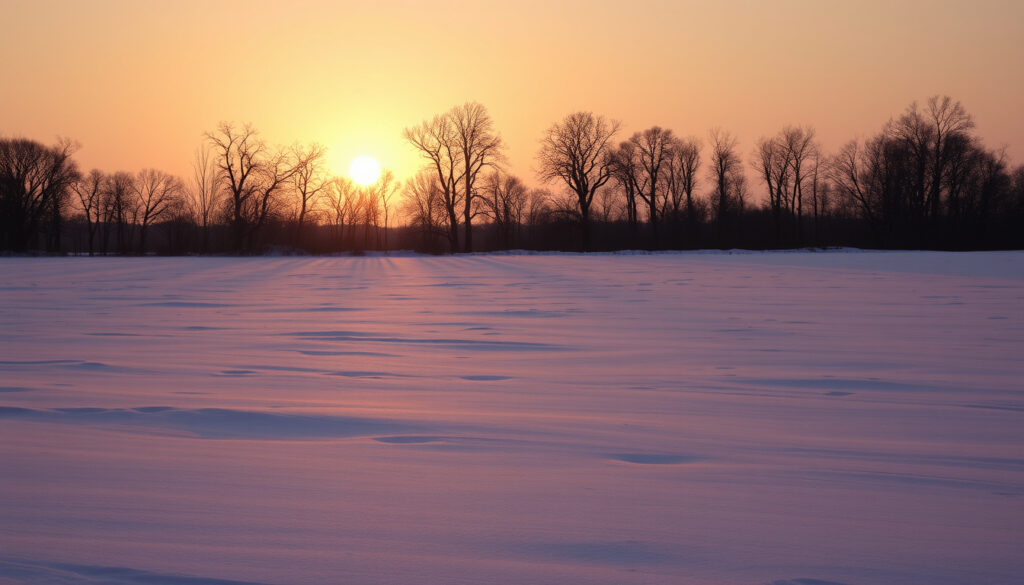
Shortest Day of 2026: When is the Winter Solstice
December 21, 2026, is the shortest day of the year for the Northern Hemisphere—and just how short it gets depends on where you live. The winter solstice marks the moment the hemisphere receives its least sunlight, with London seeing only 7 hours 49 minutes 42 seconds of daylight.
Shortest day of the year (2026, Northern Hemisphere): December 21 ·
Daylight duration on shortest day (London): 7 hours 49 minutes 42 seconds ·
Sunrise time on shortest day (London): 8:04 AM ·
Sunset time on shortest day (London): 3:53 PM
Quick snapshot
- December 21, 2026, for most of the Northern Hemisphere (timeanddate.com)
- Exact time varies by time zone; in UTC it occurs at 20:50 (CalendarCute)
- About 7 hours 49 minutes in London (timeanddate.com)
- Varies by latitude; in Dublin it’s around 7 hours 30 minutes (Gaisma)
- Earth’s axial tilt of 23.5° (Wikipedia)
- The tilt means one hemisphere leans away from the Sun during winter (timeanddate.com) (Wikipedia)
Eight key facts about the 2026 winter solstice and the shortest day, drawn from astronomical data and regional calculators:
| Fact | Value |
|---|---|
| Date of winter solstice 2026 (Northern Hemisphere) | December 21 (timeanddate.com) |
| Length of shortest day (London) | 7h 49m 42s (timeanddate.com) |
| Sunrise time (London, shortest day) | 8:04 AM (timeanddate.com) |
| Sunset time (London, shortest day) | 3:53 PM (timeanddate.com) |
| Shortest day in Southern Hemisphere | June 21, 2026 – the winter solstice for the south (timeanddate.com) |
| Solstice time in UTC | 20:50 UTC on December 21, 2026 (CalendarCute) |
| Dublin day length on shortest day | About 7h 30m (sunrise ~08:38, sunset ~16:07) (web-calendar.org) |
| Dublin civil twilight (first light to last light) | ~07:56 to ~16:52 (sunrisesunsettime.org) |
Why is December 21 the shortest day?
What is the winter solstice?
- The winter solstice is the moment when the Sun reaches its lowest maximum altitude in the sky, producing the fewest daylight hours (Wikipedia).
- In the Northern Hemisphere this occurs around December 21–22 each year (timeanddate.com).
What causes the shortest day of the year?
- Earth’s axial tilt of 23.5° means that during winter the Northern Hemisphere is tilted away from the Sun, reducing the length of the day (Wikipedia).
- This tilt remains fixed relative to the stars as Earth orbits the Sun, creating the seasonal variation in daylight (timeanddate.com).
When is the shortest day of the year sunrise and sunset?
- In London on December 21, 2026, sunrise is at 8:04 AM and sunset at 3:53 PM (timeanddate.com).
- In Dublin, estimates vary: one source gives sunrise at 08:38 and sunset at 16:07 (Crunchify), while another reports sunrise at 08:39 and sunset at 16:09 (sunrisesunsettime.org).
A few minutes of extra twilight can shift how much usable light you have for outdoor plans. For Dublin, the difference between sunrise and civil twilight (first light) is about 40 minutes – enough to matter for morning commuters.
The implication: the shortest day is not just a calendar date but a precise astronomical event tied to Earth’s geometry. Even a small difference in latitude can change sunrise and sunset times by minutes.
What is the darkest day of the year?
Is the darkest day the same as the shortest day?
- Often yes – the winter solstice has the longest night (timeanddate.com).
- But local weather (cloud cover) can make a different day feel darker, and the term “darkest day” sometimes refers to the day with the least total sunlight including twilight (Wikipedia).
Even on the solstice, the exact moment of sunset varies by longitude within the same time zone, so two towns an hour apart by road can have slightly different “darkest” days in terms of civil twilight.
The pattern: while the solstice guarantees the minimum daylight, perception of darkness is influenced by weather, altitude, and twilight definitions.
What is the shortest day in Ireland?
When is the shortest day in the Southern Hemisphere?
- In Ireland, the shortest day in 2026 falls on December 21, according to most Dublin and Navan calculators (timeanddate.com).
- However, an Ireland-wide timeanddate page lists the solstice at 12:50 AM on December 22, 2026 – a time‑zone artifact that shows the same UTC moment can land on a different local date (timeanddate.com).
- Daylight hours in Dublin range from about 7h 28m to 7h 34m depending on the calculator (web-calendar.org).
- For the Southern Hemisphere, the shortest day occurs around June 21, 2026, when the sun is at its lowest for that half of the globe (timeanddate.com).
“The December solstice marks the shortest day north of the equator.”
What this means: if you’re planning a winter solstice event in Ireland, check your local sunset time carefully – even a 30‑minute difference between Dublin and Galway can change the experience.
Are days getting shorter in 2026?
When is the shortest day of the year 2026?
- Days have been shortening since the June solstice (summer) of 2025, and they continue to shorten until the December solstice of 2026 (timeanddate.com).
- In 2026, the shortest day is December 21, after which days begin to lengthen again (timeanddate.com).
For those who dislike early darkness, the good news is that each day after December 21 adds about 1–2 minutes of daylight, a change you can notice within a week.
“The winter solstice is the shortest day of the year.”
– Wikipedia
The trend: the shortening is slow and steady from June to December. Marking the solstice gives a clear turning point for daylight recovery.
What will be the longest day of the year in 2026?
How does the longest day compare to the shortest day?
- The longest day in 2026 – the June solstice – occurs around June 21, with more than 16 hours of daylight in London (timeanddate.com).
- That is more than double the daylight of the shortest day (7h 49m), highlighting the dramatic seasonal swing caused by Earth’s tilt.
A comparison of the two extremes for 2026:
| Factor | Shortest day (Dec 21) | Longest day (Jun 21) |
|---|---|---|
| Daylight in London | 7h 49m 42s | 16h 38m |
| Sunrise (London) | 8:04 AM | 4:43 AM |
| Sunset (London) | 3:53 PM | 9:21 PM |
| Reason | Northern Hemisphere tilts away from Sun | Northern Hemisphere tilts toward Sun |
The contrast: the June solstice offers more than double the daylight of December, a swing that shapes everything from energy bills to outdoor recreation schedules.
Timeline: Key astronomical events around the shortest day
- June 20/21, 2026 – Summer solstice (longest day in Northern Hemisphere) (timeanddate.com)
- September 22, 2026 – Autumnal equinox (timeanddate.com)
- December 21, 2026 – Winter solstice (shortest day in Northern Hemisphere) (timeanddate.com)
- March 20, 2027 – Vernal equinox (timeanddate.com)
The pattern: the solstices mark the extremes; the equinoxes represent balance. Understanding this cycle helps plan seasonal activities and even agricultural planting.
What’s confirmed and what’s unclear
Confirmed facts
- The winter solstice in 2026 occurs on December 21 at 20:50 UTC (CalendarCute)
- The shortest day is astronomically defined by the moment of solstice (Wikipedia)
- Earth’s axial tilt of 23.5° is the root cause (timeanddate.com)
What’s unclear
- Exact sunrise/sunset times depend on location and atmospheric conditions – calculators differ by a few minutes (Crunchify vs sunrisesunsettime.org)
- Whether the coldest day coincides with the shortest day varies by region and weather patterns – the “seasonal lag” delays peak cold by about a month (Wikipedia)
- Ireland-wide calculators can place the same solstice instant on December 22 local time even when city-specific pages say December 21 (timeanddate.com)
Different online tools can show sunrise times differing by 10 minutes for the same city on the same date. For precise planning, stick with a single reliable source like timeanddate.com’s city‑specific pages.
The picture: even the best sources diverge by a few minutes, so pick one trusted city-specific calculator and stay consistent with it.
timeanddate.com, timeanddate.com, timeanddate.com, timeanddate.com, 2fwww.web-calendar.org, timeanddate.com, timeanddate.com, sunrisewhen.com
Frequently asked questions
How much daylight is there on the shortest day?
In London, about 7 hours 49 minutes. In Dublin, about 7 hours 30 minutes. The exact length depends on your latitude (timeanddate.com).
Does the shortest day occur on the same date every year?
It typically falls on December 21 or 22 in the Northern Hemisphere. Leap years and time zones can shift the calendar date by one day (Wikipedia).
What is the difference between solstice and equinox?
A solstice is when the Sun is farthest from the equator (shortest/longest day); an equinox is when the Sun crosses the equator, giving equal day and night (timeanddate.com).
Why is the shortest day not the coldest day?
Because of seasonal lag – the ground and oceans retain heat, so the coldest days usually come in January, about a month after the solstice (Wikipedia).
How does latitude affect the length of the shortest day?
Higher latitudes (closer to the poles) have much shorter days. For example, in Edinburgh (55°N) the shortest day is about 7 hours, while in London (51°N) it’s nearly 8 hours (timeanddate.com).
What is the historical significance of the winter solstice?
Many cultures celebrate the rebirth of the Sun – examples include Ancient Roman Saturnalia and modern Yule traditions (Wikipedia).
Can the shortest day be on December 22?
Yes. Depending on the year and time zone, the solstice can occur on December 22. For example, some Ireland‑wide calculators show the solstice at 12:50 AM on Dec 22, 2026 (timeanddate.com).
How do different cultures celebrate the shortest day?
From Scandinavia’s St. Lucia Day to Japan’s Toji, the winter solstice is a time of festivals, food, and lighting ceremonies (Wikipedia).
The takeaway: solstice timing is precise, but its local effects depend on latitude, time zone, and the calculator you consult.
Related reading
- What Day Is It Today? Date, Celebrations & Global Events
- Morning Prayer to Start the Day: Simple Steps and Examples
For anyone wondering when is the shortest day of the year in 2026, the answer is clear: December 21. But the real takeaway is that astronomical events like the solstice affect our daily routines, energy use, and even cultural traditions. Understanding the mechanics behind the seasons lets you plan your year with confidence – and maybe even appreciate the darkness a little more before the light returns.
More related posts
 How to Stop Car from Fogging Up – Proven Fixes and Prevention Tips
 How Old Is Sabrina Carpenter? Age, Real Name & Height
 Days of the Week – Origins Order Names and History
 Brigette Lundy-Paine – Age, Movies, Net Worth & Bio 2025
 How Much Is a Dime Worth? Value, Weight, History & More
 New Balance 550s for Men: Fit, Style, and 2026 Review
 When Do the Warriors Play? NBA & NRL Schedules 2026
 Picking Daisies on Sundays Guide: Age, Spice, Ending
