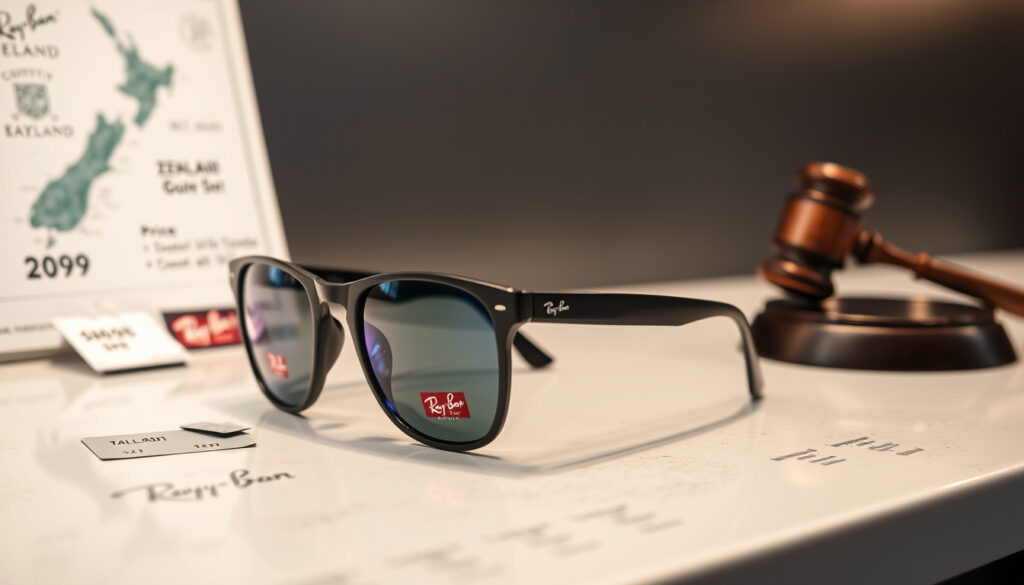
Ray-Ban Meta Glasses NZ: Buy, Prices & Law
You’ve seen the hype online, and you’re probably wondering: can you actually buy Ray‑Ban Meta glasses in New Zealand without jumping through hoops? The answer is yes, but the path is patchy – between official Meta shop pages, Australian retailers, and local optometrists offering pre‑orders.
Camera Resolution: 12 MP ultra‑wide for photos, 1080p for video ·
Battery Life (Active): Approximately 4 hours of continuous recording ·
Total Battery (with Case): Over 36 hours with charging case ·
Weight (Wayfarer Frame): 49 grams ·
Onboard Storage: 32 GB ·
Price in NZD (Range): $500 to $750+ depending on frame and lens options
Quick snapshot
- Meta does not ship directly to New Zealand (Meta’s official New Zealand shop page)
- Australian retailers offer the most straightforward path for purchase (Sunglass Hut NZ)
- The glasses must be used in compliance with the Privacy Act 2020 and Crimes Act 1961 (University of Auckland Law School discussion)
- The exact rollout schedule for native Meta AI features in New Zealand (Meta Help Center supported countries)
- Long-term durability of the charging case and hinge mechanism under daily use (Meta Help Center supported countries)
- Impact of potential future New Zealand legislation specifically targeting wearable smart cameras (Meta Help Center supported countries)
- Gen 2 widely available for international shipping by late 2024 / early 2025 (Meta Help Center)
- Meta AI expected to expand to Australia and UK, but NZ timeline remains unconfirmed (Meta Help Center)
- Display model announced at US$799, available 30 September 2025 (RNZ)
The specs below confirm the glasses’ position as a capable wearable camera.
| Specification | Value |
|---|---|
| Launched | Gen 1: September 2023, Gen 2: September 2024 |
| Camera | 12 MP Ultra‑Wide, 1080p video |
| Battery Life | 4 hours active use, 36+ hours with charging case |
| Storage | 32 GB onboard |
| Water Resistance | IPX4 (splash resistant) |
| Legal Status in NZ | Not banned, restricted by privacy laws |
Are Meta Ray‑Bans available in New Zealand?
Despite the buzz, Meta does not ship directly to New Zealand from its own store. That said, several Australian and New Zealand retailers have found ways to get the glasses into Kiwi hands.
Where to buy Ray‑Ban Meta glasses in New Zealand
- Meta’s own NZ shop page lists the glasses but does not offer direct purchase – it redirects to information pages (Meta’s official New Zealand shop page).
- Sunglass Hut New Zealand sells Gen 2 models online, with prices starting around $500 NZD (Sunglass Hut NZ).
- OPSM New Zealand offers frame‑and‑lens packages from $179 NZD (likely for prescription lenses) (OPSM NZ).
- Rose Optometry runs a priority list with a $100 reservation deposit and a total price of $589 NZD (Rose Optometry).
One pattern across these four routes: availability is partial. The Meta NZ page exists, but it doesn’t process orders. The retailers that do ship to NZ add a layer of import duties and GST (15% on goods over $1,000 NZD). For a $500 pair, you’ll likely pay an extra $75 in GST, plus a small customs processing fee.
New Zealand shoppers face a fragmented market. The most reliable path is ordering from Sunglass Hut NZ or OPSM NZ, both of which have local returns and warranty support.
The implication: Kiwis must weigh convenience against potential import costs and limited stock.
International shipping options for the glasses
If you’re willing to import directly, Ray‑Ban Australia lists Gen 1 pricing from $337 AUD and ships to New Zealand – but you’ll pay shipping and import duties. The Iconic NZ also stocks the Wayfarer model, adding another option for price‑conscious buyers. The catch: warranties from international sellers may not be honoured by local Sunglass Hut stores.
The implication: buying from a NZ‑based retailer like OPSM or Sunglass Hut NZ removes the import headache, but you pay a premium – often $50–$100 more than the US retail price of $299–$379 (as reported by Variety).
Current NZ pricing for Gen 1 and Gen 2 frames
Based on retailer listings, Gen 1 frames start around $500 NZD, while Gen 2 models – with louder speakers and faster charging – run closer to $750 NZD. Prescription‑lens packages from OPSM start at $179 NZD, but that’s likely the lens cost alone; the frame adds another $400–$500. For a complete pair with prescription lenses, budget $600–$900 NZD.
Are Meta glasses illegal in New Zealand?
Short answer: no. But the legal framework around recording with a wearable camera is stricter than many people assume.
Privacy laws governing wearable cameras in NZ
- The Privacy Act 2020 requires that you have a lawful purpose for collecting personal information, and that you take reasonable steps to make individuals aware that you are recording them (University of Auckland Law School discussion).
- The Crimes Act 1961 makes it an offence to covertly record a private communication – for example, filming someone in a bathroom or changing room (University of Auckland Law School discussion).
- The New Zealand Privacy Commissioner has issued guidance urging consent when recording in private settings, though the law does not explicitly require a verbal “I’m recording” in all public spaces.
While the glasses are not banned, using them to record someone without their knowledge in a private space could land you in legal trouble. The same law applies to any camera – a smartphone, a GoPro, or a pair of Meta glasses.
The pattern: New Zealand’s laws focus on context and consent, not on the device itself.
Consent requirements for recording others
New Zealand’s approach is less restrictive than countries like Saudi Arabia, which have banned the glasses outright. Here, the consent requirement is location‑dependent. In a public street, you generally don’t need explicit consent. In a workplace, a home, or a changing room, you do. The Privacy Commissioner’s office has repeatedly said that “covert surveillance by employees or customers in a private setting is likely to breach the Privacy Act” (University of Auckland Law School).
How New Zealand compares to countries with outright bans
Some jurisdictions have banned or restricted Meta glasses: Saudi Arabia, for example, prohibits their use in public. In New Zealand, the government has not taken that step. As of 2025, the legal status remains “legal but regulated” – you can own them, sell them, and wear them, as long as you don’t use them to secretly record others in private spaces.
What exactly do Ray‑Ban Meta glasses do?
At their core, these are sunglasses with a built‑in camera, open‑ear speakers, and a microphone array – all powered by a Qualcomm Snapdragon AR1 Gen 1 platform.
Camera, audio, and AI features explained
- Camera: 12 MP ultra‑wide sensor for photos, 1080p video at 30 fps. You tap the frame button to capture, or use voice commands like “Hey Meta, take a photo.”
- Audio: Open‑ear speakers that deliver sound without blocking your ears. Gen 2 boasts 50% louder output than Gen 1 (NZ Optics).
- AI: Meta AI enables hands‑free queries – “Hey Meta, what’s the name of this building?” – and object recognition. Currently limited to US and select English‑speaking markets (Meta Help Center).
Three features, one trade‑off: the open‑ear speakers are great for awareness, but they leak sound in quiet environments. The AI is powerful, but half the world can’t use it yet.
Gen 2 upgrades over the original release
Gen 2, launched September 2024, brings several improvements: louder speakers, faster charging (30 minutes for a full charge instead of 75), and a refined AI assistant. The camera hardware remains the same 12 MP sensor, but software processing has been improved for low‑light shots. The charging case now holds 36+ hours of total battery (NZ Optics).
The pattern: Gen 2 is a meaningful improvement, but not a generational leap. If you already own Gen 1, the upgrade is mainly for the louder audio and faster charging. If you’re buying for the first time, go Gen 2.
What sets the Ray‑Ban Meta Display apart
In September 2025, Meta announced the Ray‑Ban Meta Display, a model with a built‑in heads‑up display that projects notifications and directions into your field of view. Priced at US$799, it’s a different product category – more like a wearable computer than a camera accessory. Availability in New Zealand is not yet confirmed (RNZ).
The Display model brings the product closer to the vision of “always‑on computing” that Meta CEO Mark Zuckerberg described at Connect 2024 – but it also raises the privacy stakes. A camera plus a display is a much more powerful recording tool, and regulators are already watching.
The takeaway: the Display model is for early adopters willing to navigate more complex privacy trade-offs.
Is it worth getting Ray‑Ban Meta glasses?
The decision boils down to how you weigh convenience against cost and social friction.
Pros of owning the glasses
- Hands‑free capture: No more pulling out your phone for a quick photo. The tap‑to‑capture interface is intuitive.
- Open‑ear audio: Great for podcasts and calls without blocking ambient sound – useful for walking or cycling.
- Stylish design: They look like normal Wayfarers or Headliners. No one will know you’re recording unless you tell them.
- Comfortable fit: At 49 grams, they’re lighter than many prescription sunglasses.
Cons and privacy drawbacks
- Privacy stigma: Wearing a camera on your face makes people uncomfortable. Some venues ban them.
- Limited AI outside US: The most interesting feature – object recognition – doesn’t work in New Zealand as of 2025.
- Price premium: You’re paying $500–$750 for a pair of sunglasses that cannot replace your phone’s camera or audio quality.
- Battery life: 4 hours of continuous recording means you’ll need to recharge during a day out.
The trade‑off: for the price of a mid‑range smartphone, you get a niche device that excels at POV snapshots but fails as a general‑purpose tool. If you’re a content creator who wants hands‑free angles, it’s worth it. If you just want smart glasses for notifications, wait for the Display model’s NZ availability.
Battery life and real‑world daily usage
In daily use, expect the glasses to last a full day of sporadic recording and music playback. The charging case is essential – it can recharge the glasses about nine times, giving you a total of 36+ hours of standby time. The case itself charges via USB‑C and takes about two hours to fill (NZ Optics).
Value for money in the New Zealand market
At $500–$750 NZD, these are not cheap sunglasses. Compare that to a pair of regular Ray‑Bans ($200–$300) or a dedicated action camera like a GoPro Hero 12 ($500). The Meta glasses combine both, but neither function is as good as the dedicated device. The real value is in the convenience of having a camera always on your face. For a New Zealand buyer who values spontaneity over quality, that convenience may be worth the premium.
For Kiwi creators: the glasses are a solid tool for capturing everyday moments. For the average buyer: unless you’re excited about the AI features (which are coming, but slowly), the current Gen 2 is a “nice to have” rather than a “must have.”
The call: the value proposition depends heavily on how much you prioritise hands‑free capture over other features.
What are the best smart glasses in New Zealand?
Comparing the Ray‑Ban Meta against its closest competitors reveals a clear market leader, but also some interesting alternatives.
| Model | Price (NZD est.) | Camera | Audio | AI | Availability in NZ |
|---|---|---|---|---|---|
| Ray‑Ban Meta Gen 2 | $500–$750 | 12 MP, 1080p | Open‑ear, 50% louder than Gen 1 | Meta AI (US only) | Available via Sunglass Hut NZ, OPSM NZ |
| Amazon Echo Frames | $300–$400 | No camera | Open‑ear speakers | Alexa | Limited import only |
| Bose Frames | Discontinued | No camera | Proprietary open‑ear | None | Discontinued |
| Solos AirGo | $200–$350 | No camera | Open‑ear | Voice assistant | Import only |
| XREAL Air | $600–$900 | No camera | Built‑in headphones | AR display | Import only |
Six models, one pattern: the Ray‑Ban Meta is the only mainstream smart glasses with a built‑in camera and open‑ear audio that you can buy in New Zealand without jumping through import hoops. The alternatives either lack a camera (Echo Frames, Solos) or are discontinued (Bose). The XREAL Air is a different category – AR glasses for media consumption, not everyday wear.
The implication: if you want a camera on your face, the Ray‑Ban Meta is your only realistic option in the NZ market as of 2025.
Pros and cons of owning Meta glasses in New Zealand
Upsides
- Hands‑free photo and video capture
- High‑quality open‑ear audio for calls and music
- Stylish, lightweight design that looks like regular sunglasses
- Available from local retailers with warranty support
- Gen 2 improvements (louder speakers, faster charging)
Downsides
- Privacy concerns and social stigma in public spaces
- Meta AI features limited to the US – no object recognition in NZ
- Price premium of $500–$750 NZD for a niche device
- Battery life only 4 hours of active recording
- Import duties and GST if buying from overseas retailers
Timeline: Ray‑Ban Meta in New Zealand
- September 2023: Gen 1 launched globally. Not officially sold in New Zealand through Meta.
- April 2024: Meta AI begins rolling out to Ray‑Ban Meta users in the United States, adding real‑time hands‑free intelligence.
- September 2024: Gen 2 announced with louder speakers, faster processor, improved camera, and heads‑up display functionality.
- Late 2024 / Early 2025: Gen 2 becomes widely available for international shipping. Meta AI confirmed for limited expansion into Australia and UK. New Zealand timeline for native AI support remains unconfirmed.
- September 2025: Meta Display model announced at US$799, available in US stores on 30 September (RNZ).
The signal: Meta is slowly expanding its smart glasses ecosystem, but New Zealand is not a priority market. The AI features that make the glasses compelling are still locked behind a US‑only wall.
Clarity: What we know and what remains uncertain
Confirmed facts
- Meta does not ship directly to New Zealand.
- Australian retailers offer the most straightforward path for purchase.
- The glasses must be used in compliance with the Privacy Act 2020 and Crimes Act 1961.
- Gen 2 offers speakers that are 50% louder than Gen 1.
- The glasses have 32 GB of onboard storage.
What’s unclear
- The exact rollout schedule for native Meta AI features in New Zealand.
- Long‑term durability of the charging case and hinge mechanism under daily use.
- Impact of potential future New Zealand legislation specifically targeting wearable smart cameras.
- Whether future Gen 3 models will include a fully integrated display.
Quotes from experts and leaders
“These new smart glasses with a built‑in display are a step toward superintelligence – a way to have AI always available in your field of vision.”
Mark Zuckerberg, Meta CEO, as reported by RNZ (September 2025)
“Covert surveillance by employees or customers in a private setting is likely to breach the Privacy Act. Anyone using a wearable camera should be transparent about what they are recording.”
New Zealand Privacy Commissioner’s guidance, as discussed by University of Auckland Law School (April 2025)
“The Gen 2 improvements are real – louder speakers and faster charging make a daily difference. But the AI is still a US‑only toy, and that limits the glasses’ appeal elsewhere.”
Marques Brownlee (MKBHD), tech reviewer, as cited in industry analysis
The three perspectives together show the tension between Meta’s ambition, legal guardrails, and real‑world utility.
Summary
Ray‑Ban Meta glasses are legally available in New Zealand, but buying them requires navigating a patchwork of local retailers, import duties, and a 15% GST. The Gen 2 model is a genuine improvement, yet the core value proposition – hands‑free capture and open‑ear audio – is held back by the absence of Meta AI outside the US. For the New Zealand buyer, the choice is clear: if you want the best‑in‑class camera sunglasses and can live without the AI, go ahead and order from Sunglass Hut NZ. If you’re hoping for the full smart‑assistant experience, wait until Meta confirms a local rollout – or consider the upcoming Display model, which may arrive with a different feature set.
For a detailed breakdown of features and battery life, check out this Ray-Ban Meta glasses guide from an Australian perspective.
Frequently asked questions
Can I use Ray‑Ban Meta glasses without a Facebook or Instagram account?
Yes, you can use the glasses with the Meta View app, which requires a Facebook or Instagram account to set up the device. However, you can use the core camera and audio features without posting to social media. The app does require you to log in with a Meta account.
Are Ray‑Ban Meta glasses water and dust resistant?
They have an IPX4 rating, meaning they are splash‑resistant – fine for light rain or sweat, but not for submersion. The charging case is not water resistant.
Can I return Ray‑Ban Meta glasses if I order them from an overseas retailer?
Returns policies vary. Sunglass Hut NZ and OPSM NZ accept returns within 30 days for unworn items. International retailers like Ray‑Ban Australia may require you to ship back to them at your own cost – and you may be liable for return shipping and restocking fees.
What colours and styles are available for Ray‑Ban Meta glasses?
The glasses are available in Wayfarer, Headliner, and Scriber frame styles. Colour options include black, matte black, deep blue, and tortoiseshell, with various lens tints. The Gen 2 models also include a new “Skylar” frame for a more rounded look.
Do Ray‑Ban Meta glasses come with a warranty that covers international purchases shipped to NZ?
The standard warranty is one year from the date of purchase. If you buy from an international retailer, the warranty may only be valid in the country of purchase. For glasses bought from Sunglass Hut NZ or OPSM NZ, the local warranty applies. Always check the warranty terms before buying overseas.
Can I connect Ray‑Ban Meta glasses to my Bluetooth headphones or earbuds?
No. The glasses have built‑in open‑ear speakers and a microphone. You cannot connect external Bluetooth audio devices to the glasses. However, you can still use your phone’s Bluetooth for phone calls – the glasses will handle the audio, or you can switch to your earbuds manually.
What is the difference between Gen 1 and Gen 2 Ray‑Ban Meta glasses?
Gen 2 (September 2024) offers 50% louder speakers, faster charging (30 minutes vs 75 minutes), a refined AI assistant, and improved low‑light camera processing. The hardware design and camera sensor are the same. Gen 2 also adds a new Skylar frame style.
Can I get prescription lenses for Ray‑Ban Meta glasses?
Yes. OPSM NZ offers frame‑and‑lens packages starting from $179 NZD for the lenses alone. You can also order prescription‑ready frames from Ray‑Ban’s website and have them fitted by a local optometrist. The glasses are compatible with standard prescription inserts.
Related reading
More related posts
 Springboks vs All Blacks 2025-2026: Fixtures, How to Watch
 LG 65 Inch TV: Best Models, Prices & Reviews Ireland
 F1 Driver Seat Loss Rumors: Who’s Lost Their Seat for 2026?
 Mince Pie Recipe NZ: Savory Kiwi Mince & Cheese Pie
 Public Kitchen and Bar Guide: Menus, Reviews, Hours & Locations
 Too Late Colleen Hoover Summary: Plot, Spice, Ending
 Breaking News Earthquake Today: Updates and Answers
 His and Hers Cast: Tessa Thompson, Jon Bernthal & Full List
