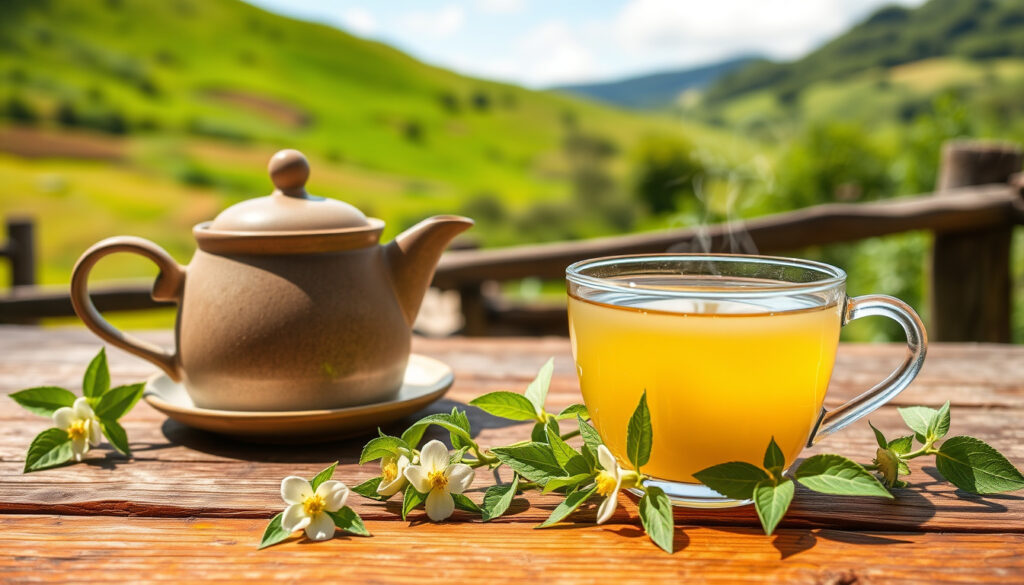
Lemon Balm Tea NZ: Benefits, Side Effects and Best Picks
Standing in front of the tea shelves at any New Zealand supermarket, you’ll see lemon balm tea next to ashwagandha powders — both promising a calmer evening, but arriving there by very different routes. Lemon balm is the mint-family herb traditionally used for insomnia, while ashwagandha is an adaptogenic root with published adverse reaction reports from New Zealand’s Medsafe; which one fits your health profile depends on your personal circumstances.
Caffeine: 0 for both (Healthline)
Lemon balm supplement dose studied: up to 5,000 mg/day for 20 days (WebMD)
Ashwagandha in NZ: regulator publishes reported adverse reactions (Medsafe)
Key things to know
What it is
Lemon balm tea is a naturally caffeine-free infusion of Melissa officinalis, a member of the mint family. WebMD describes it as generally used for insomnia.
What the evidence says
Cleveland Clinic reports antiviral and anti-inflammatory properties. Healthline says lemon balm may benefit the heart and other body systems, but more research is needed.
Who should be careful
Most adults can enjoy the tea, but WebMD notes the 5,000 mg/day supplement dose that was studied for 20 days is an extract, not a teabag. Anyone on regular medication should check the label, and pregnant or breastfeeding women should ask a qualified professional.
The New Zealand angle
New Zealand’s Medsafe has published a summary of reported adverse reactions to ashwagandha. On a lemon balm product, the label to look for is Melissa officinalis.
Key facts at a glance
Two herbs, two botanical identities, one difference that matters on the label.
| Facts | Lemon balm | Ashwagandha | Source |
|---|---|---|---|
| Botanical name | Melissa officinalis | Withania somnifera | Healthline |
| Plant family | Lamiaceae (mint) | Solanaceae (nightshade) | WebMD |
| Caffeine | 0 | 0 | Healthline |
| Traditional use | calming tea, insomnia | adaptogen for stress | WebMD |
| Main active compounds | rosmarinic acid, citronellal, citral | withanolides | MAGICT NZ |
| NZ retail forms | tea bags, loose leaf, fresh leaves | powder, capsules, teabags | MAGICT NZ |
| Regulatory note (NZ) | not flagged in the sources reviewed | Medsafe has published reported adverse reactions | Medsafe |
What are the benefits of drinking lemon balm tea?
Lemon balm has been used for over 2,000 years in European herbal medicine to promote relaxation and sleep. Modern sources note its antiviral and anti-inflammatory properties, and it is commonly used for mild anxiety and insomnia.
Does lemon balm tea help lose belly fat?
No direct evidence links lemon balm tea to belly fat loss. The herb may support sleep quality and stress reduction, which can influence eating habits, but no trial demonstrates a direct effect on fat loss.
Does lemon balm decrease cortisol?
Small acute-stress studies suggest lemon balm may reduce cortisol levels, but the evidence is suggestive, not conclusive. Most trials used concentrated extracts, not brewed tea.
Upsides
- Caffeine-free, suitable for evening use
- Long history of traditional use for sleep and mild stress
- Generally safe when consumed as tea in moderate amounts
Downsides
- Limited long-term clinical safety data
- May interact with thyroid medication and sedatives
- High-dose extracts (not tea) can cause side effects
Is it good to drink lemon balm tea every day?
For most people, an evening cup is a simple, low-risk ritual. WebMD lists lemon balm tea as generally used for insomnia, which fits neatly into a nightly routine. The sharper question is dose. The same source notes that study participants tolerated 5,000 mg of a lemon balm supplement daily for 20 days without reported side effects — that is a supplement extract, not a cup of tea, and it should not be confused with sitting down to a regular-sized teabag.
A tea bag will rarely approach that study dose, and a teabag’s serving is also diluted by steeping. If you drink several cups a day, pay attention to how you feel; if you have a thyroid condition or take prescription medicines, that’s the moment to check with a qualified professional.
Who should not take lemon balm?
The honest answer from the sources is still being written. Healthline says lemon balm may benefit the heart and other body systems, but more research is needed — which is a polite way of saying the safety data for special groups is thin. The people who should be most cautious are:
- People with a known allergy to mint-family plants (sage, basil, oregano, mint itself).
- People taking thyroid medication, sedatives, or blood-pressure medicines — not because these interactions are clearly proven, but because the margin for error is small and the evidence is limited.
- People who are pregnant or breastfeeding, since the research on herbal doses during pregnancy is not strong enough to call it risk-free.
If you fall into any of those groups, a single cup is unlikely to be dangerous, but a daily habit deserves a conversation with a qualified professional rather than a guess off the internet.
What not to mix with lemon balm?
Because lemon balm is associated with calming effects, the main thing to avoid is stacking it with other sedative herbs and medicines. The most relevant “mix” for this guide is ashwagandha: New Zealand’s Medsafe has published a summary of reported adverse reactions to ashwagandha, so a high-dose combination isn’t automatically safer than either herb alone.
- Alcohol. Both lemon balm and alcohol can slow the central nervous system. A cup of tea is usually fine; a long evening of drinks with herbal “relaxer” products is less tested.
- Caffeinated drinks. Lemon balm tea is naturally caffeine-free, so mixing it with coffee or cola doesn’t create a chemical problem — it just defeats the purpose of a relaxing evening tea.
- High-dose supplements. If you already take lemon balm as a liquid extract or capsule, adding a few cups of tea each day increases the dose quickly; read labels for Melissa officinalis and keep to one form at a time.
Can lemon balm cause a “buzz”?
No — at least not in the stimulant sense. Lemon balm tea contains no caffeine, and Healthline describes the herb’s effects as calming rather than stimulating. The Cleveland Clinic reports antiviral and anti-inflammatory properties, not euphoria.
What’s confirmed: mild sedation, relaxation, and traditional use for sleep and mild anxiety — exactly why people drink it at night.
What’s not confirmed: intoxication, a “high,” or a caffeine-style buzz. If you feel something from lemon balm tea, it’s usually the opposite of stimulation — a gentle, drink-water-and-let-your-body-nap calm.
Is it better to drink lemon balm tea at night or in the morning?
Because lemon balm is caffeine‑free and traditionally used for relaxation, most people find it works best as an evening tea. No head‑to‑head trial compares morning vs. evening use, but its calming effect makes it a natural choice 30–60 minutes before bedtime. If you drink it in the morning, you may still benefit from its mild stress‑relief properties, but it won’t provide a stimulating boost.
Is ashwagandha or lemon balm better?
Set these two herbs side by side and the real differences are botanical, chemical, and about who should steer clear.
| Feature | Lemon balm tea | Ashwagandha | Source |
|---|---|---|---|
| Traditional use | Evening calm, sleep, mild anxiety | Stress adaptogen, stamina | WebMD |
| Main active compounds | rosmarinic acid, citronellal, citral | withanolides | Healthline |
| Typical NZ forms | tea bags, loose leaf, fresh leaves | powder, capsules, teabags | MAGICT NZ |
| Reported adverse reactions in NZ | Not flagged in the sources reviewed | Medsafe has published a summary | Medsafe |
| Body of evidence | Well-known historical use; modern research still needed (Healthline) | Some research on stress; more needed | Healthline |
What is the best lemon balm tea to buy?
In New Zealand, look for products labeled Melissa officinalis (pure lemon balm leaf). Brands available through NZ retailers include Harney Teas Organic Lull Away blend, Salus lemon balm infusion bags, Tonic Health Magic T pure lemon balm, and Planet Organic loose‑leaf. For the purest experience, choose organic single‑ingredient tea without added flavours.
What the sources actually say
“Many people can take 5,000 mg of lemon balm daily for 20 days without side effects.” — WebMD
“Lemon balm has antiviral and anti-inflammatory properties.” — Cleveland Clinic
“Lemon balm may benefit the heart and other body systems, but more research is needed.” — Healthline
These quotes come from the sources that anchor this piece. None of them describe lemon balm as a stimulant, and none of them present ashwagandha as a risk-free everyday herb.
The bottom line for New Zealand tea drinkers
Lemon balm tea is the low-stakes option: caffeine-free, mint-family, and backed by a long tradition of evening use. Ashwagandha may still be useful, but its file in New Zealand includes published adverse-reaction reports, so it deserves more caution, not less. When you’re standing in the supermarket aisle, read the label for Melissa officinalis, keep the high-dose extracts short-term, and treat every label as a small piece of evidence — not the full story.
Related reading: **Memory Foam Pillow NZ: Brands, Benefits & Downsides**
supplementsolutions.co.nz, ods.od.nih.gov, merckmanuals.com, health.clevelandclinic.org, thepublicherbarium.org, magict.co.nz, healthline.com, hollandandbarrett.com, herbs.org.nz
Frequently asked questions
Can I drink lemon balm tea with ashwagandha?
There is no hard contra-indication in the sources reviewed, but mixing the two changes the dose. Ashwagandha has a regulatory file in New Zealand: Medsafe has published reported adverse reactions, so keep the ashwagandha low and the lemon balm tea to a normal cup.
Does lemon balm contain caffeine?
No. Lemon balm tea is naturally caffeine-free, which is part of why it works as a bedtime tea. If you buy a commercial blend, check the label for added black tea or coffee.
How much lemon balm is too much?
The clearest number comes from WebMD: 5,000 mg/day of a supplement for 20 days was tolerated in study settings. Tea will deliver far less than that per cup, but a high-dose extract plus several cups of tea could add up quickly.
Why does lemon balm tea make me sleepy the next day?
Possibly a dose issue. If you’re using a concentrated extract or an unusually strong tea, the herb’s mild sedative effect can linger. Try a smaller cup earlier in the evening and switch to a low dose.
Is lemon balm safe for children?
Traditional use suggests a calm tea is sometimes given in small amounts, but the clinical evidence is thin. In general, it is not recommended for infants and young children without professional guidance.
Which is better for sleep: lemon balm or ashwagandha?
Lemon balm has the longer history as a sleep tea, and its calming effect is well described. Ashwagandha is more often used for stress adaptation than for immediate sleep. If your goal is a cup before bed, lemon balm is the more direct choice.
More related posts
 Jobs in New Plymouth NZ: Salaries & Platforms
 Car Seat Covers NZ: Best Options, Reviews & Buying Guide
 When Do the Warriors Play? NBA & NRL Schedules 2026
 Western United vs Auckland FC – Preview and Key Insights
 Five Letter Word Finder: How to Find Words Quickly
 Night of the Long Knives: Hitler’s SA Purge Explained
 Southland Times Death Notices – Guide to Latest Invercargill Obituaries
 The Legend of Baron To’a: Film, Locations & Netflix Exit
